

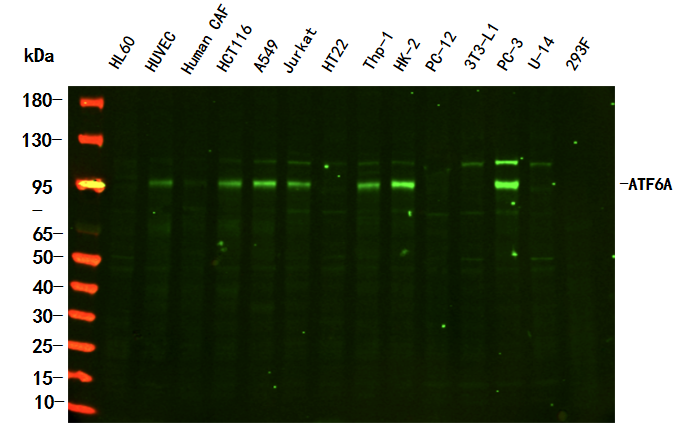
Background:This gene encodes a transcription factor that activates target genes for the unfolded protein response (UPR) during endoplasmic reticulum (ER) stress. Although it is a transcription factor, this protein is unusual in that it is synthesized as a transmembrane protein that is embedded in the ER. It functions as an ER stress sensor/transducer, and following ER stress-induced proteolysis, it functions as a nuclear transcription factor via a cis-acting ER stress response element (ERSE) that is present in the promoters of genes encoding ER chaperones. This protein has been identified as a survival factor for quiescent but not proliferative squamous carcinoma cells. There have been conflicting reports about the association of polymorphisms in this gene with diabetes in different populations, but another polymorphism has been associated with increased plasma cholesterol levels. This gene is also thought to be a potential therapeutic target for cystic fibrosis.
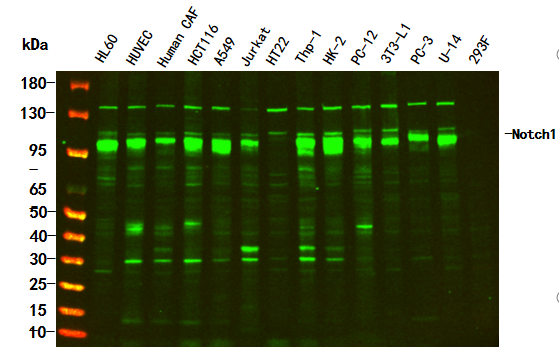
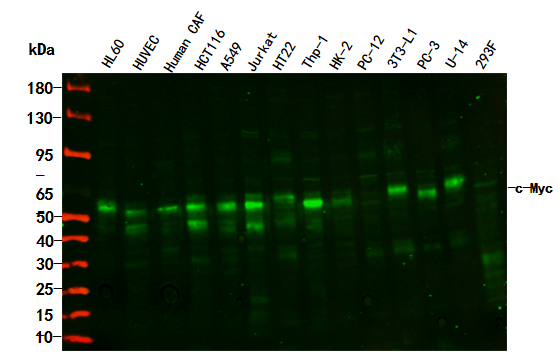
Elevate your endoplasmic reticulum (ER) stress and unfolded protein response (UPR) research with the Anti-ATF6A Rabbit Monoclonal Antibody (WR4090)—a Google-optimized, rigorously validated tool for specific ATF6A detection. Tested across 14+ human, mouse, and rat cell lines (HL60, HCT116, HT22, etc.), this antibody delivers clear banding (75 kDa predicted / 100 kDa observed) via 4-20% SDS-PAGE, paired with optimized conditions (4°C overnight incubation, 1:2500 dilution) and a robust Dylight 800-conjugated detection system.
Ideal for studying ATF6A’s roles as an ER stress sensor, nuclear transcription factor, or therapeutic target (e.g., cystic fibrosis), this trusted Anti-ATF6A Rabbit Monoclonal Antibody boosts assay reproducibility. Order WR4090 today to advance your ATF6A-focused experiments with a SEO-verified, high-performance research tool
Leave a Comment
Your email address will not be published. Required fields are marked *