

Product details
Background:
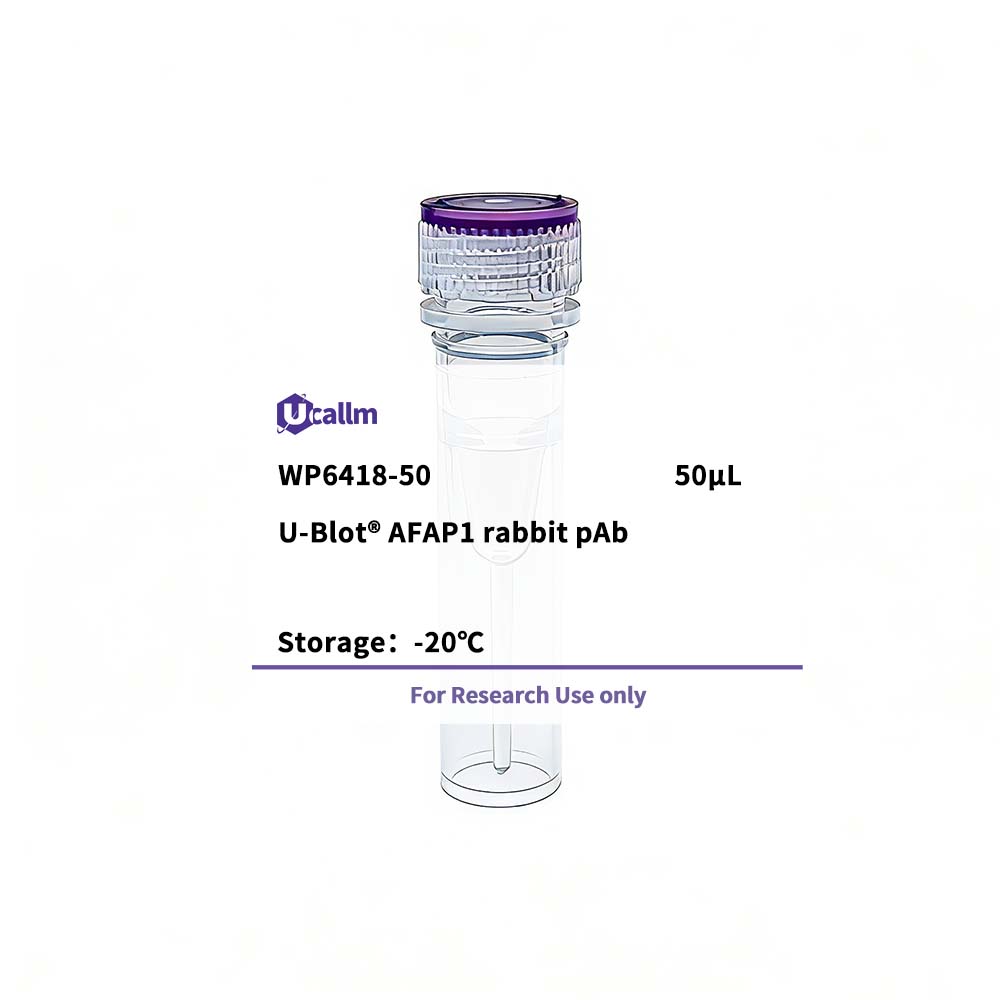
Price range: $268.00 through $328.00
Background:
| Size | 50μL/100μL |
| Target | AFAP1 |
| Reactivity | Human, Mouse, Rat |
| Applications | WB |
| MW(Calculated) | 80kD |
| MW(Observed) | |
| Host Species | Rabbit |
| Isotype | IgG |
| Conjugate/Modification | Unmodified |
| Recommended Dilution Ratio | WB 1:500-2000 |
| Formulation | Liquid in PBS containing 50% glycerol, 0.5% BSA and 0.02% sodium azide. |
| Purification | The antibody was affinity-purified from rabbit antiserum by affinity-chromatography using epitope-specific immunogen. |
| Storage | -15°C to -25°C/1 year(Do not lower than -25°C) |
| Concentration | 1 mg/ml |
| Clonality | Polyclonal |
| Clone Number | |
| Immunogen | Synthesized peptide derived from human AFAP1 |
| Specificity | This antibody detects endogenous levels of AFAP1 at Human, Mouse,Rat |
| Gene Name | AFAP1 AFAP |
| Protein Name | Actin filament-associated protein 1 (110 kDa actin filament-associated protein) (AFAP-110) |
| Other Name | |
| Species | Human |
| Gene ID | 60312 |
| Uniprot | Q8N556, |
| Species.1 | Mouse |
| Gene ID.1 | 70292 |
| Uniprot.1 | Q80YS6, |
| Species.2 | Rat |
| Gene ID.2 | 140935 |
| Uniprot.2 | Q8VH46 |
| Cellular Localization | Cytoplasm, cytoskeleton, stress fiber . |
| Tissue Expression | Low expression in normal breast epithelial cell line MCF-10A and in tumorigenic breast cancer cell lines MCF-7, T-47D and ZR-75-1. Highly expressed in the invasive breast cancer cell lines MDA-MB-231 and MDA-MB-435. Overexpressed in prostate carcinoma. |
| Signaling_pathway | |
| Research Areas | |
| Function | Can cross-link actin filaments into both network and bundle structures (By similarity). May modulate changes in actin filament integrity and induce lamellipodia formation. May function as an adapter molecule that links other proteins, such as SRC and PKC to the actin cytoskeleton. Seems to play a role in the development and progression of prostate adenocarcinoma by regulating cell-matrix adhesions and migration in the cancer cells. |




