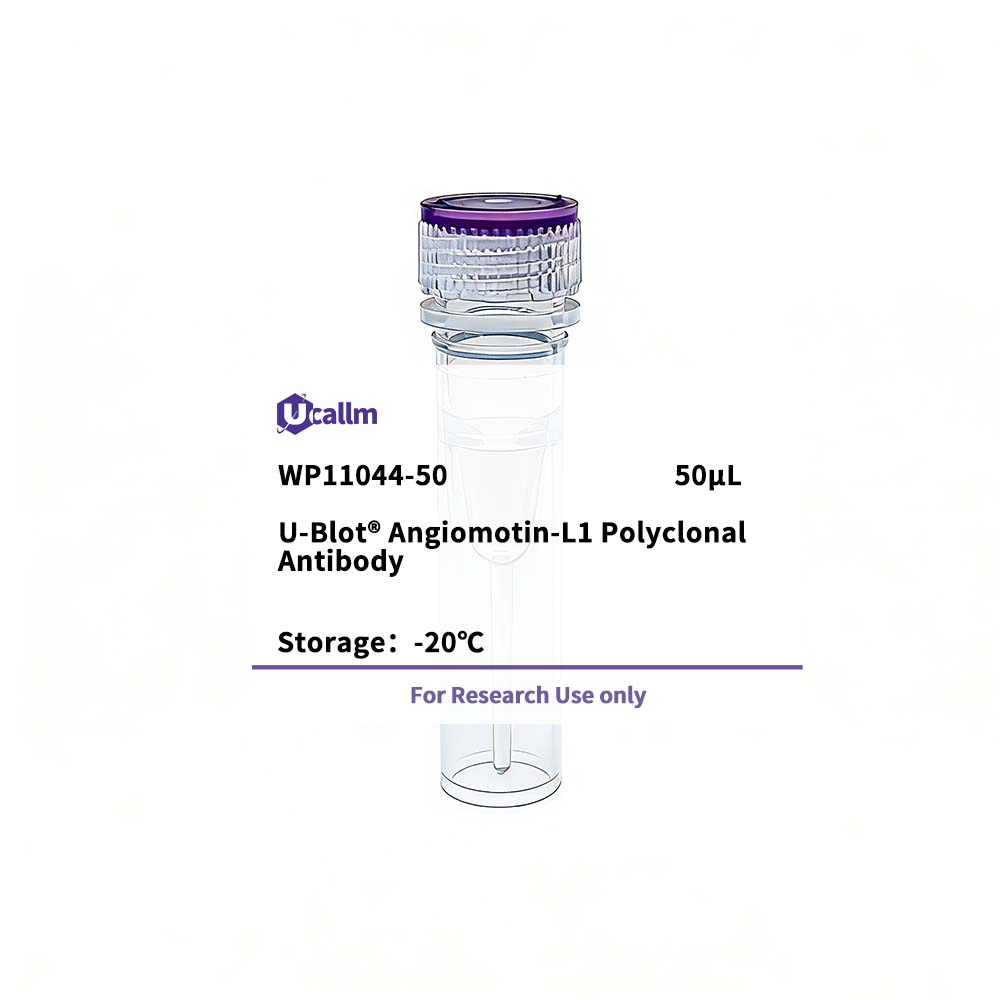
SKU: WP11044 Categories: ,

Angiomotin-L1 Polyclonal Antibody

Price range: $268.00 through $328.00

SKU: WP11044-100
Enter the quantity you would like, or drag the panel to find the quantity and price that best for you
Bulk QuoteAuthorize OEM & ODM

Product details

Background:

The protein encoded by this gene is a peripheral membrane protein that is a component of tight junctions or TJs. TJs form an apical junctional structure and act to control paracellular permeability and maintain cell polarity. This protein is related to angiomotin, an angiostatin binding protein that regulates endothelial cell migration and capillary formation. Two transcript variants encoding different isoforms have been found for this gene. [provided by RefSeq, Jul 2014],

Specifications

Size50μL/100μL
TargetAngiomotin-L1
ReactivityHuman, Mouse
ApplicationsIHC, IF, ELISA
MW(Calculated)107kD
MW(Observed)
Host SpeciesRabbit
IsotypeIgG
Conjugate/ModificationUnmodified
Recommended Dilution RatioIHC 1:100-1:300; ELISA 1:10000; IF 1:50-200 / Note: For IHC, we suggest antigen retrieval with TE buffer pH 9.0 (Cat#WT1004)
FormulationLiquid in PBS containing 50% glycerol, 0.5% BSA and 0.02% sodium azide.
PurificationThe antibody was affinity-purified from rabbit antiserum by affinity-chromatography using epitope-specific immunogen.
Storage-15°C to -25°C/1 year(Do not lower than -25°C)
Concentration1 mg/ml
ClonalityPolyclonal
Clone Number
ImmunogenThe antiserum was produced against synthesized peptide derived from human AMOTL1. AA range:441-490
SpecificityAngiomotin-L1 Polyclonal Antibody detects endogenous levels of Angiomotin-L1 protein.
Gene NameAMOTL1
Protein NameAngiomotin-like protein 1
Other NameAMOTL1; / Angiomotin-like protein 1
SpeciesHuman
Gene ID154810
UniprotQ8IY63,
Species.1Mouse
Gene ID.175723
Uniprot.1Q9D4H4
Species.2
Gene ID.2
Uniprot.2
Cellular LocalizationCell junction, tight junction .
Tissue ExpressionBrain,Epithelium,Muscle,Skeletal muscle,Skin,Spleen,Testis,Thymus,
Signaling_pathwayCellular Processes >> Cellular community - eukaryotes >> Tight junction
Research Areas>>Tight junction
Functionsimilarity:Belongs to the angiomotin family.,
Please login to post questions
Back to Top
Product has been added to your cart
