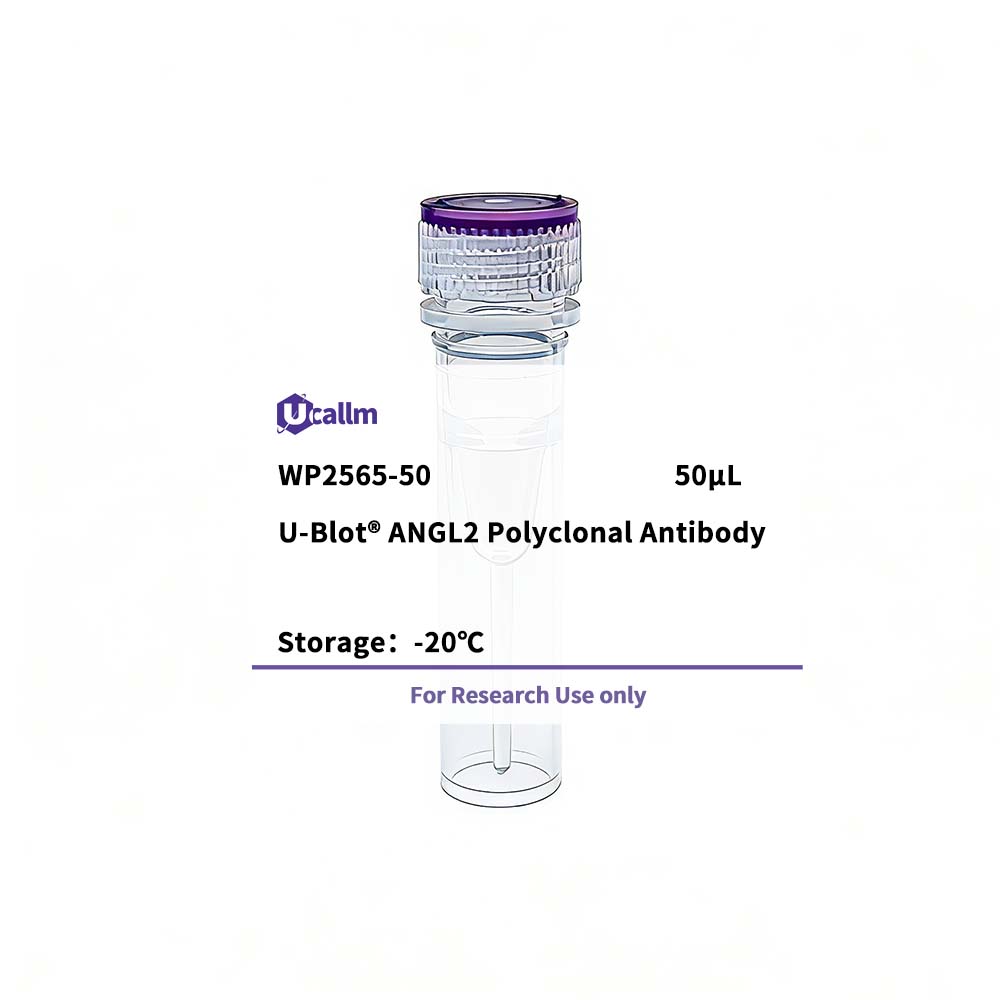
SKU: WP2565 Categories: ,

ANGL2 Polyclonal Antibody

Price range: $268.00 through $328.00

SKU: WP2565-100
Enter the quantity you would like, or drag the panel to find the quantity and price that best for you
Bulk QuoteAuthorize OEM & ODM

Product details

Background:

Angiopoietins are members of the vascular endothelial growth factor family and the only known growth factors largely specific for vascular endothelium. Angiopoietin-1, angiopoietin-2, and angiopoietin-4 participate in the formation of blood vessels. ANGPTL2 protein is a secreted glycoprotein with homology to the angiopoietins and may exert a function on endothelial cells through autocrine or paracrine action. [provided by RefSeq, Jul 2008],

Specifications

Size50μL/100μL
TargetANGL2
ReactivityHuman, Mouse
ApplicationsWB, ELISA
MW(Calculated)
MW(Observed)54kD
Host SpeciesRabbit
IsotypeIgG
Conjugate/ModificationUnmodified
Recommended Dilution RatioWB 1:500-2000; ELISA 1:5000-20000
FormulationLiquid in PBS containing 50% glycerol,0.5% BSA and 0.02% sodium azide.
PurificationThe antibody was affinity-purified from rabbit antiserum by affinity-chromatography using epitope-specific immunogen.
Storage-15°C to -25°C/1 year(Do not lower than -25°C)
Concentration1 mg/ml
ClonalityPolyclonal
Clone Number
ImmunogenSynthesized peptide derived from part region of human protein
SpecificityANGL2 Polyclonal Antibody detects endogenous levels of protein.
Gene NameANGPTL2 ARP2 UNQ170/PRO196
Protein NameAngiopoietin-related protein 2 (Angiopoietin-like protein 2)
Other Name
SpeciesHuman
Gene ID23452
UniprotQ9UKU9,
Species.1Mouse
Gene ID.1
Uniprot.1Q9R045
Species.2
Gene ID.2
Uniprot.2
Cellular LocalizationSecreted.
Tissue ExpressionWidely expressed in heart, small intestine, spleen and stomach. Also found in lower levels in colon, ovary, adrenal gland, skeletal muscle and in prostate.
Signaling_pathway
Research Areas
FunctionFunction:Induces sprouting in endothelial cells through an autocrine and paracrine action.,PTM:N-glycosylated.,similarity:Contains 1 fibrinogen C-terminal domain.,tissue specificity:Widely expressed in heart, small intestine, spleen and stomach. Also found in lower levels in colon, ovary, adrenal gland, skeletal muscle and in prostate.,
Please login to post questions
Back to Top
Product has been added to your cart

