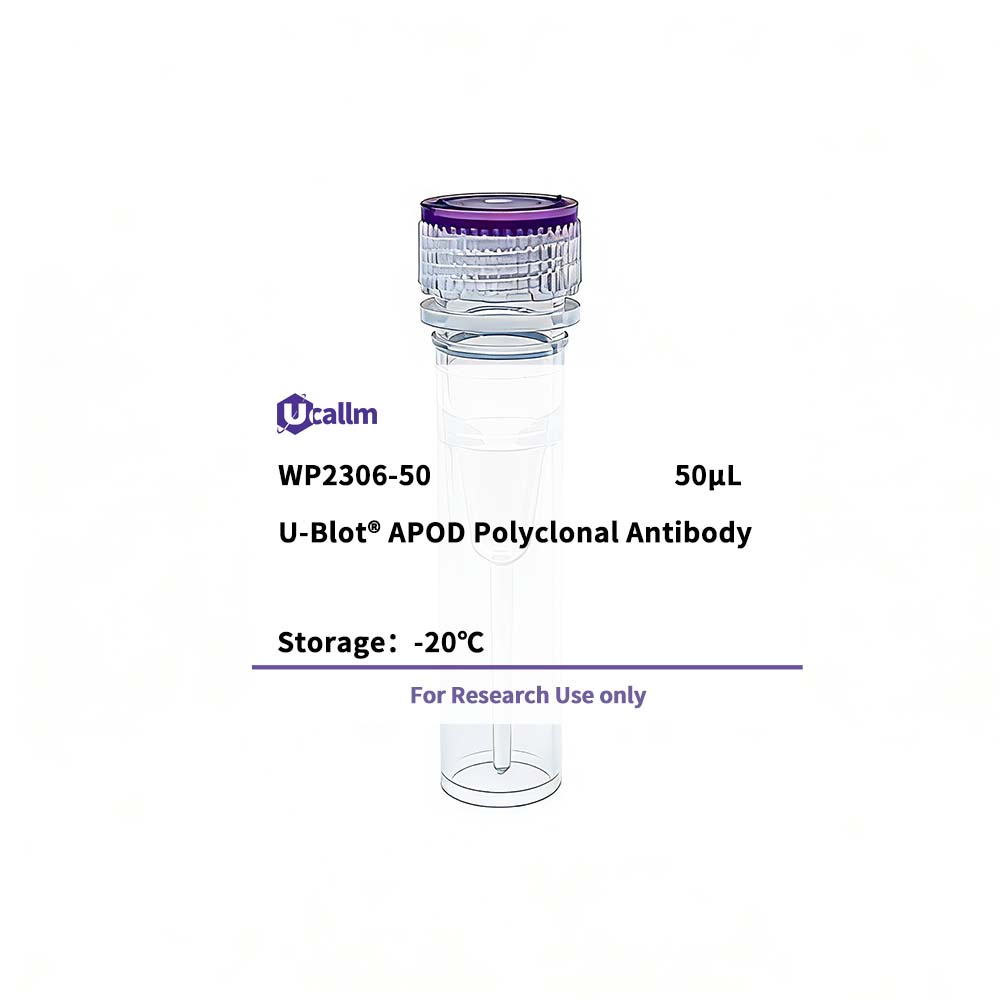
SKU: WP2306 Categories: ,

APOD Polyclonal Antibody

Price range: $268.00 through $328.00

SKU: WP2306-100
Enter the quantity you would like, or drag the panel to find the quantity and price that best for you
Bulk QuoteAuthorize OEM & ODM

Product details

Background:

This gene encodes a component of high density lipoprotein that has no marked similarity to other apolipoprotein sequences. It has a high degree of homology to plasma retinol-binding protein and other members of the alpha 2 microglobulin protein superfamily of carrier proteins, also known as lipocalins. This glycoprotein is closely associated with the enzyme lecithin:cholesterol acyltransferase – an enzyme involved in lipoprotein metabolism. [provided by RefSeq, Aug 2008],

Specifications

Size50μL/100μL
TargetAPOD
ReactivityHuman, Mouse, Rat
ApplicationsWB, ELISA
MW(Calculated)
MW(Observed)20kD
Host SpeciesRabbit
IsotypeIgG
Conjugate/ModificationUnmodified
Recommended Dilution RatioWB 1:500-2000; ELISA 1:5000-20000
FormulationLiquid in PBS containing 50% glycerol,0.5% BSA and 0.02% sodium azide.
PurificationThe antibody was affinity-purified from rabbit antiserum by affinity-chromatography using epitope-specific immunogen.
Storage-15°C to -25°C/1 year(Do not lower than -25°C)
Concentration1 mg/ml
ClonalityPolyclonal
Clone Number
ImmunogenSynthesized peptide derived from part region of human protein
SpecificityAPOD Polyclonal Antibody detects endogenous levels of protein.
Gene NameAPOD
Protein NameApolipoprotein D (Apo-D) (ApoD)
Other Name
SpeciesHuman
Gene ID347
UniprotP05090,
Species.1Mouse
Gene ID.1
Uniprot.1P51910,
Species.2Rat
Gene ID.2
Uniprot.2P23593
Cellular LocalizationSecreted.
Tissue ExpressionExpressed in liver, intestine, pancreas, kidney, placenta, adrenal, spleen, fetal brain tissue and tears.
Signaling_pathway
Research Areas
FunctionFunction:APOD occurs in the macromolecular complex with lecithin-cholesterol acyltransferase. It is probably involved in the transport and binding of bilin. Appears to be able to transport a variety of ligands in a number of different contexts.,miscellaneous:APOD is primarily localized in HDL (60-65%), with most of the remainder in VHDL and only trace amounts in VLDL and LDL.,similarity:Belongs to the calycin superfamily. Lipocalin family.,subunit:Homodimer. In plasma, also exists as a disulfide-linked heterodimer with APOA2.,tissue specificity:Expressed in liver, intestine, pancreas, kidney, placenta, adrenal, spleen, fetal brain tissue and tears.,
Please login to post questions
Back to Top
Product has been added to your cart

