SKU: WP2590 Categories: ,

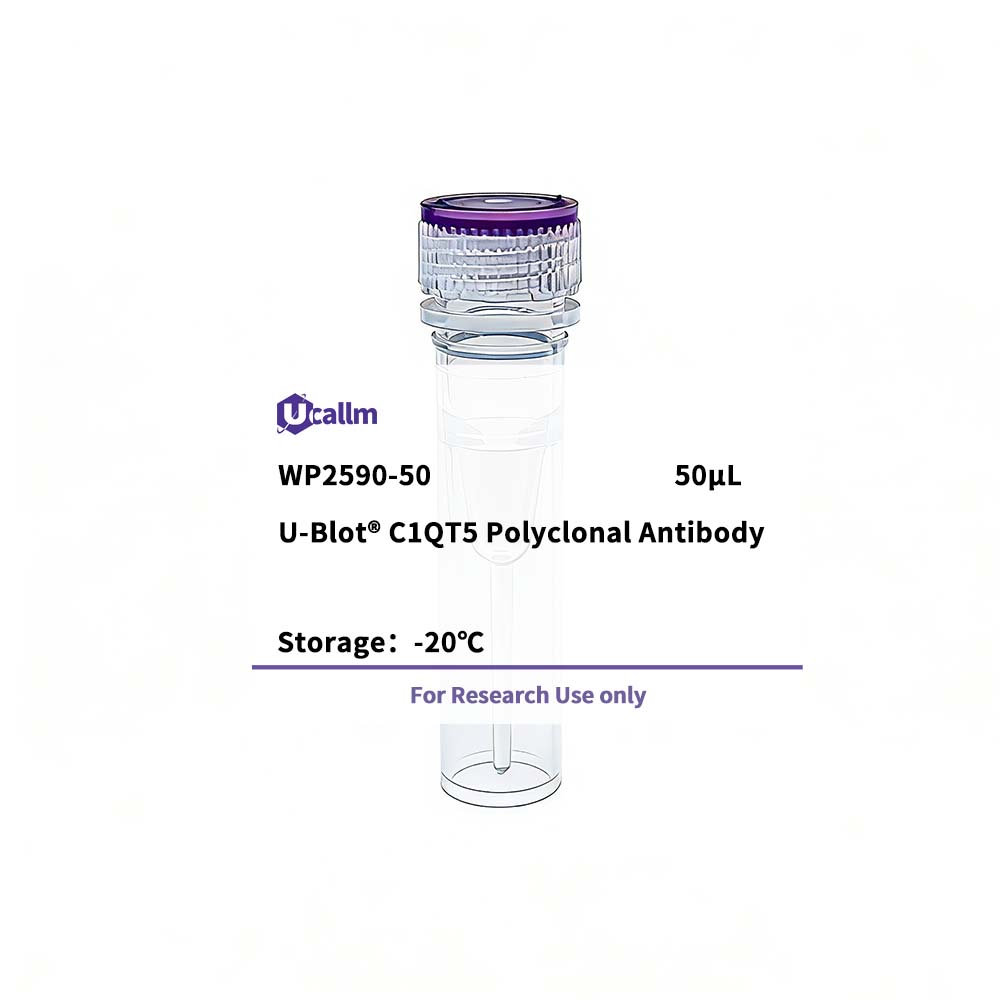
C1QT5 Polyclonal Antibody

Price range: $268.00 through $328.00

SKU: WP2590-100
Enter the quantity you would like, or drag the panel to find the quantity and price that best for you
Bulk QuoteAuthorize OEM & ODM

Product details

Background:

This gene encodes a member of a family of proteins that function as components of basement membranes and may play a role in cell adhesion. Mutations in this gene have been associated with late-onset retinal degeneration. The protein may be encoded by either a bicistronic transcript including sequence from the upstream membrane frizzled-related protein gene (MFRP), or by a monocistronic transcript expressed from an internal promoter. [provided by RefSeq, Jun 2013],

Specifications

Size50μL/100μL
TargetC1QT5
ReactivityHuman, Mouse, Rat
ApplicationsWB, ELISA
MW(Calculated)
MW(Observed)26kD
Host SpeciesRabbit
IsotypeIgG
Conjugate/ModificationUnmodified
Recommended Dilution RatioWB 1:500-2000; ELISA 1:5000-20000
FormulationLiquid in PBS containing 50% glycerol,0.5% BSA and 0.02% sodium azide.
PurificationThe antibody was affinity-purified from rabbit antiserum by affinity-chromatography using epitope-specific immunogen.
Storage-15°C to -25°C/1 year(Do not lower than -25°C)
Concentration1 mg/ml
ClonalityPolyclonal
Clone Number
ImmunogenSynthesized peptide derived from part region of human protein
SpecificityC1QT5 Polyclonal Antibody detects endogenous levels of protein.
Gene NameC1QTNF5 CTRP5 UNQ303/PRO344
Protein NameComplement C1q tumor necrosis factor-related protein 5
Other Name
SpeciesHuman
Gene ID114902
UniprotQ9BXJ0,
Species.1Mouse
Gene ID.1
Uniprot.1Q8K479,
Species.2Rat
Gene ID.2
Uniprot.2Q5FVH0
Cellular LocalizationSecreted .
Tissue ExpressionBrain,Fetal brain,Uterus,
Signaling_pathway
Research Areas
Functiondevelopmental stage:Expressed in fetal brain.,Disease:Defects in C1QTNF5 are a cause of late-onset retinal degeneration (LORD) [MIM:605670]. LORD is an autosomal dominant disorder characterized by onset in the fifth to sixth decade with night blindness and punctate yellow-white deposits in the retinal fundus, progressing to severe central and peripheral degeneration, with choroidal neovascularization and chorioretinal atrophy.,Disease:Defects in MFRP are the cause of microphthalmia MFRP-related (MCOPMFRP) [MIM:611040]. Microphthalmia is a clinically heterogeneous disorder of eye formation, ranging from small size of a single eye to complete bilateral absence of ocular tissues. Ocular abnormalities like opacities of the cornea and lens, scaring of the retina and choroid, cataract and other abnormalities like cataract may also be present. MCOPMFRP is characterized by posterior microphthalmia, retinitis pigmentosa, foveoschisis and optic disc drusen.,Disease:Defects in MFRP are the cause of nanophthalmos 2 (NNO2) [MIM:609549]. NNO2 is a rare autosomal recessive disorder of eye development characterized by extreme hyperopia and small functional eyes.,Function:May play a role in eye development.,similarity:Contains 1 C1q domain.,similarity:Contains 1 collagen-like domain.,similarity:Contains 1 FZ (frizzled) domain.,similarity:Contains 2 CUB domains.,similarity:Contains 2 LDL-receptor class A domains.,tissue specificity:Specifically expressed in brain. Strongly expressed in medulla oblongata and to a lower extent in hippocampus and corpus callosum. Expressed in keratinocytes.,
Please login to post questions
Back to Top
Product has been added to your cart