


CCR9 Polyclonal Antibody
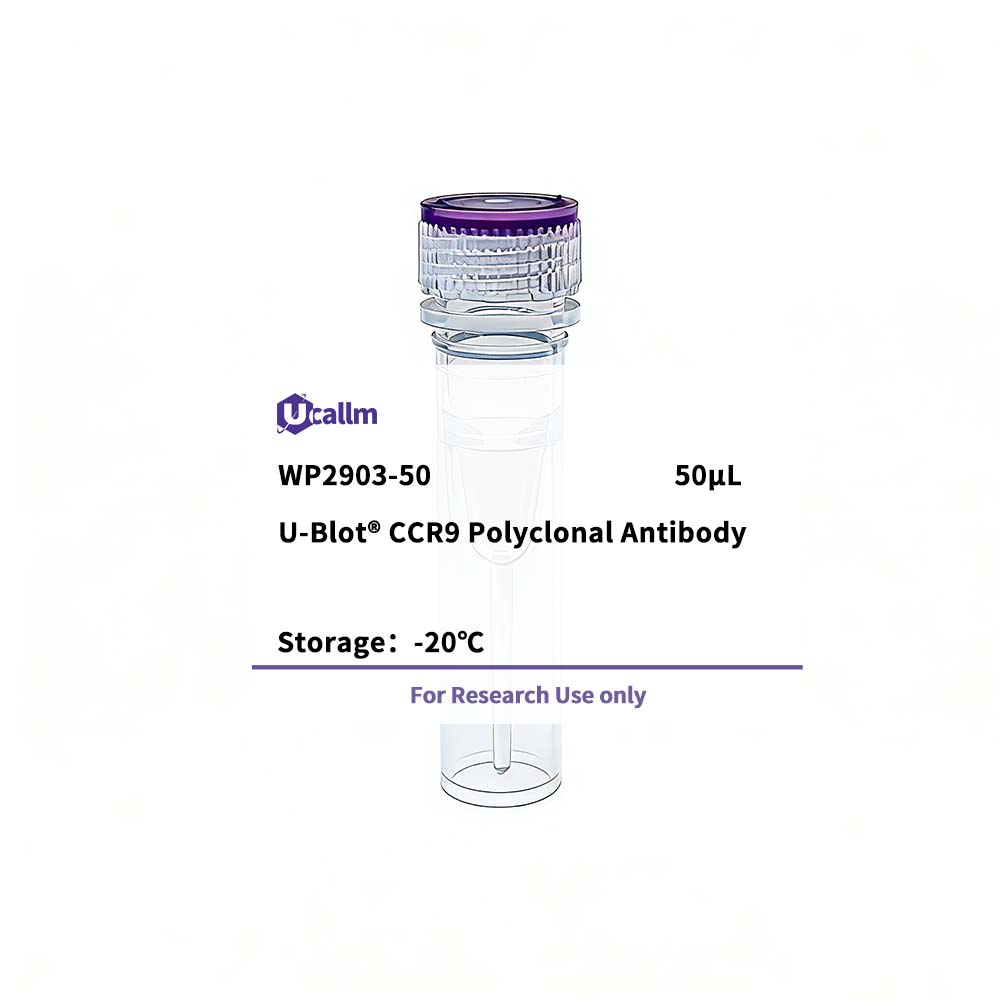
Ucallm_WP2903-50
Price range: $268.00 through $328.00
Product details
Background:
The protein encoded by this gene is a member of the beta chemokine receptor family. It is predicted to be a seven transmembrane protein similar to G protein-coupled receptors. Chemokines and their receptors are key regulators of the thymocytes migration and maturation in normal and inflammation conditions. The specific ligand of this receptor is CCL25. It has been found that this gene is differentially expressed by T lymphocytes of small intestine and colon, suggested a role in the thymocytes recruitment and development that may permit functional specialization of immune responses in different segment of the gastrointestinal tract. This gene is mapped to the chemokine receptor gene cluster region. Two alternatively spliced transcript variants have been described. Multiple transcript variants encoding different isoforms have been found for this gene. [provided by RefSeq, Jan 2012],
Specifications
| Size | 50μL/100μL |
| Target | CCR9 |
| Reactivity | Human, Mouse |
| Applications | WB, ELISA |
| MW(Calculated) | |
| MW(Observed) | 42kD |
| Host Species | Rabbit |
| Isotype | IgG |
| Conjugate/Modification | Unmodified |
| Recommended Dilution Ratio | WB 1:500-2000; ELISA 1:5000-20000 |
| Formulation | Liquid in PBS containing 50% glycerol,0.5% BSA and 0.02% sodium azide. |
| Purification | The antibody was affinity-purified from rabbit antiserum by affinity-chromatography using epitope-specific immunogen. |
| Storage | -15°C to -25°C/1 year(Do not lower than -25°C) |
| Concentration | 1 mg/ml |
| Clonality | Polyclonal |
| Clone Number | |
| Immunogen | Synthesized peptide derived from human protein . at AA range: 140-220 |
| Specificity | CCR9 Polyclonal Antibody detects endogenous levels of protein. |
| Gene Name | CCR9 GPR28 |
| Protein Name | C-C chemokine receptor type 9 (C-C CKR-9) (CC-CKR-9) (CCR-9) (G-protein coupled receptor 28) (GPR-9-6) (CD antigen CDw199) |
| Other Name | |
| Species | Human |
| Gene ID | 10803 |
| Uniprot | P51686, |
| Species.1 | Mouse |
| Gene ID.1 | |
| Uniprot.1 | Q9WUT7 |
| Species.2 | |
| Gene ID.2 | |
| Uniprot.2 | |
| Cellular Localization | Cell membrane; Multi-pass membrane protein . |
| Tissue Expression | Highly expressed in the thymus and low in lymph nodes and spleen. |
| Signaling_pathway | Organismal Systems >> Immune system >> Intestinal immune network for IgA production;Organismal Systems >> Immune system >> Chemokine signaling pathway;Environmental Information Processing >> Signaling molecules and interaction >> Cytokine-cytokine receptor interaction;Environmental Information Processing >> Signaling molecules and interaction >> Viral protein interaction with cytokine and cytokine receptor |
| Research Areas | >>Cytokine-cytokine receptor interaction; / >>Viral protein interaction with cytokine and cytokine receptor; / >>Chemokine signaling pathway; / >>Intestinal immune network for IgA production |
| Function | Function:Receptor for chemokine SCYA25/TECK. Subsequently transduces a signal by increasing the intracellular calcium ions level. Alternative coreceptor with CD4 for HIV-1 infection.,miscellaneous:EC50 of SCYA25/TECK for isoform 1 is lower than for isoform 2.,online information:CC chemokine receptors entry,similarity:Belongs to the G-protein coupled receptor 1 family.,tissue specificity:Highly expressed in the thymus and low in lymph nodes and spleen., |
Please login to post questions
Related products



