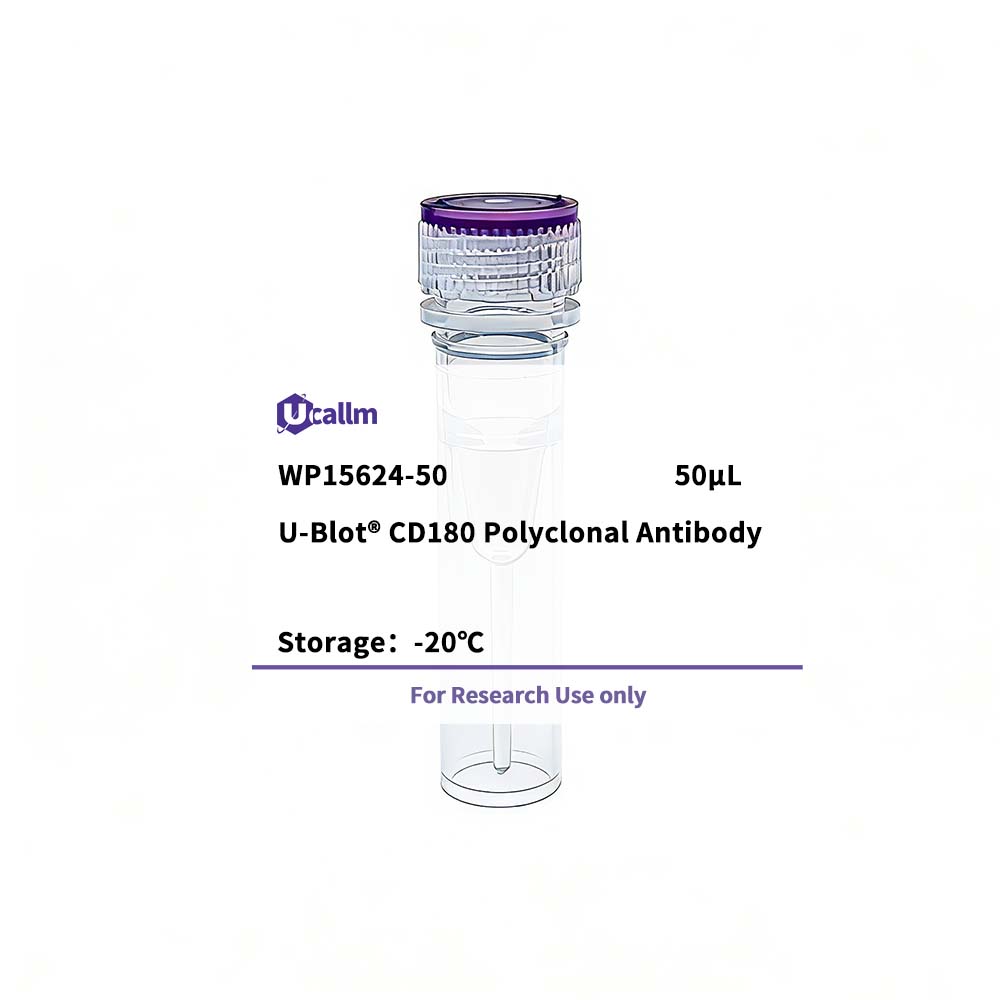
SKU: WP15624 Categories: ,

CD180 Polyclonal Antibody

Price range: $268.00 through $328.00

SKU: WP15624-100
Enter the quantity you would like, or drag the panel to find the quantity and price that best for you
Bulk QuoteAuthorize OEM & ODM

Product details

Background:

CD180 is a cell surface molecule consisting of extracellular leucine-rich repeats (LRR) and a short cytoplasmic tail. The extracellular LRR is associated with a molecule called MD-1 and form the cell surface receptor complex, RP105/MD-1. It belongs to the family of pathogen receptors, Toll-like receptors (TLR). RP105/MD1, by working in concert with TLR4, controls B cell recognition and signaling of lipopolysaccharide (LPS), a membrane constituent of Gram-negative bacteria. [provided by RefSeq, Jul 2008],

Specifications

Size50μL/100μL
TargetCD180
ReactivityHuman, Mouse, Rat
ApplicationsWB, ELISA
MW(Calculated)
MW(Observed)75kD
Host SpeciesRabbit
IsotypeIgG
Conjugate/ModificationUnmodified
Recommended Dilution RatioWB 1:500-1:2000; ELISA 1:10000; Not yet tested in other applications.
FormulationLiquid in PBS containing 50% glycerol, 0.5% BSA and 0.02% sodium azide.
PurificationThe antibody was affinity-purified from rabbit antiserum by affinity-chromatography using epitope-specific immunogen.
Storage-15°C to -25°C/1 year(Do not lower than -25°C)
Concentration1 mg/ml
ClonalityPolyclonal
Clone Number
ImmunogenSynthesized peptide derived from CD180 antigen at AA range: 221-270
SpecificityCD180 Polyclonal Antibody detects endogenous levels of CD180 protein.
Gene NameCD180
Protein NameCD180 antigen
Other NameCD180; / LY64; / RP105; / CD180 antigen; / Lymphocyte antigen 64; / Radioprotective 105 kDa protein; / CD180
SpeciesHuman
Gene ID4064
UniprotQ99467,
Species.1Mouse
Gene ID.117079
Uniprot.1Q62192
Species.2
Gene ID.2
Uniprot.2
Cellular LocalizationCell membrane; Single-pass type I membrane protein.
Tissue ExpressionExpressed mainly on mature peripherical B cells. Detected in spleen, lymph node and appendix. Not detected in pre-B and -T cells.
Signaling_pathway
Research Areas
FunctionDisease:Decreased expression of LY64 has been shown in systemic lupus erythematosus (SLE). The loss of LY64 is associated with B-cell activation and increased disease activity in SLE patients.,Function:May cooperate with MD-1 and TLR4 to mediate the innate immune response to bacterial lipopolysaccharide (LPS) in B-cells. Leads to NF-kappa-B activation. Also involved in the life/death decision of B-cells.,similarity:Belongs to the Toll-like receptor family.,similarity:Contains 17 LRR (leucine-rich) repeats.,subunit:Binds to MD-1.,tissue specificity:Expressed mainly on mature peripherical B cells. Detected in spleen, lymph node and appendix. Not detected in pre-B and -T cells.,
Please login to post questions
Back to Top
Product has been added to your cart

