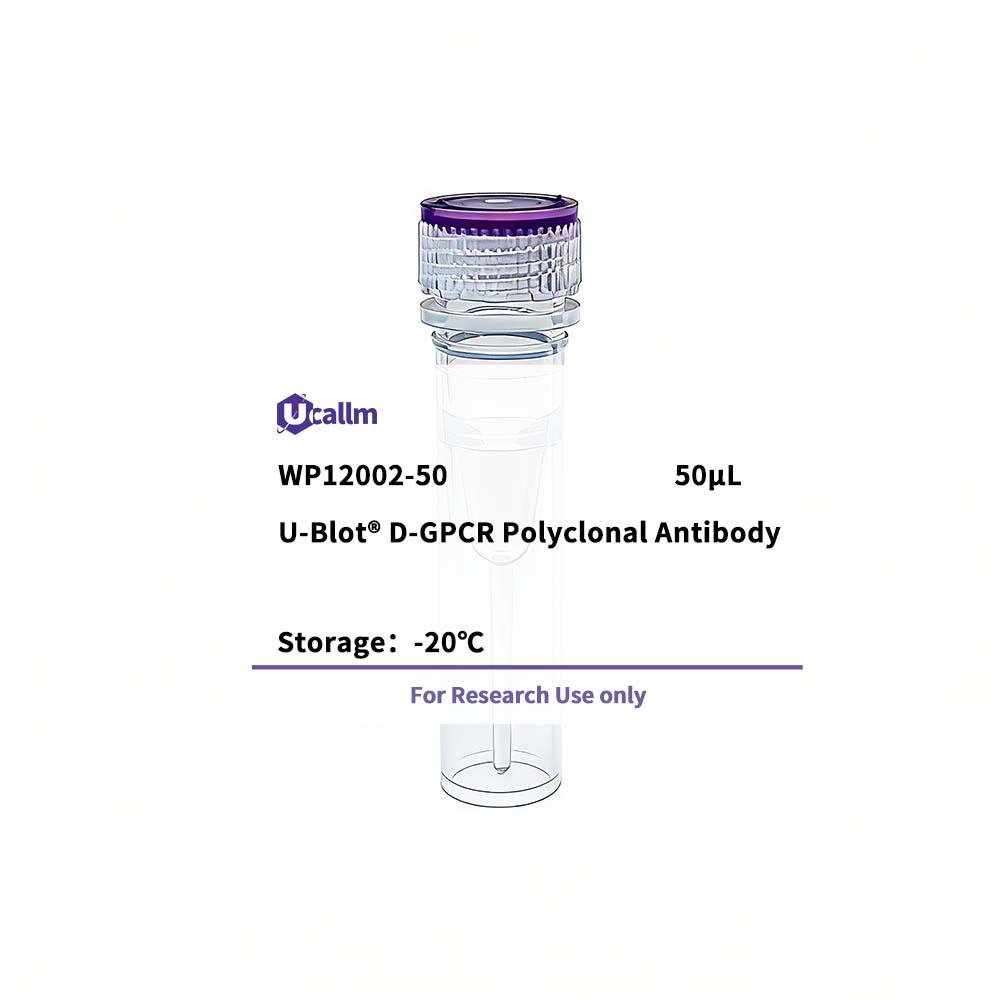
SKU: WP12002 Categories: ,

D-GPCR Polyclonal Antibody

Price range: $268.00 through $328.00

SKU: WP12002-100
Enter the quantity you would like, or drag the panel to find the quantity and price that best for you
Bulk QuoteAuthorize OEM & ODM

Product details

Background:

Olfactory receptors interact with odorant molecules in the nose, to initiate a neuronal response that triggers the perception of a smell. The olfactory receptor proteins are members of a large family of G-protein-coupled receptors (GPCR) arising from single coding-exon genes. Olfactory receptors share a 7-transmembrane domain structure with many neurotransmitter and hormone receptors and are responsible for the recognition and G protein-mediated transduction of odorant signals. The olfactory receptor gene family is the largest in the genome. The nomenclature assigned to the olfactory receptor genes and proteins for this organism is independent of other organisms. [provided by RefSeq, Jul 2008],

Specifications

Size50μL/100μL
TargetD-GPCR
ReactivityHuman
ApplicationsWB, IF, ELISA
MW(Calculated)
MW(Observed)35kD
Host SpeciesRabbit
IsotypeIgG
Conjugate/ModificationUnmodified
Recommended Dilution RatioWB 1:500-1:2000; IF 1:200-1:1000; ELISA 1:20000; Not yet tested in other applications.
FormulationLiquid in PBS containing 50% glycerol, 0.5% BSA and 0.02% sodium azide.
PurificationThe antibody was affinity-purified from rabbit antiserum by affinity-chromatography using epitope-specific immunogen.
Storage-15°C to -25°C/1 year(Do not lower than -25°C)
Concentration1 mg/ml
ClonalityPolyclonal
Clone Number
ImmunogenThe antiserum was produced against synthesized peptide derived from human OR51E1. AA range:241-290
SpecificityD-GPCR Polyclonal Antibody detects endogenous levels of D-GPCR protein.
Gene NameOR51E1
Protein NameOlfactory receptor 51E1
Other NameOR51E1; / GPR164; / OR51E1P; / OR52A3P; / POGR; / PSGR2; / Olfactory receptor 51E1; / D-GPCR; / G-protein coupled receptor 164; / Olfactory receptor 52A3; / Prostate-overexpressed G protein-coupled receptor; / Prostate-specific G protein-coupled receptor 2
SpeciesHuman
Gene ID143503
UniprotQ8TCB6
Species.1
Gene ID.1
Uniprot.1
Species.2
Gene ID.2
Uniprot.2
Cellular LocalizationCell membrane; Multi-pass membrane protein .
Tissue ExpressionHighly expressed in prostate. Very low levels may be detected in some other tissues, such as placenta, skeletal muscle, heart, ovary and testis. Up-regulated in prostate cancers.
Signaling_pathway
Research Areas>>Olfactory transduction
FunctionFunction:Odorant receptor .,similarity:Belongs to the G-protein coupled receptor 1 family.,tissue specificity:Highly expressed in prostate. Very low levels may be detected in some other tissues, such as placenta, skeletal muscle, heart, ovary and testis. Up-regulated in prostate cancers.,
Please login to post questions
Back to Top
Product has been added to your cart

