


Digoxin Monoclonal Antibody [4F6]
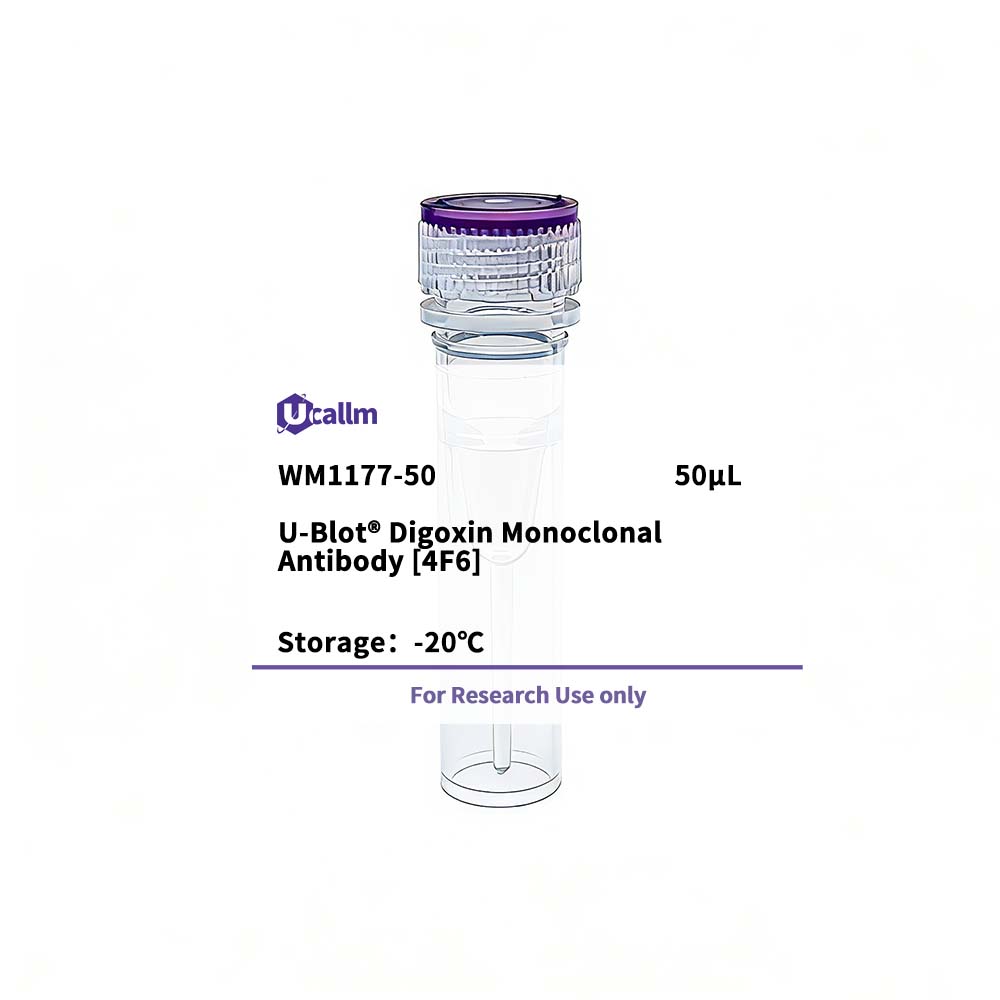
Ucallm_WM1177-50
Price range: $268.00 through $328.00
Product details
Background:
The most common indications for digoxin are atrial fibrillation and atrial flutter with rapid ventricular response, though beta blockers and/or calcium channel blockers are a better first choice. There is tentative evidence that digoxin may increase the risk of death, though another meta-analysis reports no change in mortality. High ventricular rate leads to insufficient diastolic filling time. By slowing down the conduction in the AV node and increasing its refractory period, digoxin can reduce the ventricular rate. The arrhythmia itself is not affected, but the pumping function of the heart improves, owing to improved filling.
Specifications
| Size | 50μL/100μL |
| Target | Digoxin |
| Reactivity | |
| Applications | ELISA |
| MW(Calculated) | |
| MW(Observed) | |
| Host Species | Mouse |
| Isotype | |
| Conjugate/Modification | Unmodified |
| Recommended Dilution Ratio | ELISA 1:10000 |
| Formulation | Liquid in PBS containing 50% glycerol, 0.5% BSA and 0.02% sodium azide. |
| Purification | The antibody was affinity-purified from mouse ascites by affinity-chromatography using specific immunogen. |
| Storage | -15°C to -25°C/1 year(Do not lower than -25°C) |
| Concentration | 1 mg/ml |
| Clonality | Monoclonal |
| Clone Number | 4F6 |
| Immunogen | Digoxin |
| Specificity | |
| Gene Name | |
| Protein Name | |
| Other Name | |
| Species | |
| Gene ID | |
| Uniprot | |
| Species.1 | |
| Gene ID.1 | |
| Uniprot.1 | |
| Species.2 | |
| Gene ID.2 | |
| Uniprot.2 | |
| Cellular Localization | |
| Tissue Expression | |
| Signaling_pathway | |
| Research Areas | |
| Function |
Please login to post questions
Related products





