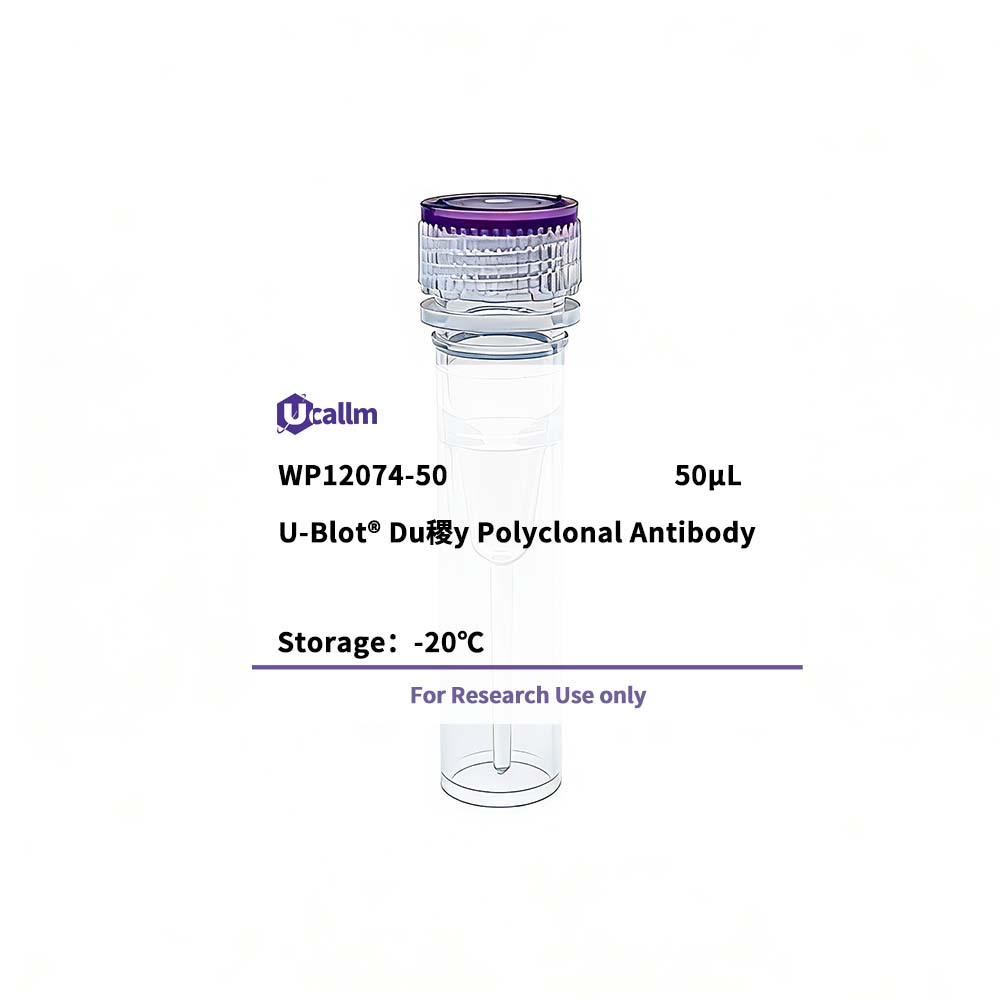
SKU: WP12074 Categories: ,

Duffy Polyclonal Antibody

Price range: $268.00 through $328.00

SKU: WP12074-100
Enter the quantity you would like, or drag the panel to find the quantity and price that best for you
Bulk QuoteAuthorize OEM & ODM

Product details

Background:

The protein encoded by this gene is a glycosylated membrane protein and a non-specific receptor for several chemokines. The encoded protein is the receptor for the human malarial parasites Plasmodium vivax and Plasmodium knowlesi. Polymorphisms in this gene are the basis of the Duffy blood group system. Two transcript variants encoding different isoforms have been found for this gene. [provided by RefSeq, Jul 2008],


Specifications

Size50μL/100μL
TargetDuffy
ReactivityHuman, Mouse
ApplicationsIF, ELISA
MW(Calculated)36kD
MW(Observed)
Host SpeciesRabbit
IsotypeIgG
Conjugate/ModificationUnmodified
Recommended Dilution RatioIF 1:200-1:1000; ELISA 1:40000; Not yet tested in other applications;
FormulationLiquid in PBS containing 50% glycerol, 0.5% BSA and 0.02% sodium azide.
PurificationThe antibody was affinity-purified from rabbit antiserum by affinity-chromatography using epitope-specific immunogen.
Storage-15°C to -25°C/1 year(Do not lower than -25°C)
Concentration1 mg/ml
ClonalityPolyclonal
Clone Number
ImmunogenThe antiserum was produced against synthesized peptide derived from human DARC. AA range:1-50
SpecificityDuffy Polyclonal Antibody detects endogenous levels of Duffy protein.
Gene NameDARC
Protein NameDuffy antigen/chemokine receptor
Other NameDARC; / FY; / GPD; / Duffy antigen/chemokine receptor; / Fy glycoprotein; / GpFy; / Glycoprotein D; / Plasmodium vivax receptor; / CD antigen CD234
SpeciesHuman
Gene ID2532
UniprotQ16570,
Species.1Mouse
Gene ID.1
Uniprot.1Q9QUI6
Species.2
Gene ID.2
Uniprot.2
Cellular LocalizationEarly endosome. Recycling endosome. Membrane; Multi-pass membrane protein. Predominantly localizes to endocytic vesicles, and upon stimulation by the ligand is internalized via caveolae. Once internalized, the ligand dissociates from the receptor, and is targeted to degradation while the receptor is recycled back to the cell membrane.
Tissue ExpressionFound in adult kidney, adult spleen, bone marrow and fetal liver. In particular, it is expressed along postcapillary venules throughout the body, except in the adult liver. Erythroid cells and postcapillary venule endothelium are the principle tissues expressing duffy. Fy(-A-B) individuals do not express duffy in the bone marrow, however they do, in postcapillary venule endothelium.
Signaling_pathway
Research Areas>>Malaria
FunctionDisease:Individuals that do not produce the Duffy antigen (FY(A-B-)) are more resistant to vivax malaria. This allele is found predominantly in population of African origin.,Function:Non-specific receptor for many chemokines such as IL-8, GRO, RANTES, MCP-1 and TARC. It is also the receptor for the human malaria parasites Plasmodium vivax and Plasmodium knowlesi.,online information:Blood group antigen gene mutation database,online information:Duffy antigen entry,polymorphism:DARC is responsible for the Duffy blood group system. The molecular basis of the Fy(A)=Fy1/Fy(B)=Fy2 blood group antigens is a single variation in position 42; Gly-42 corresponds to Fy(A) and Asp-42 to Fy(B).,polymorphism:Genetic variation in DARC is associated with white blood cell count quantitative trait locus type 1 (WBCQ1) [MIM:611862]. Peripheral white blood cell count (WBC) is a common clinical measurement, used to determine evidence of acute infammation or infection. Peripheral WBC is the sum of several cell types including neutrophils and lymphocytes, which are the most common types of WBC, as well as less common cell types such as eosinophils, basophils, and monocytes. Elevated WBC has been associated with risk of coronary heart disease, cancer, and all-cause mortality. White blood cell levels have widespread clinical applications including assessment of patients undergoing chemotherapy and evaluation of infection.,similarity:Belongs to the G-protein coupled receptor Duffy family.,tissue specificity:Found in adult kidney, adult spleen, bone marrow and fetal liver. In particular, it is expressed along postcapillary venules throughout the body, except in the adult liver. Erythroid cells and postcapillary venule endothelium are the principle tissues expressing duffy. Fy(-A-B) individuals do not express duffy in the bone marrow, however they do, in postcapillary venule endothelium.,
Please login to post questions
Back to Top
Product has been added to your cart

