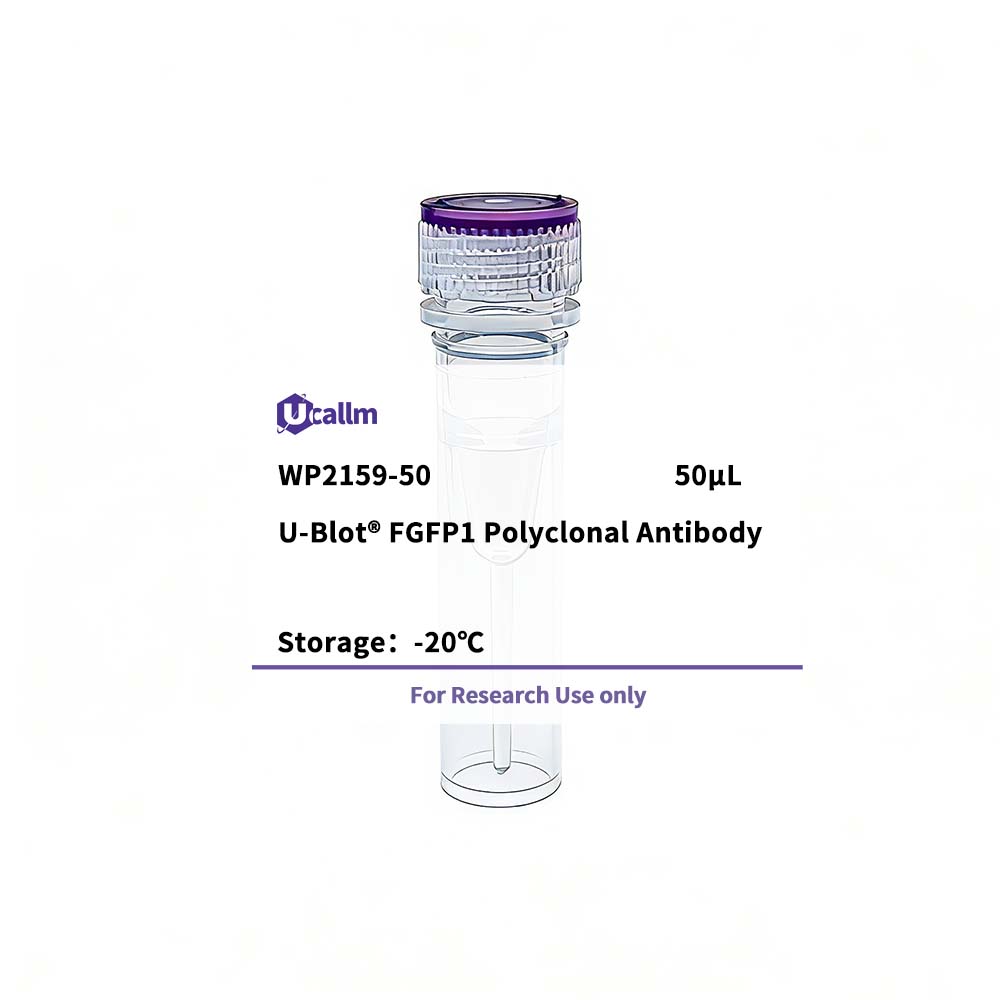
SKU: WP2159 Categories: ,

FGFP1 Polyclonal Antibody

Price range: $268.00 through $328.00

SKU: WP2159-100
Enter the quantity you would like, or drag the panel to find the quantity and price that best for you
Bulk QuoteAuthorize OEM & ODM

Product details

Background:

This gene encodes a secreted fibroblast growth factor carrier protein. The encoded protein plays a critical role in cell proliferation, differentiation and migration by binding to fibroblast growth factors and potentiating their biological effects on target cells. The encoded protein may also play a role in tumor growth as an angiogenic switch molecule, and expression of this gene has been associated with several types of cancer including pancreatic and colorectal adenocarcinoma. A pseudogene of this gene is also located on the short arm of chromosome 4. [provided by RefSeq, Nov 2011],

Specifications

Size50μL/100μL
TargetFGFP1
ReactivityHuman, Mouse, Rat
ApplicationsWB, ELISA
MW(Calculated)
MW(Observed)25kD
Host SpeciesRabbit
IsotypeIgG
Conjugate/ModificationUnmodified
Recommended Dilution RatioWB 1:500-2000; ELISA 1:5000-20000
FormulationLiquid in PBS containing 50% glycerol,0.5% BSA and 0.02% sodium azide.
PurificationThe antibody was affinity-purified from rabbit antiserum by affinity-chromatography using epitope-specific immunogen.
Storage-15°C to -25°C/1 year(Do not lower than -25°C)
Concentration1 mg/ml
ClonalityPolyclonal
Clone Number
ImmunogenSynthesized peptide derived from human protein . at AA range: 110-190
SpecificityFGFP1 Polyclonal Antibody detects endogenous levels of protein.
Gene NameFGFBP1 FGFBP HBP17
Protein NameFibroblast growth factor-binding protein 1 (FGF-BP) (FGF-BP1) (FGF-binding protein 1) (FGFBP-1) (17 kDa heparin-binding growth factor-binding protein) (17 kDa HBGF-binding protein) (HBp17)
Other Name
SpeciesHuman
Gene ID9982
UniprotQ14512,
Species.1Mouse
Gene ID.1
Uniprot.1O70514,
Species.2Rat
Gene ID.2
Uniprot.2Q9QY10
Cellular LocalizationSecreted, extracellular space . Cell membrane; Peripheral membrane protein . Extracellular and plasma membrane-associated. Colocalizes with HSPG2 in the pericellular environment of squamous cell carcinomas. .
Tissue ExpressionExpressed in the suprabasal region of the epidermis, in hair follicles, the basement membrane at the dermo-epidermal junction (occasionally extending into the basement membrane of dermal blood vessels), wounded skin and several invasive squamous cell carcinomas (at protein level). Expressed in normal and wounded skin and various squamous cell carcinomas.
Signaling_pathway
Research Areas
FunctionFunction:Acts as a carrier protein that release fibroblast-binding factors (FGFs) from the extracellular matrix (EM) storage and thus enhance the mitogenic activity of FGFs. Enhances FGF2 signaling during tissue repair, angiogenesis and in tumor growth.,induction:Up-regulated in epithelial cells after skin injury. Keratinocyte mitogens.,miscellaneous:Expression is significantly up-regulated in carcinogen-induced skin tumors, various squamous cell carcinomas, some colon cancer cell lines and tumors.,similarity:Belongs to the fibroblast growth factor-binding protein family.,subcellular location:Extracellular and plasma membrane-associated. Colocalizes with HSPG2 in the pericellular environment of squamous cell carcinomas.,subunit:Found in a complex with FGFBP1, FGF1 and FGF2. Interacts with FGF1, FGF2, FGF7, FGF10, FGF22 and HSPG2.,tissue specificity:Expressed in the suprabasal region of the epidermis, in hair follicles, the basement membrane at the dermo-epidermal junction (occasionally extending into the basement membrane of dermal blood vessels), wounded skin and several invasive squamous cell carcinomas (at protein level). Expressed in normal and wounded skin and various squamous cell carcinomas.,
Please login to post questions
Back to Top
Product has been added to your cart

