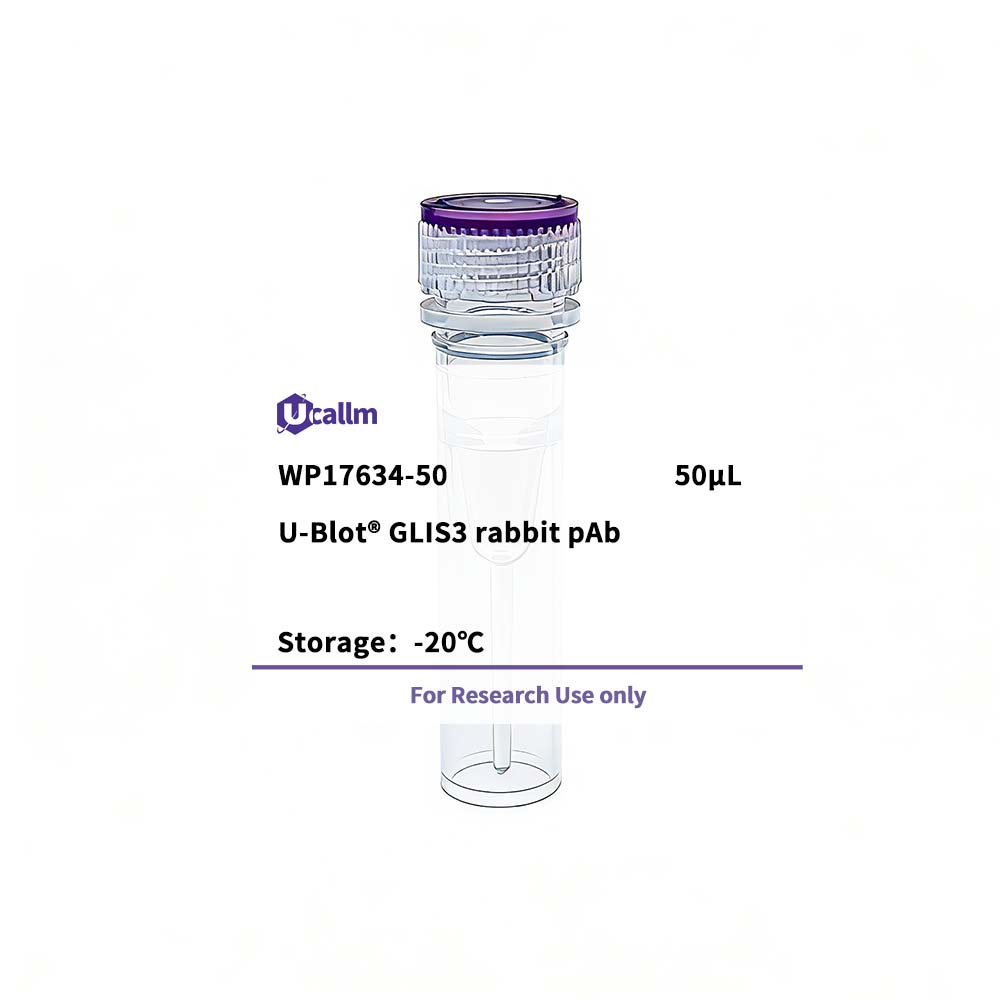
SKU: WP17634 Categories: ,

GLIS3 rabbit pAb

Price range: $268.00 through $328.00

SKU: WP17634-100
Enter the quantity you would like, or drag the panel to find the quantity and price that best for you
Bulk QuoteAuthorize OEM & ODM

Product details

Background:

This gene is a member of the GLI-similar zinc finger protein family and encodes a nuclear protein with five C2H2-type zinc finger domains. This protein functions as both a repressor and activator of transcription and is specifically involved in the development of pancreatic beta cells, the thyroid, eye, liver and kidney. Mutations in this gene have been associated with neonatal diabetes and congenital hypothyroidism (NDH). Alternatively spliced variants that encode different protein isoforms have been described but the full-length nature of only two have been determined. [provided by RefSeq, Jul 2008],


Specifications

Size50μL/100μL
TargetGLIS3
ReactivityHuman, Mouse
ApplicationsWB
MW(Calculated)85kD
MW(Observed)
Host SpeciesRabbit
IsotypeIgG
Conjugate/ModificationUnmodified
Recommended Dilution RatioWB 1:500-2000
FormulationLiquid in PBS containing 50% glycerol, 0.5% BSA and 0.02% sodium azide.
PurificationThe antibody was affinity-purified from rabbit antiserum by affinity-chromatography using epitope-specific immunogen.
Storage-15°C to -25°C/1 year(Do not lower than -25°C)
Concentration1 mg/ml
ClonalityPolyclonal
Clone Number
ImmunogenSynthesized peptide derived from human GLIS3 AA range: 381-431
SpecificityThis antibody detects endogenous levels of GLIS3 at Human/Mouse
Gene NameGLIS3 ZNF515
Protein NameGLIS3
Other Name
SpeciesHuman
Gene ID169792
UniprotQ8NEA6,
Species.1Mouse
Gene ID.1
Uniprot.1Q6XP49
Species.2
Gene ID.2
Uniprot.2
Cellular LocalizationNucleus .
Tissue ExpressionIn the adult, expressed at high levels in the kidney and at lower levels in the brain, skeletal muscle, pancreas, liver, lung, thymus and ovary.
Signaling_pathway
Research Areas
FunctionDisease:Defects in GLIS3 are a cause of NDH syndrome [MIM:610199]; also called neonatal diabetes mellitus with congenital hypothyroidism. NDH syndrome is a new neonatal diabetes syndrome associated with congenital hypothyroidism, congenital glaucoma, hepatic fibrosis and polycystic kidneys.,Function:Acts as both a repressor and activator of transcription. Binds to the consensus sequence 5'-GACCACCCAC-3'.,similarity:Belongs to the GLI C2H2-type zinc-finger protein family.,similarity:Contains 5 C2H2-type zinc fingers.,tissue specificity:In the adult, expressed at high levels in the kidney and at lower levels in the brain, skeletal muscle, pancreas, liver, lung, thymus and ovary.,
Please login to post questions
Back to Top
Product has been added to your cart

