SKU: WR4300 Categories: ,

U-Blot® HMGB1 Rabbit mAb

Price range: $268.00 through $328.00

SKU: WR4300-50
Enter the quantity you would like, or drag the panel to find the quantity and price that best for you
Bulk QuoteAuthorize OEM & ODM

Product details

Background:high mobility group box 1(HMGB1) Homo sapiens This gene encodes a protein that belongs to the High Mobility Group-box superfamily. The encoded non-histone, nuclear DNA-binding protein regulates transcription, and is involved in organization of DNA. This protein plays a role in several cellular processes, including inflammation, cell differentiation and tumor cell migration. Multiple pseudogenes of this gene have been identified. Alternative splicing results in multiple transcript variants that encode the same protein. [provided by RefSeq, Sep 2015],

Specifications

Size50μL/100μL
TargetHMGB1
ReactivityHuman, Mouse, Rat
ApplicationsWB, IHC, IF, ELISA
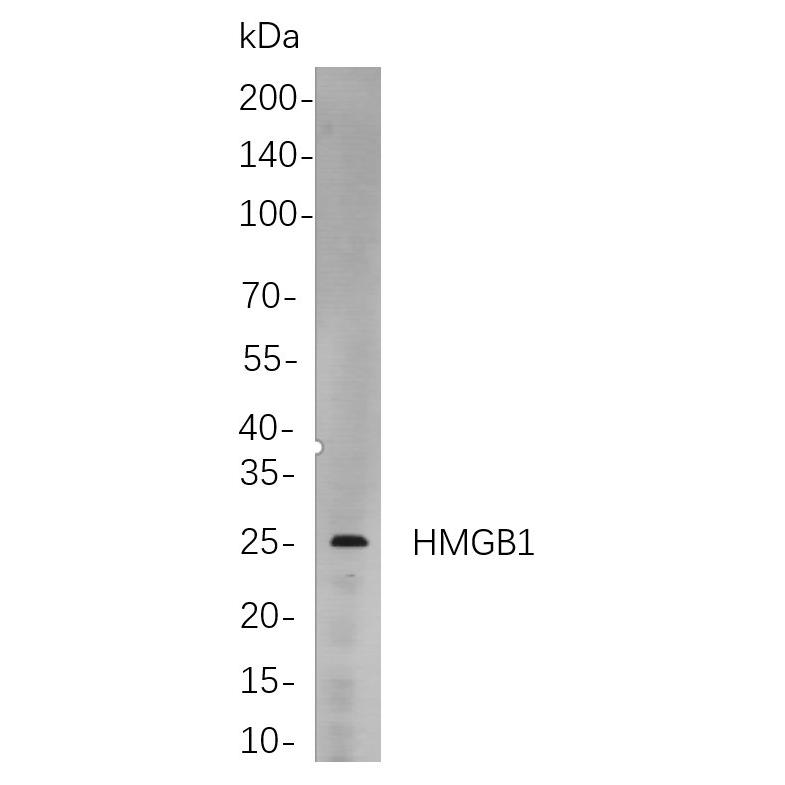
MW(Calculated)25kD
MW(Observed)25kD
Host SpeciesRabbit
IsotypeIgG,Kappa
Conjugate/ModificationUnmodified
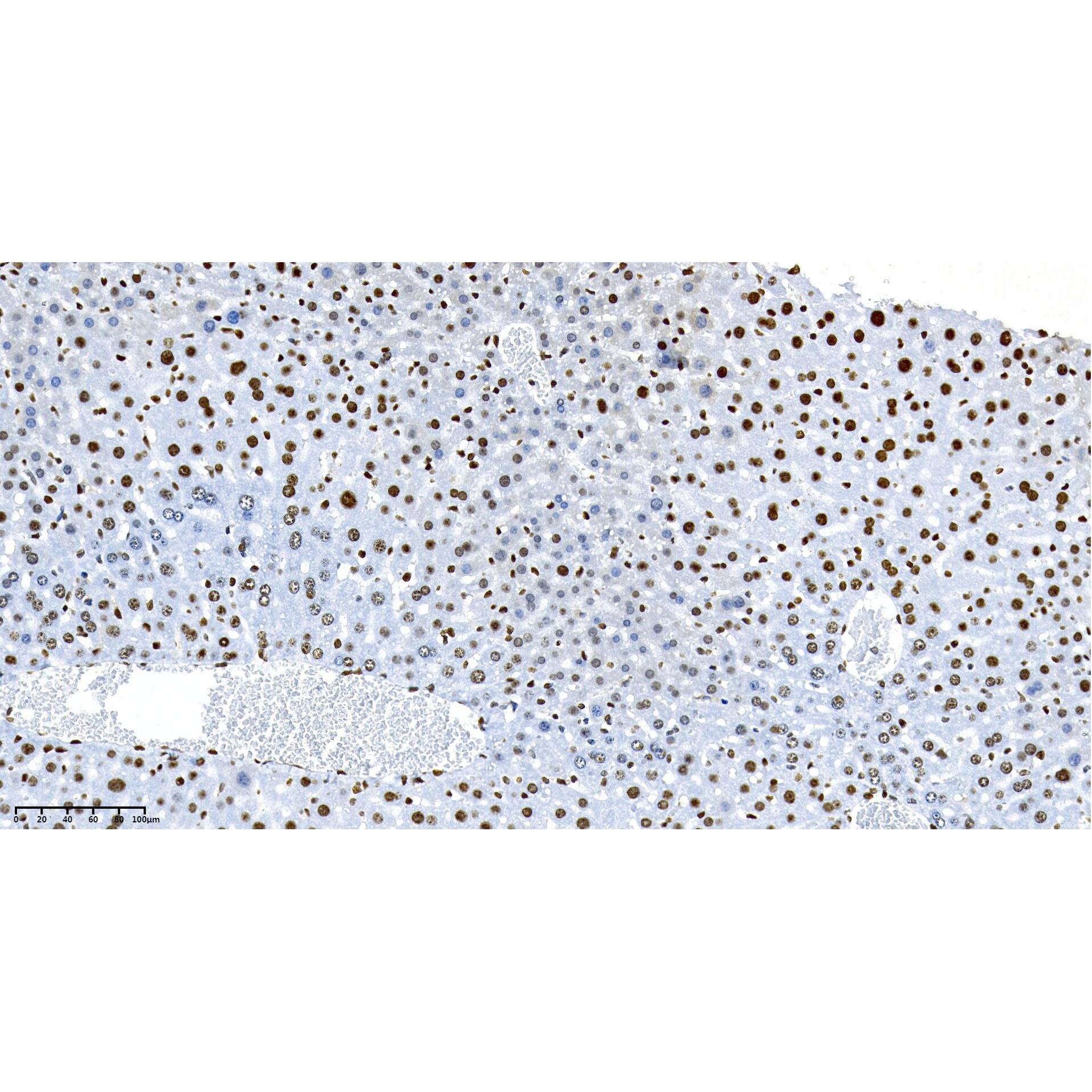
Recommended Dilution RatioIHC 1:2000-1:10000; WB 1:5000-1:10000; IF 1:200-1:1000; ELISA 1:5000-1:20000; / Note: For IHC, we suggest antigen retrieval with TE buffer pH 9.0 (Cat#WT1004)
FormulationPBS, 50% glycerol, 0.05% Proclin 300, 0.05%BSA
PurificationRecombinant Antibody expressed in animal component-free (ACF) media, purified via Protein A affinity chromatography.
Storage-15°C to -25°C/1 year(Do not lower than -25°C)
Concentration
ClonalityMonoclonal
Clone NumberRM0499R
ImmunogenThe specific immunogen used to produce this antibody is proprietary information.
SpecificityEndogenous
Gene NameHMGB1 HMG1
Protein NameHigh mobility group protein B1 (High mobility group protein 1) (HMG-1)
Other NameHigh mobility group protein B1 (High mobility group protein 1) (HMG-1)
SpeciesHuman
Gene ID3146
UniprotP09429,
Species.1Mouse
Gene ID.1100862258
Uniprot.1P63158,
Species.2Rat
Gene ID.225459
Uniprot.2P63159
Cellular LocalizationNucleus
Tissue ExpressionUbiquitous. Expressed in platelets (PubMed:11154118).
Signaling_pathwayCellular Processes >> Transport and catabolism >> Autophagy - animal;Cellular Processes >> Cell growth and death >> Necroptosis;Organismal Systems >> Immune system >> Neutrophil extracellular trap formation
Research Areas>>Base excision repair; / >>Autophagy - animal; / >>Necroptosis; / >>Neutrophil extracellular trap formation
FunctionFunction:Binds preferentially single-stranded DNA and unwinds double stranded DNA.,similarity:Belongs to the HMGB family.,similarity:Contains 2 HMG box DNA-binding domains.,
Please login to post questions

Back to Top
Product has been added to your cart
