SKU: WP15292 Categories: ,

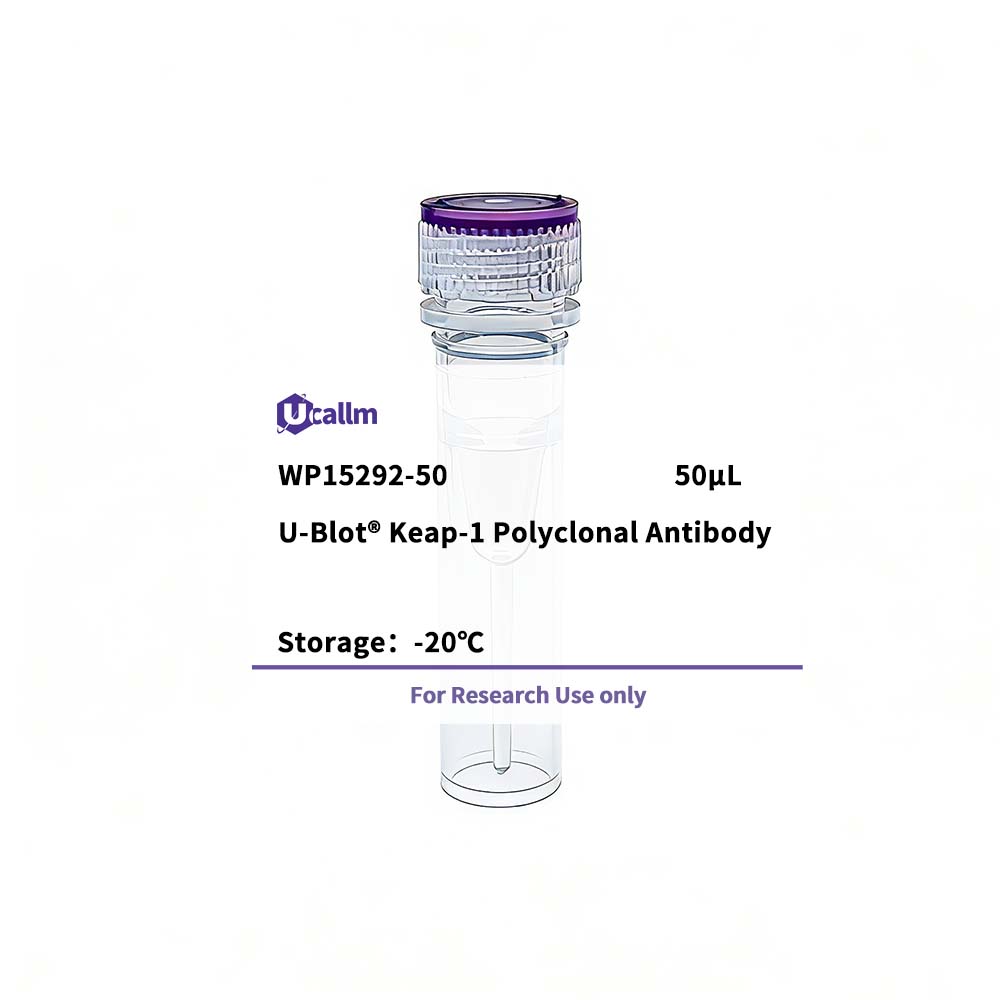
Keap-1 Polyclonal Antibody

Price range: $268.00 through $328.00

SKU: WP15292-100
Enter the quantity you would like, or drag the panel to find the quantity and price that best for you
Bulk QuoteAuthorize OEM & ODM

Product details

Background:

This gene encodes a protein containing KELCH-1 like domains, as well as a BTB/POZ domain. Kelch-like ECH-associated protein 1 interacts with NF-E2-related factor 2 in a redox-sensitive manner and the dissociation of the proteins in the cytoplasm is followed by transportation of NF-E2-related factor 2 to the nucleus. This interaction results in the expression of the catalytic subunit of gamma-glutamylcysteine synthetase. Two alternatively spliced transcript variants encoding the same isoform have been found for this gene. [provided by RefSeq, Jul 2008],

Specifications

Size50μL/100μL
TargetKeap1
ReactivityHuman, Mouse, Rat
ApplicationsWB, IHC, IF, ELISA
MW(Calculated)
MW(Observed)70kD
Host SpeciesRabbit
IsotypeIgG
Conjugate/ModificationUnmodified
Recommended Dilution RatioWB 1:500-1:2000; IHC: 1:100-300; ELISA 1:20000; IF 1:50-200 / Note: For IHC, we suggest antigen retrieval with TE buffer pH 9.0 (Cat#WT1004)
FormulationLiquid in PBS containing 50% glycerol, 0.5% BSA and 0.02% sodium azide.
PurificationThe antibody was affinity-purified from rabbit antiserum by affinity-chromatography using epitope-specific immunogen.
Storage-15°C to -25°C/1 year(Do not lower than -25°C)
Concentration1 mg/ml
ClonalityPolyclonal
Clone Number
ImmunogenThe antiserum was produced against synthesized peptide derived from the Internal region of human KEAP1. AA range:411-460
SpecificityKeap1 Polyclonal Antibody detects endogenous levels of Keap1 protein.
Gene NameKEAP1 INRF2 KIAA0132 KLHL19
Protein NameKelch-like ECH-associated protein 1
Other NameKEAP1; / INRF2; / KIAA0132; / KLHL19; / Kelch-like ECH-associated protein 1; / Cytosolic inhibitor of Nrf2; / INrf2; / Kelch-like protein 19
SpeciesHuman
Gene ID9817
UniprotQ14145,
Species.1Mouse
Gene ID.150868
Uniprot.1Q9Z2X8,
Species.2Rat
Gene ID.2117519
Uniprot.2P57790
Cellular LocalizationCytoplasm . Nucleus . Mainly cytoplasmic (PubMed:15601839). In response to selective autophagy, relocalizes to inclusion bodies following interaction with SQSTM1/p62 (PubMed:20452972). .
Tissue ExpressionBroadly expressed, with highest levels in skeletal muscle.
Signaling_pathwayHuman Diseases >> Cancer: overview >> Pathways in cancer;Human Diseases >> Cancer: specific types >> Hepatocellular carcinoma;Human Diseases >> Neurodegenerative disease >> Parkinson disease
Research Areas>>Ubiquitin mediated proteolysis; / >>Parkinson disease; / >>Pathways in cancer; / >>Chemical carcinogenesis - reactive oxygen species; / >>Hepatocellular carcinoma; / >>Fluid shear stress and atherosclerosis
FunctionDisease:Defects in KEAP1 may be a cause of breast cancer.,Disease:Defects in KEAP1 may be involved in non small cell lung carcinomas (NSCLC) and lung adenocarcinoma.,Domain:The Kelch repeats mediate interaction with NF2L2/NRF2, BPTF and PGAM5.,enzyme regulation:Ubiquitination and subsequent degradation of PGAM5 is inhibited by oxidative stress and sulforaphane.,Function:Retains NFE2L2/NRF2 in the cytosol. Functions as substrate adapter protein for the E3 ubiquitin ligase complex formed by CUL3 and RBX1. Targets NFE2L2/NRF2 for ubiquitination and degradation by the proteasome, thus resulting in the suppression of its transcriptional activity and the repression of antioxidant response element-mediated detoxifying enzyme gene expression. May also retain BPTF in the cytosol. Targets PGAM5 for ubiquitination and degradation by the proteasome.,PTM:Ubiquitinated and subject to proteasomal degradation.,similarity:Contains 1 BACK (BTB/Kelch associated) domain.,similarity:Contains 1 BTB (POZ) domain.,similarity:Contains 6 Kelch repeats.,subcellular location:Shuttles between cytoplasm and nucleus.,subunit:Homodimer. Interacts with the N-terminal regulatory domain of NF2L2/NRF2. Interacts with BPTF and PTMA. Interacts with CUL3. Part of a complex that contains KEAP1, CUL3 and RBX1. Interacts with PGAM5.,tissue specificity:Broadly expressed, with highest levels in skeletal muscle.,
Please login to post questions
Back to Top
Product has been added to your cart

