SKU: WR4052 Categories: ,

U-Blot® LC3A Rabbit mAb

Price range: $268.00 through $328.00

SKU: WR4052-50
Enter the quantity you would like, or drag the panel to find the quantity and price that best for you
Bulk QuoteAuthorize OEM & ODM

Product details

Background:MAP1A and MAP1B are microtubule-associated proteins which mediate the physical interactions between microtubules and components of the cytoskeleton. MAP1A and MAP1B each consist of a heavy chain subunit and multiple light chain subunits. The protein encoded by this gene is one of the light chain subunits and can associate with either MAP1A or MAP1B. Two transcript variants encoding different isoforms have been found for this gene. The expression of variant 1 is suppressed in many tumor cell lines, suggesting that may be involved in carcinogenesis. [provided by RefSeq, Feb 2012],

Specifications

Size50μL/100μL
TargetLC3A
ReactivityHuman, Mouse, Rat
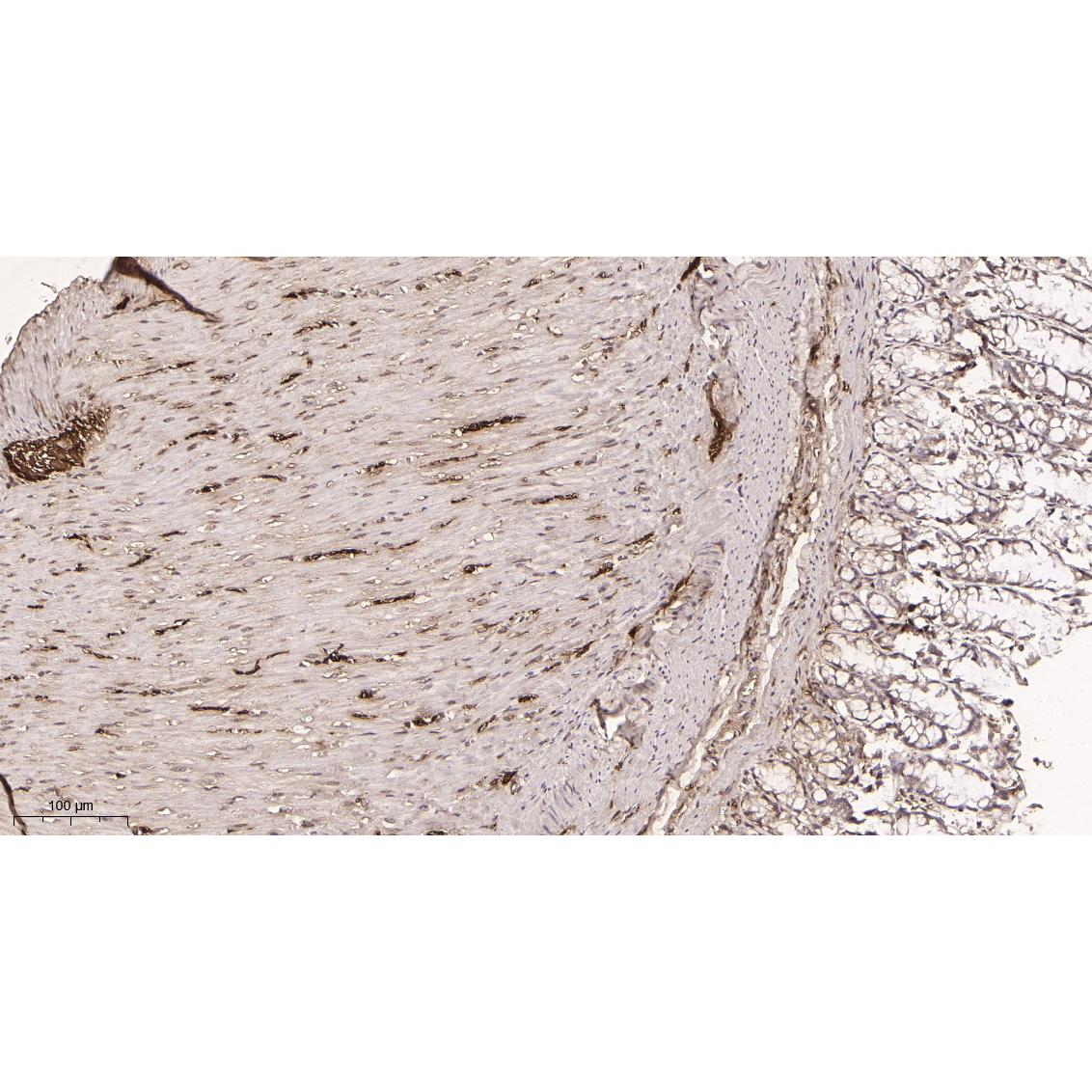
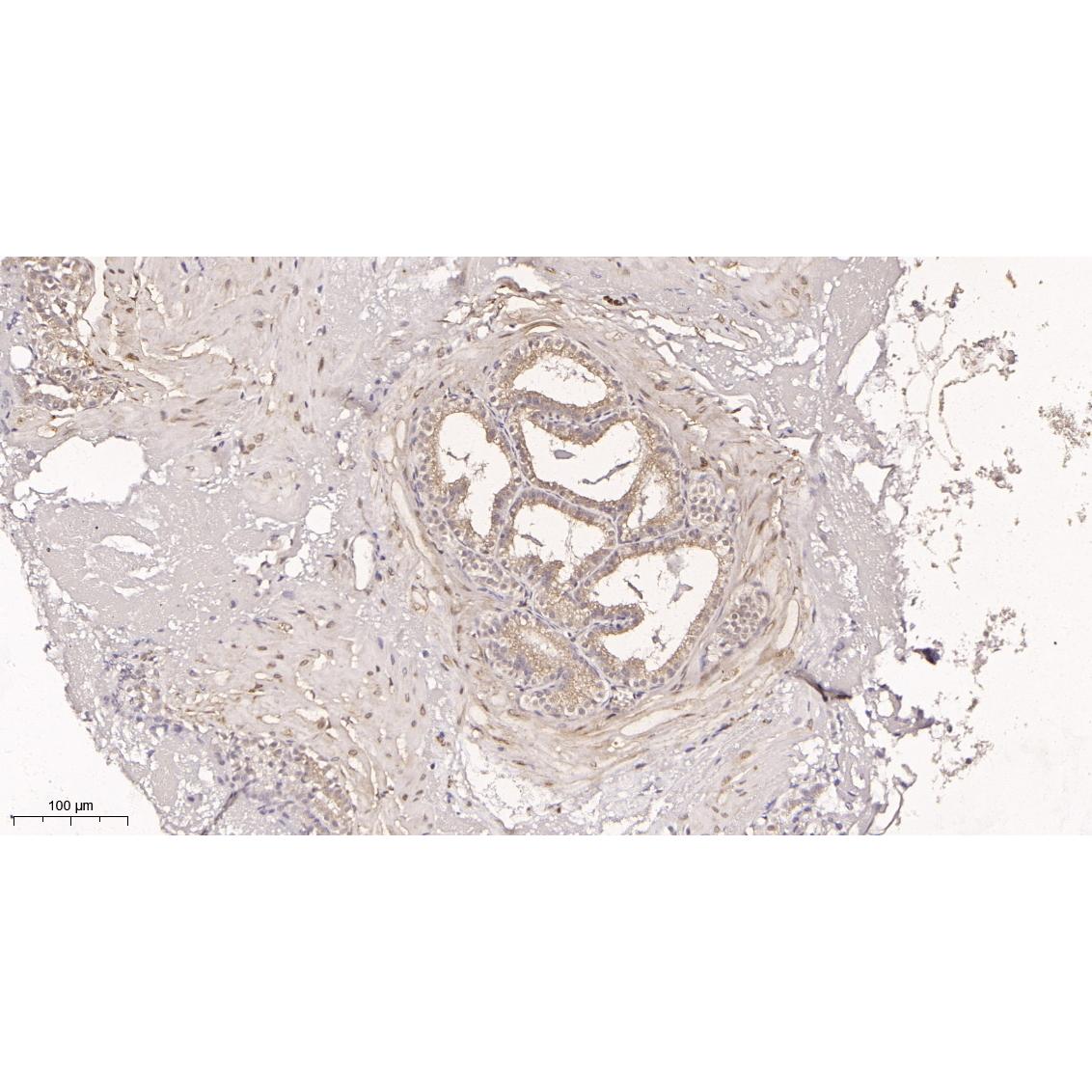
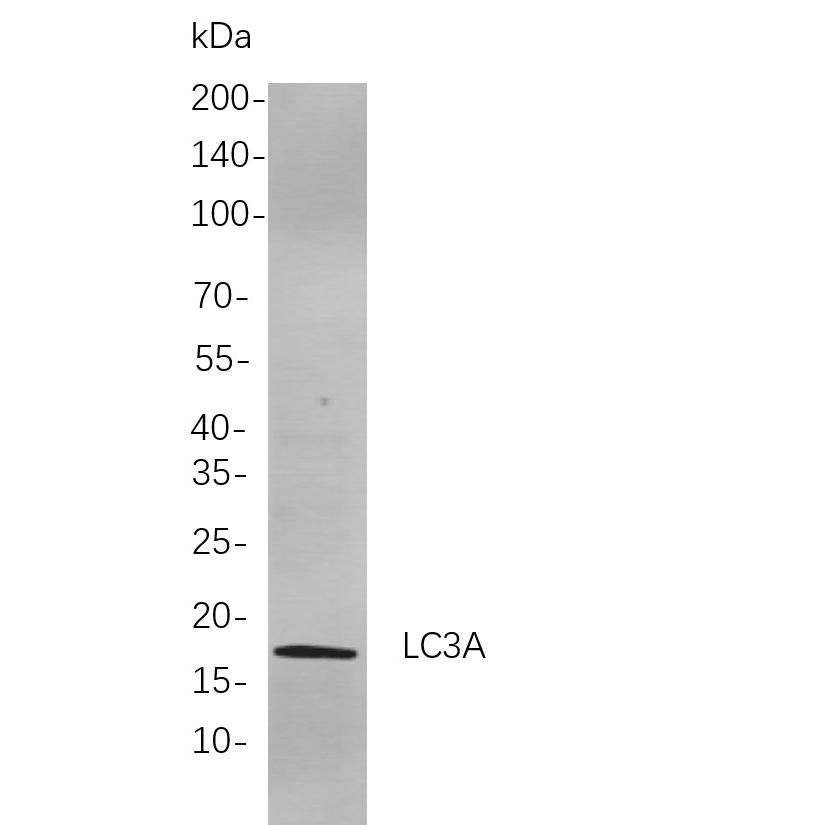
ApplicationsWB, IHC, IF, IP, ELISA
MW(Calculated)14kD
MW(Observed)16kD
Host SpeciesRabbit
IsotypeIgG,Kappa
Conjugate/ModificationUnmodified
Recommended Dilution RatioIHC 1:200-1:1000; WB 1:1000-1:5000; IF 1:200-1:1000; ELISA 1:5000-1:20000; IP 1:50-1:200, / Note: For IHC, we suggest antigen retrieval with TE buffer pH 9.0 (Cat#WT1004)
FormulationPBS, 50% glycerol, 0.05% Proclin 300, 0.05%BSA
PurificationRecombinant Antibody expressed in animal component-free (ACF) media, purified via Protein A affinity chromatography.
Storage-15°C to -25°C/1 year(Do not lower than -25°C)
Concentration
ClonalityMonoclonal
Clone NumberRM0130R
ImmunogenThe specific immunogen used to produce this antibody is proprietary information.
SpecificityEndogenous
Gene NameMAP1LC3A
Protein NameLC3A
Other NameMicrotubule-associated proteins 1A/1B light chain 3A; / Autophagy-related protein LC3 A; / Autophagy-related ubiquitin-like modifier LC3 A; / MAP1 light chain 3-like protein 1; / MAP1A/MAP1B light chain 3 A; / MAP1A/MAP1B LC3 A; / Microtubule-associated protein 1 light chain 3 alpha
SpeciesHuman
Gene ID84557
UniprotQ9H492,
Species.1Mouse
Gene ID.1
Uniprot.1Q91VR7,
Species.2Rat
Gene ID.2
Uniprot.2Q6XVN8
Cellular LocalizationCytoplasm
Tissue ExpressionMost abundant in heart, brain, liver, skeletal muscle and testis but absent in thymus and peripheral blood leukocytes.
Signaling_pathwayCellular Processes >> Transport and catabolism >> Autophagy - animal;Cellular Processes >> Transport and catabolism >> Mitophagy - animal;Cellular Processes >> Cell growth and death >> Ferroptosis;Organismal Systems >> Immune system >> NOD-like receptor signaling pathway;Human Diseases >> Neurodegenerative disease >> Amyotrophic lateral sclerosis;Human Diseases >> Neurodegenerative disease >> Pathways of neurodegeneration - multiple diseases;Environmental Information Processing >> Signal transduction >> Apelin signaling pathway
Research Areas>>Mitophagy - animal; / >>Autophagy - animal; / >>Ferroptosis; / >>Apelin signaling pathway; / >>NOD-like receptor signaling pathway; / >>Amyotrophic lateral sclerosis; / >>Pathways of neurodegeneration - multiple diseases; / >>Shigellosis; / >>Kaposi sarcoma-associated herpesvirus infection
FunctionFunction:Probably involved in formation of autophagosomal vacuoles (autophagosomes).,PTM:The precursor molecule is cleaved by APG4B/ATG4B to form the cytosolic form, LC3-I. This is activated by APG7L/ATG7, transferred to ATG3 and conjugated to phospholipid to form the membrane-bound form, LC3-II.,similarity:Belongs to the MAP1 LC3 family.,subcellular location:LC3-II binds to the autophagic membranes.,subunit:3 different light chains, LC1, LC2 and LC3, can associate with MAP1A and MAP1B proteins.,tissue specificity:Most abundant in heart, brain, liver, skeletal muscle and testis but absent in thymus and peripheral blood leukocytes.,
Please login to post questions

Back to Top
Product has been added to your cart

