SKU: WM1376 Categories: ,

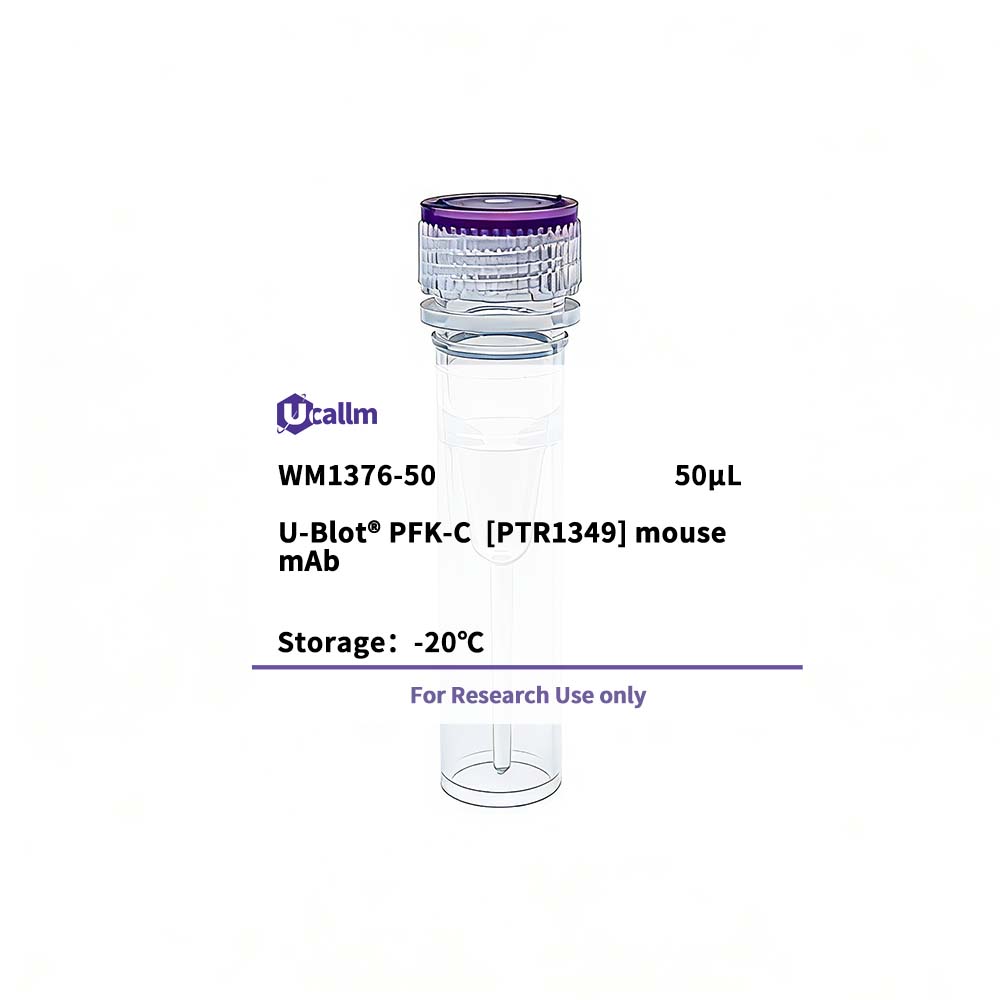
PFK-C [PTR1349] mouse mAb

Price range: $268.00 through $328.00

SKU: WM1376-50
Enter the quantity you would like, or drag the panel to find the quantity and price that best for you
Bulk QuoteAuthorize OEM & ODM

Product details

Background:
This gene encodes a member of the phosphofructokinase A protein family. The encoded enzyme is the platelet-specific isoform of phosphofructokinase and plays a key role in glycolysis regulation. This gene may play a role in metabolic reprogramming in some cancers, including clear cell renal cell carcinomas, and cancer of the bladder, breast, and lung. Alternative splicing results in multiple transcript variants. [provided by RefSeq, Sep 2016],

Specifications

Size50μL/100μL
TargetPFK-C
ReactivityHuman, Mouse, Rat
ApplicationsWB, IF, ELISA
MW(Calculated)84kD
MW(Observed)84kD
Host SpeciesMouse
IsotypeIgG1,Kappa
Conjugate/ModificationUnmodified
Recommended Dilution RatioWB 1:500-2000; IF 1:100-500; ELISA 1:1000-5000
FormulationPBS, 50% glycerol, 0.05% Proclin 300, 0.05%BSA
PurificationRecombinant Antibody expressed in animal component-free (ACF) media, purified via Protein G affinity chromatography.
Storage-15°C to -25°C/1 year(Do not lower than -25°C)
Concentration
ClonalityMonoclonal
Clone NumberRMMR1349
ImmunogenSynthesized peptide derived from human K6PP. AA range:300-400
SpecificityThis antibody detects endogenous levels of PFK-C .
Gene NamePFKP
Protein Name6-phosphofructokinase type C
Other NamePFKP; / PFKF; / 6-phosphofructokinase type C; / 6-phosphofructokinase; / platelet type; / Phosphofructo-1-kinase isozyme C; / PFK-C; / Phosphofructokinase 1; / Phosphohexokinase
SpeciesHuman
Gene ID5214
UniprotQ01813,
Species.1Mouse
Gene ID.156421
Uniprot.1Q9WUA3,
Species.2Rat
Gene ID.260416
Uniprot.2P47860
Cellular LocalizationCytoplasmic
Tissue ExpressionBrain,Epithelium,Kidney,Pancreatic islet,Placenta,Prostate,
Signaling_pathwayOrganismal Systems >> Endocrine system >> Glucagon signaling pathway;Organismal Systems >> Endocrine system >> Thyroid hormone signaling pathway;Human Diseases >> Cancer: overview >> Central carbon metabolism in cancer;Environmental Information Processing >> Signal transduction >> HIF-1 signaling pathway;Environmental Information Processing >> Signal transduction >> AMPK signaling pathway;Genetic Information Processing >> Folding, sorting and degradation >> RNA degradation
Research Areas>>Glycolysis / Gluconeogenesis; / >>Pentose phosphate pathway; / >>Fructose and mannose metabolism; / >>Galactose metabolism; / >>Metabolic pathways; / >>Carbon metabolism; / >>Biosynthesis of amino acids; / >>RNA degradation; / >>HIF-1 signaling pathway; / >>AMPK signaling pathway; / >>Thyroid hormone signaling pathway; / >>Glucagon signaling pathway; / >>Central carbon metabolism in cancer
FunctionCatalytic activity:ATP + D-fructose 6-phosphate = ADP + D-fructose 1,6-bisphosphate.,cofactor:Magnesium.,enzyme regulation:Allosteric enzyme activated by ADP, AMP, or fructose bisphosphate and inhibited by ATP or citrate.,miscellaneous:In human PFK exists as a system of 3 types of subunits, PFKM (muscle), PFKL (liver) and PFKP (platelet) isoenzymes.,pathway:Carbohydrate degradation; glycolysis; D-glyceraldehyde 3-phosphate and glycerone phosphate from D-glucose: step 3/4.,similarity:Belongs to the phosphofructokinase family. Two domains subfamily.,subunit:Tetramer. Muscle is M4, liver is L4, and red cell is M3L, M2L2, or ML3. A subunit composition with a higher proportion of platelet type subunits is found in platelets, brain and fibroblasts.,
Please login to post questions
Back to Top
Product has been added to your cart


