


Recombinant CD371 Fc-Fused Nanobody (VF0381)
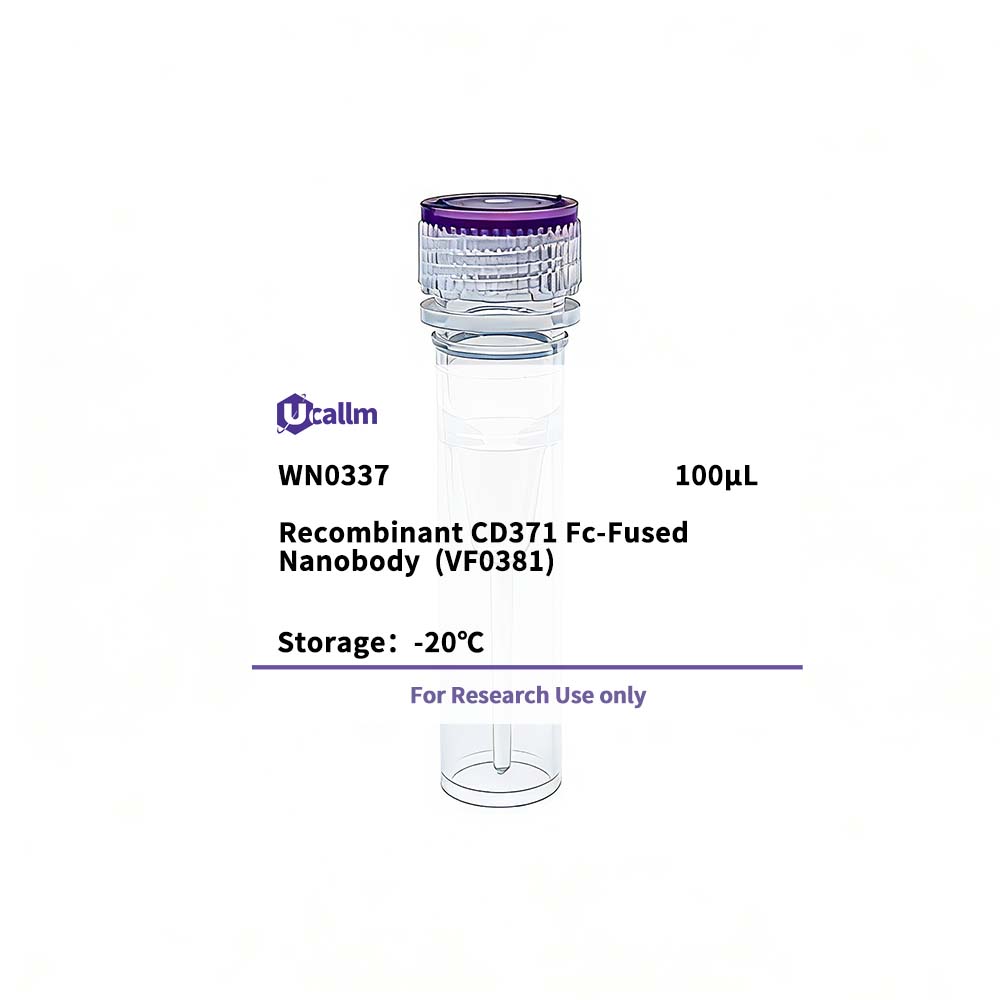
Ucallm_WN0337
$365.00
Product details
Background:CD371 (CLEC12A), also known as DCAL-2, MICL or CLL-1, is a 30 kD type II transmembrane protein with extracellular C-type lectin domains, belonging to the C-type lectin family. It is expressed on monocytes, granulocytes, NK cells, and basophils. Its cytoplasmic ITIM motif modulates signaling cascades and is involved in phosphorylation of tyrosine residues in MAP kinases.
Specifications
| Size | 100μL |
| Target | CD371 |
| Reactivity | Human |
| Applications | ELISA |
| MW(Calculated) | |
| MW(Observed) | |
| Host Species | |
| Isotype | IgG2a,Kappa |
| Conjugate/Modification | Unmodified |
| Recommended Dilution Ratio | ELISA 1:5000-100000; Flow Cyt 1-2μg/Test |
| Formulation | Phosphate-buffered solution |
| Purification | Recombinant Expression and Affinity purified |
| Storage | -15°C to -25°C/1 year(Avoid freeze / thaw cycles) |
| Concentration | Please check the information on the tube |
| Clonality | |
| Clone Number | VF0287 |
| Immunogen | Purified recombinant Human CD371 |
| Specificity | This recombinant monoclonal antibody can detects endogenous levels of CD371 protein. |
| Gene Name | CLEC12A CLL1 DCAL2 MICL |
| Protein Name | C-type lectin domain family 12 member A (C-type lectin-like molecule 1) (CLL-1) (Dendritic cell-associated lectin 2) (DCAL-2) (Myeloid inhibitory C-type lectin-like receptor) (MICL) (CD antigen CD371) |
| Other Name | CLL1; / MICL; / CLL-1; / DCAL-2; / C-type lectin domain family 12 member A; / CD371; / CD371 nanobody |
| Species | Human |
| Gene ID | 160364 |
| Uniprot | Q5QGZ9 |
| Species.1 | |
| Gene ID.1 | |
| Uniprot.1 | |
| Species.2 | |
| Gene ID.2 | |
| Uniprot.2 | |
| Cellular Localization | Cell membrane; Single-pass type II membrane protein . Ligand binding leads to internalization. |
| Tissue Expression | Strongly expressed in peripheral blood leukocytes and spleen, with weaker expression in lymph node and adult liver, and no expression detected in bone marrow, thymus, and fetal liver. Not expressed in brain, heart, placenta, lung, kidney, skeletal muscle, and pancreas. Within peripheral blood leukocyte and immunocyte cell lines, expression was predominant in NK cells but was also detected in monocytes. |
| Signaling_pathway | |
| Research Areas | |
| Function | Cell surface receptor that modulates signaling cascades and mediates tyrosine phosphorylation of target MAP kinases. |
Please login to post questions
Related products





