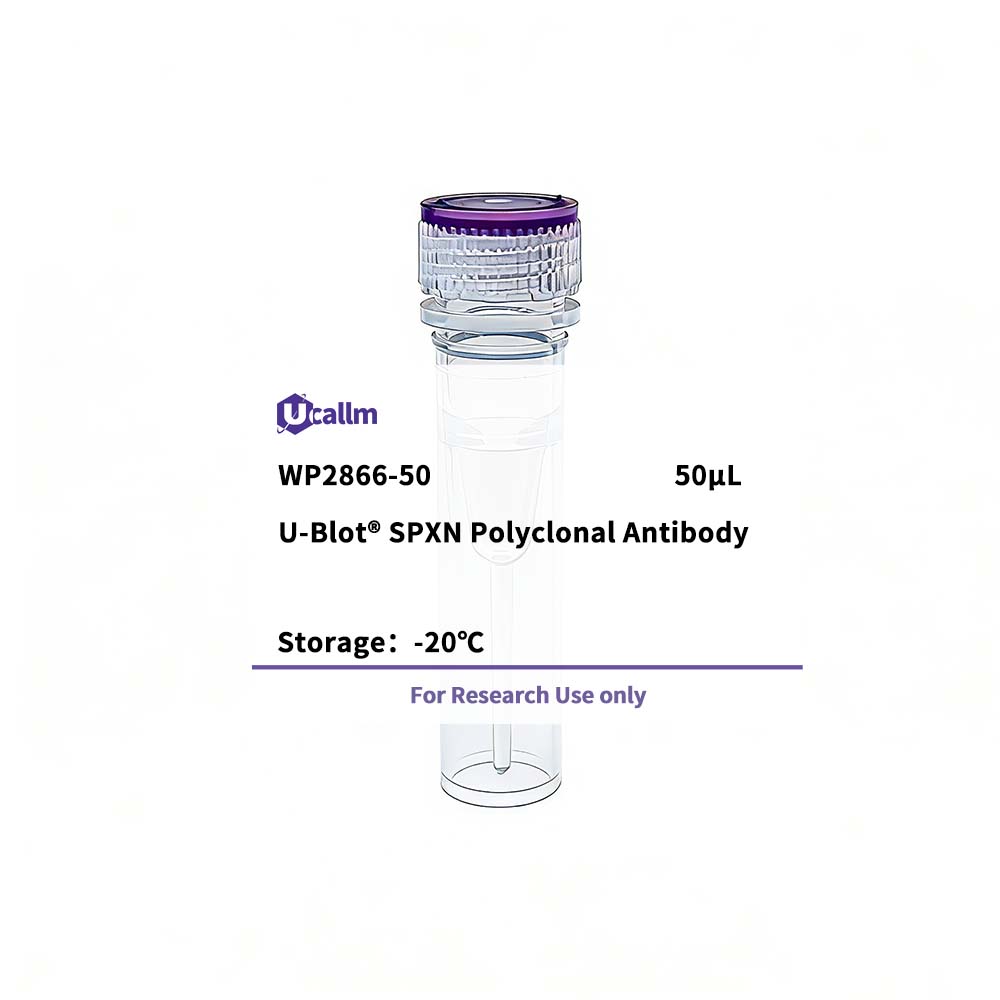
SKU: WP2866 Categories: ,

SPXN Polyclonal Antibody

Price range: $268.00 through $328.00

SKU: WP2866-100
Enter the quantity you would like, or drag the panel to find the quantity and price that best for you
Bulk QuoteAuthorize OEM & ODM

Product details

Background:

The protein encoded by this gene is a hormone involved in modulation of cardiovascular and renal function. It has also been shown in rats to cause weight loss. Several transcript variants have been found for this gene. [provided by RefSeq, Feb 2016],

Specifications

Size50μL/100μL
TargetSPXN
ReactivityHuman, Mouse, Rat
ApplicationsWB, ELISA
MW(Calculated)
MW(Observed)12kD
Host SpeciesRabbit
IsotypeIgG
Conjugate/ModificationUnmodified
Recommended Dilution RatioWB 1:500-2000; ELISA 1:5000-20000
FormulationLiquid in PBS containing 50% glycerol,0.5% BSA and 0.02% sodium azide.
PurificationThe antibody was affinity-purified from rabbit antiserum by affinity-chromatography using epitope-specific immunogen.
Storage-15°C to -25°C/1 year(Do not lower than -25°C)
Concentration1 mg/ml
ClonalityPolyclonal
Clone Number
ImmunogenSynthesized peptide derived from human protein . at AA range: 1-50
SpecificitySPXN Polyclonal Antibody detects endogenous levels of protein.
Gene NameC12orf39
Protein NameSpexin (NPQ)
Other Name
SpeciesHuman
Gene ID80763
UniprotQ9BT56
Species.1
Gene ID.1
Uniprot.1
Species.2
Gene ID.2
Uniprot.2
Cellular LocalizationSecreted. Secreted, extracellular space. Cytoplasmic vesicle, secretory vesicle. Secreted via the classical ER/Golgi-dependent pathway into the extracellular medium largely as a full-length protein without the signal peptide, and not as a hydrolyzed and amidated peptide (PubMed:19193193 and PubMed:17284679). Localized extracellularly surrounding the villous trophoblastic cells. Detected in the serum.
Tissue ExpressionExpressed in the type I glomic cells within the carotid body (at protein level). Expressed predominantly in pancreas, testis, kidney, brain and placenta. Expressed in submucosal layer of esophagus and stomach fundus.
Signaling_pathway
Research Areas>>Neuroactive ligand-receptor interaction
FunctionFunction:Induces contraction of stomach muscle.,tissue specificity:Expressed in submucosal layer of esophagus and stomach fundus. Expressed in brain, pancreas and kidney.,
Please login to post questions
Back to Top
Product has been added to your cart
