SKU: WP15852 Categories: ,

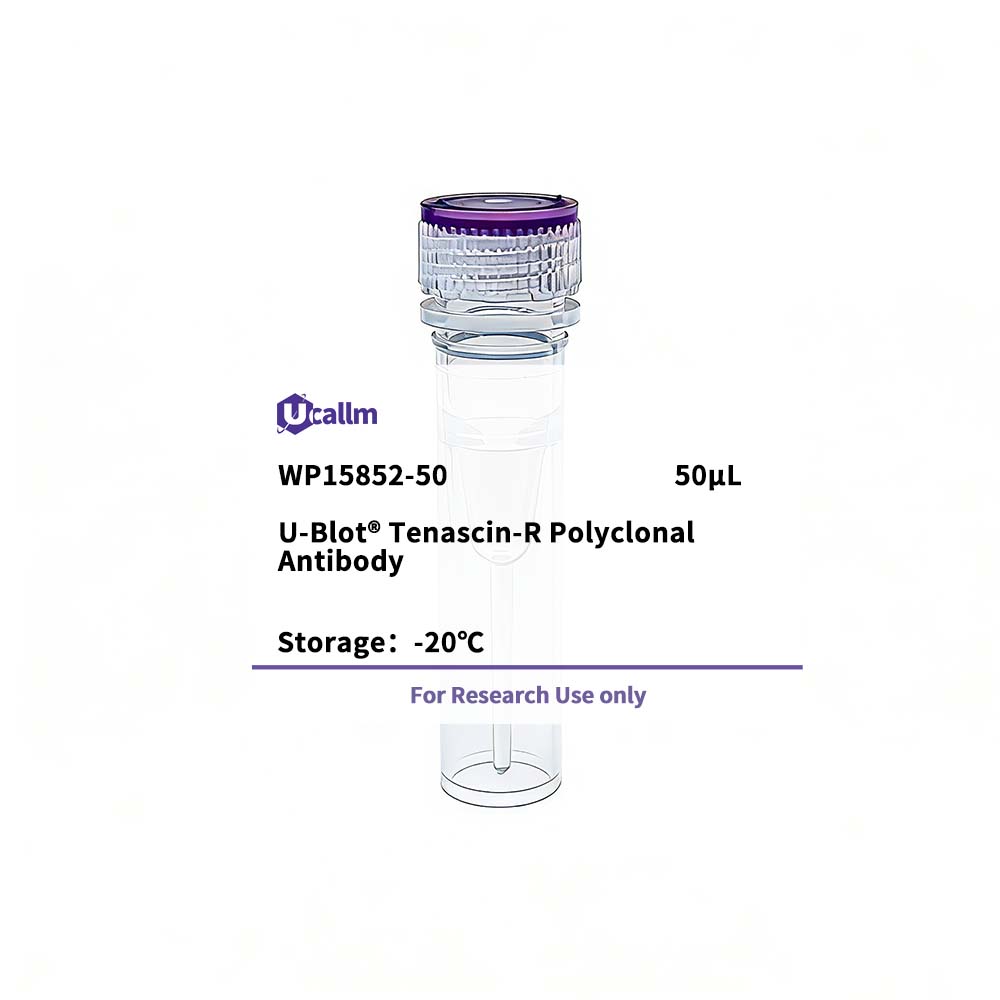
Tenascin-R Polyclonal Antibody

Price range: $268.00 through $328.00

SKU: WP15852-100
Enter the quantity you would like, or drag the panel to find the quantity and price that best for you
Bulk QuoteAuthorize OEM & ODM

Product details

Background:

tenascin R(TNR) Homo sapiens This gene encodes a member of the tenascin family of extracellular matrix glycoproteins. The encoded protein is restricted to the central nervous system. The protein may play a role in neurite outgrowth, neural cell adhesion and modulation of sodium channel function. It is a constituent of perineuronal nets. [provided by RefSeq, Aug 2013],


Specifications

Size50μL/100μL
TargetTenascin-R
ReactivityHuman, Mouse, Rat
ApplicationsIHC, IF, ELISA
MW(Calculated)
MW(Observed)
Host SpeciesRabbit
IsotypeIgG
Conjugate/ModificationUnmodified
Recommended Dilution RatioIHC 1:50-200; ELISA 1:10000-20000; IF 1:50-200 / Note: For IHC, we suggest antigen retrieval with TE buffer pH 9.0 (Cat#WT1004)
FormulationLiquid in PBS containing 50% glycerol, 0.5% BSA and 0.02% sodium azide.
PurificationThe antibody was affinity-purified from rabbit antiserum by affinity-chromatography using epitope-specific immunogen.
Storage-15°C to -25°C/1 year(Do not lower than -25°C)
Concentration1 mg/ml
ClonalityPolyclonal
Clone Number
ImmunogenSynthetic peptide from human protein at AA range: 1270-1350
SpecificityThe antibody detects endogenous Tenascin-R
Gene NameTNR
Protein NameTenascin-R (TN-R) (Janusin) (Restrictin)
Other NameTenascin-R; / TN-R; / Janusin; / Restrictin
SpeciesHuman
Gene ID7143
UniprotQ92752,
Species.1Mouse
Gene ID.121960
Uniprot.1Q8BYI9,
Species.2Rat
Gene ID.2
Uniprot.2Q05546
Cellular LocalizationSecreted, extracellular space, extracellular matrix.
Tissue ExpressionBrain specific.
Signaling_pathwayCellular Processes >> Cellular community - eukaryotes >> Focal adhesion;Human Diseases >> Cancer: overview >> MicroRNAs in cancer;Environmental Information Processing >> Signal transduction >> PI3K-Akt signaling pathway;Environmental Information Processing >> Signaling molecules and interaction >> ECM-receptor interaction
Research Areas>>PI3K-Akt signaling pathway; / >>Focal adhesion; / >>ECM-receptor interaction; / >>Human papillomavirus infection; / >>MicroRNAs in cancer
FunctionDomain:The EGF-like domains mediate interaction with CNTN1. The fibronectin type-III domains 3-5 mediate interaction with BCAN. The fibronectin type-III domains 1-2 and 7-9 mediate interaction with SCN2B.,Function:Neural extracellular matrix (ECM) protein involved in interactions with different cells and matrix components. These interactions can influence cellular behavior by either evoking a stable adhesion and differentiation, or repulsion and inhibition of neurite growth. Binding to cell surface gangliosides inhibits RGD-dependent integrin-mediated cell adhesion and results in an inhibition of PTK2 (FAK) phosphorylation and cell detachment. Binding to membrane surface sulfatides results in a oligodendrocyte adhesion and differentiation. Interaction with CNTN1 induces a repulsion of neurons and an inhibition of neurite outgrowth. Interacts with SCN2B may play a crucial role in clustering and regulation of activity of sodium channels at nodes of Ranvier. TNR-linked chondroitin sulfate glycosaminoglycans are involved in the interaction with FN1 and mediate inhibition of cell adhesion and neurite outgrowth. The highly regulated addition of sulfated carbohydrate structure may modulate the adhesive properties of TNR over the course of development and during synapse maintenance.,PTM:Contains N-linked oligosaccharides, O-linked sialylated structures and O-linked chondroitin sulfate glycosaminoglycans. Contains N-linked oligosaccharides with a sulfated carbohydrate structure.,similarity:Belongs to the tenascin family.,similarity:Contains 1 fibrinogen C-terminal domain.,similarity:Contains 5 EGF-like domains.,similarity:Contains 9 fibronectin type-III domains.,subunit:Forms oligomers. Interacts with CNTN1, TNC, and FN1. Interacts with BCAN and AGC1 in a calcium-dependent manner. Interacts with SCN2B, PTPRZ1, and CSPG3.,tissue specificity:Brain specific.,
Please login to post questions
Back to Top
Product has been added to your cart


