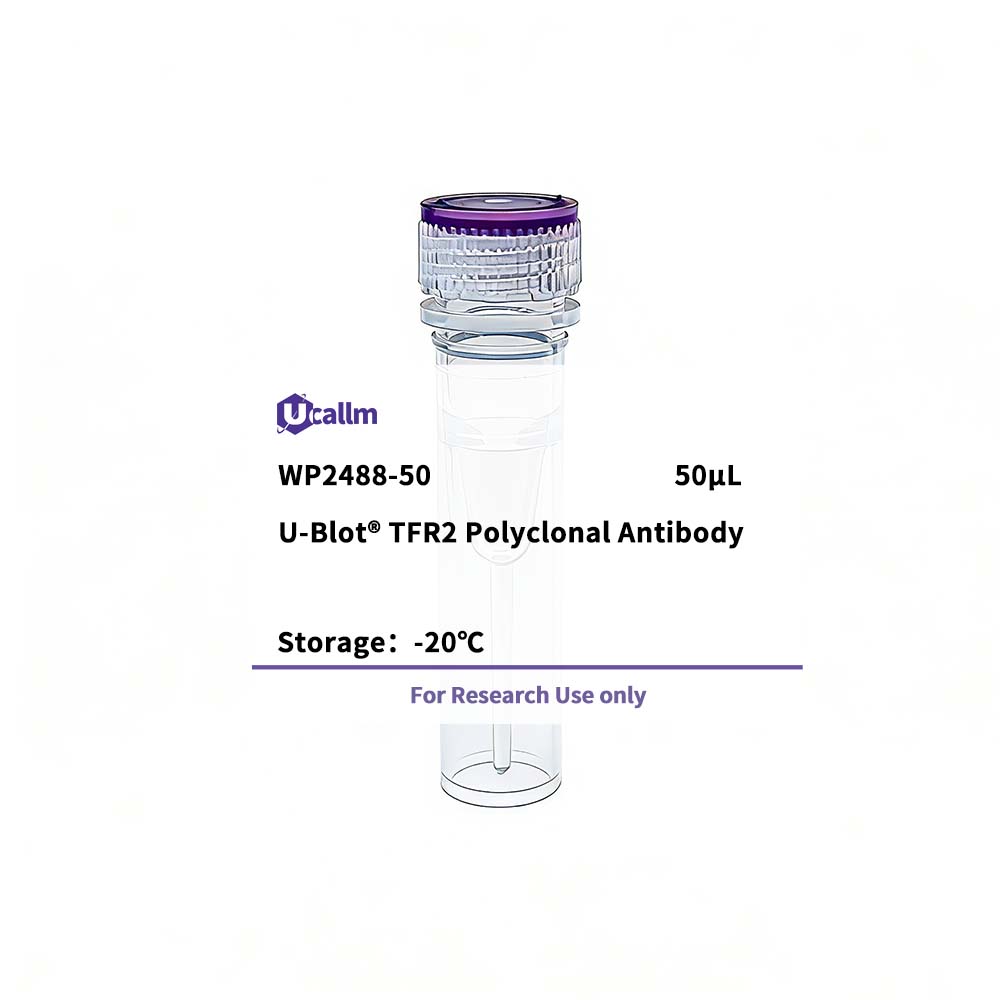
SKU: WP2488 Categories: ,

TFR2 Polyclonal Antibody

Price range: $268.00 through $328.00

SKU: WP2488-100
Enter the quantity you would like, or drag the panel to find the quantity and price that best for you
Bulk QuoteAuthorize OEM & ODM

Product details

Background:

This gene encodes a single-pass type II membrane protein, which is a member of the transferrin receptor-like family. This protein mediates cellular uptake of transferrin-bound iron, and may be involved in iron metabolism, hepatocyte function and erythrocyte differentiation. Mutations in this gene have been associated with hereditary hemochromatosis type III. Alternatively spliced transcript variants encoding different isoforms have been described for this gene. [provided by RefSeq, May 2011],


Specifications

Size50μL/100μL
TargetTFR2
ReactivityHuman, Mouse, Rat
ApplicationsWB, ELISA
MW(Calculated)
MW(Observed)88kD
Host SpeciesRabbit
IsotypeIgG
Conjugate/ModificationUnmodified
Recommended Dilution RatioWB 1:500-2000; ELISA 1:5000-20000
FormulationLiquid in PBS containing 50% glycerol,0.5% BSA and 0.02% sodium azide.
PurificationThe antibody was affinity-purified from rabbit antiserum by affinity-chromatography using epitope-specific immunogen.
Storage-15°C to -25°C/1 year(Do not lower than -25°C)
Concentration1 mg/ml
ClonalityPolyclonal
Clone Number
ImmunogenSynthesized peptide derived from part region of human protein
SpecificityTFR2 Polyclonal Antibody detects endogenous levels of protein.
Gene NameTFR2
Protein NameTransferrin receptor protein 2 (TfR2)
Other Name
SpeciesHuman
Gene ID7036
UniprotQ9UP52,
Species.1Mouse
Gene ID.1
Uniprot.1Q9JKX3,
Species.2Rat
Gene ID.2
Uniprot.2B2GUY2
Cellular LocalizationCell membrane; Single-pass type II membrane protein.; [Isoform Beta]: Cytoplasm . Lacks the transmembrane domain. Probably intracellular.
Tissue ExpressionPredominantly expressed in liver. While the alpha form is also expressed in spleen, lung, muscle, prostate and peripheral blood mononuclear cells, the beta form is expressed in all tissues tested, albeit weakly.
Signaling_pathwayEnvironmental Information Processing >> Signal transduction >> TGF-beta signaling pathway
Research Areas
FunctionDisease:Defects in TFR2 are a cause of hereditary hemochromatosis type 3 (HFE3) [MIM:604250]. HFE3 is a disorder of iron hemostasis resulting in iron overload and has a phenotype indistinguishable from that of hereditary hemochromatosis (HH). HH is characterized by abnormal intestinal iron absorption and progressive increase of total body iron, which results in midlife in clinical complications including cirrhosis, cardiopathy, diabetes, endocrine dysfunctions, arthropathy, and susceptibility to liver cancer. Since the disease complications can be effectively prevented by regular phlebotomies, early diagnosis is most important to provide a normal life expectancy to the affected subjects.,Function:Mediates cellular uptake of transferrin-bound iron in a non-iron dependent manner. May be involved in iron metabolism, hepatocyte function and erythrocyte differentiation.,miscellaneous:The variant Lys-172 found in hereditary hemochromatosis type III affects the putative initiation codon of the beta isoform thus preventing its translation.,similarity:Belongs to the peptidase M28 family. M28B subfamily.,subcellular location:Lacks the transmembrane domain. Probably intracellular.,subunit:Homodimer.,tissue specificity:Predominantly expressed in liver. While the alpha form is also expressed in spleen, lung, muscle, prostate and peripheral blood mononuclear cells, the beta form is expressed in all tissues tested, albeit weakly.,
Please login to post questions
Back to Top
Product has been added to your cart

