SKU: WM1144 Categories: ,

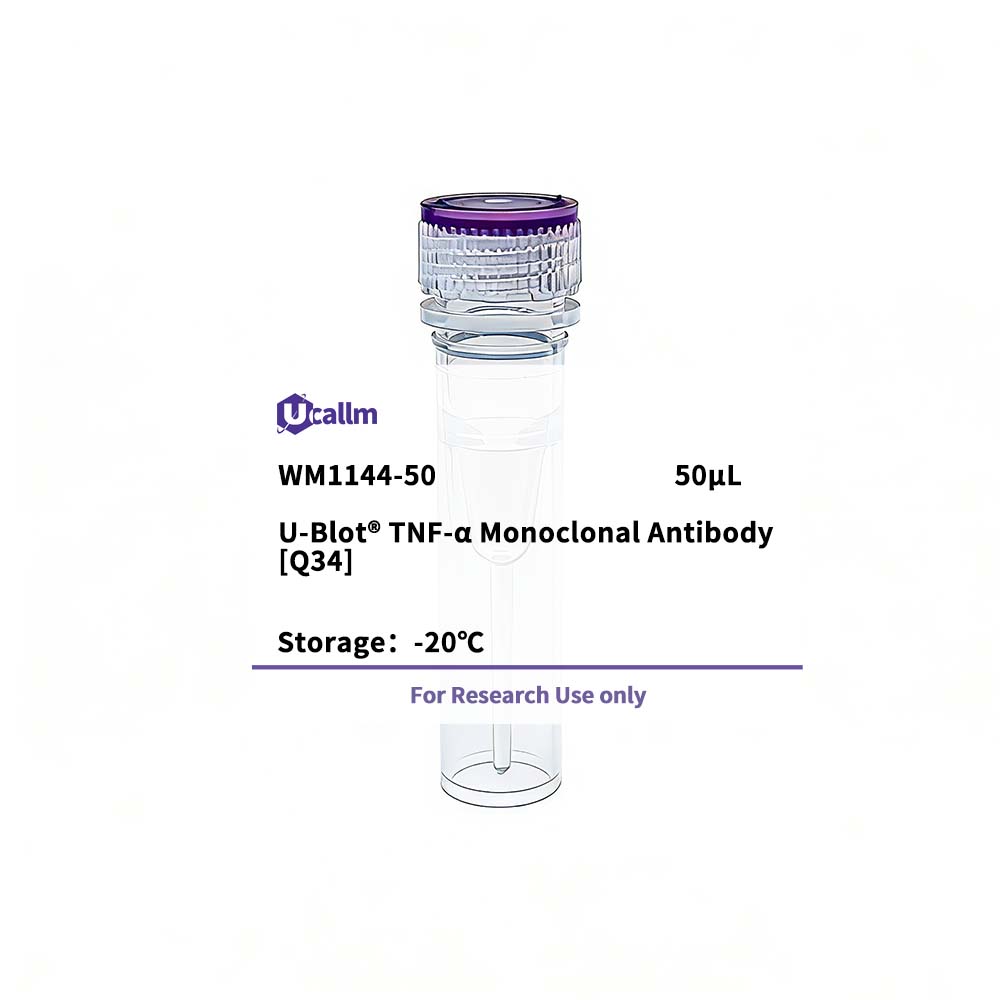
TNF-α Monoclonal Antibody [Q34]

Price range: $268.00 through $328.00

SKU: WM1144-50
Enter the quantity you would like, or drag the panel to find the quantity and price that best for you
Bulk QuoteAuthorize OEM & ODM

Product details

Background:
This gene encodes a multifunctional proinflammatory cytokine that belongs to the tumor necrosis factor (TNF) superfamily. This cytokine is mainly secreted by macrophages. It can bind to, and thus functions through its receptors TNFRSF1A/TNFR1 and TNFRSF1B/TNFBR. This cytokine is involved in the regulation of a wide spectrum of biological processes including cell proliferation, differentiation, apoptosis, lipid metabolism, and coagulation. This cytokine has been implicated in a variety of diseases, including autoimmune diseases, insulin resistance, and cancer. Knockout studies in mice also suggested the neuroprotective function of this cytokine. [provided by RefSeq, Jul 2008],

Specifications

Size50μL/100μL
TargetTNFA
ReactivityHuman, Mouse, Rat
ApplicationsWB, IHC, IF
MW(Calculated)
MW(Observed)17,25kD
Host SpeciesMouse
IsotypeIgG1
Conjugate/ModificationUnmodified
Recommended Dilution RatioWB 1:1000-1:3000; IHC 1:50-1:200; IF 1:50-200 / Note: For IHC, we suggest antigen retrieval with TE buffer pH 9.0 (Cat#WT1004)
FormulationLiquid in PBS containing 50% glycerol, 0.5% BSA and 0.02% sodium azide.
PurificationThe antibody was affinity-purified from mouse ascites by affinity-chromatography using epitope-specific immunogen.
Storage-15°C to -25°C/1 year(Do not lower than -25°C)
Concentration1 mg/ml
ClonalityMonoclonal
Clone NumberQ34
ImmunogenSynthetic Peptide of TNF α
SpecificityThe antibody detects endogenous TNF α protein
Gene NameTNF TNFA TNFSF2
Protein NameTumor necrosis factor (Cachectin) (TNF-alpha) (Tumor necrosis factor ligand superfamily member 2) (TNF-a)
Other NameTumor necrosis factor; / Cachectin; / TNF-alpha; / Tumor necrosis factor ligand superfamily member 2; / TNF-a; / [Cleaved into: Tumor necrosis factor, membrane form; / N-terminal fragment; / NTF; / Intracellular domain 1; / ICD1; / Intracellular domain 2; / ICD2; / C-domain 1; / C-domain 2; / Tumor necrosis factor, soluble form]
SpeciesHuman
Gene ID7124
UniprotP01375,
Species.1Mouse
Gene ID.121926
Uniprot.1P06804,
Species.2Rat
Gene ID.224835
Uniprot.2P16599
Cellular LocalizationCell membrane; Single-pass type II membrane protein .; [Tumor necrosis factor, membrane form]: Membrane; Single-pass type II membrane protein.; [Tumor necrosis factor, soluble form]: Secreted .; [C-domain 1]: Secreted.; [C-domain 2]: Secreted.
Tissue ExpressionBlood,Peripheral blood leukocyte,Placenta,Prostatic carcinoma,
Signaling_pathwayCellular Processes >> Cell growth and death >> Apoptosis;Cellular Processes >> Cell growth and death >> Necroptosis;Organismal Systems >> Immune system >> Hematopoietic cell lineage;Organismal Systems >> Immune system >> Toll-like receptor signaling pathway;Organismal Systems >> Immune system >> NOD-like receptor signaling pathway;Organismal Systems >> Immune system >> RIG-I-like receptor signaling pathway;Organismal Systems >> Immune system >> Natural killer cell mediated cytotoxicity;Organismal Systems >> Immune system >> Antigen processing and presentation;Organismal Systems >> Immune system >> T cell receptor signaling pathway;Organismal Systems >> Immune system >> IL-17 signaling pathway;Organismal Systems >> Immune system >> Fc epsilon RI signaling pathway;Organismal Systems >> Endocrine system >> Adipocytokine signaling pathway;Organismal Systems >> Development and regeneration >> Osteoclast differentiation;Human Diseases >> Immune disease >> Asthma;Human Diseases >> Immune disease >> Systemic lupus erythematosus;Human Diseases >> Immune disease >> Rheumatoid arthritis;Human Diseases >> Immune disease >> Inflammatory bowel disease;Human Diseases >> Immune disease >> Allograft rejection;Human Diseases >> Immune disease >> Graft-versus-host disease;Human Diseases >> Neurodegenerative disease >> Alzheimer disease;Human Diseases >> Neurodegenerative disease >> Amyotrophic lateral sclerosis;Human Diseases >> Neurodegenerative disease >> Prion disease;Human Diseases >> Neurodegenerative disease >> Pathways of neurodegeneration - multiple diseases;Environmental Information Processing >> Signal transduction >> MAPK signaling pathway;Environmental Information Processing >> Signal transduction >> TGF-beta signaling pathway;Environmental Information Processing >> Signal transduction >> NF-kappa B signaling pathway;Environmental Information Processing >> Signal transduction >> TNF signaling pathway;Environmental Information Processing >> Signal transduction >> Sphingolipid signaling pathway;Environmental Information Processing >> Signal transduction >> mTOR signaling pathway;Environmental Information Processing >> Signaling molecules and interaction >> Cytokine-cytokine receptor interaction;Environmental Information Processing >> Signaling molecules and interaction >> Viral protein interaction with cytokine and cytokine receptor
Research Areas>>Antifolate resistance; / >>MAPK signaling pathway; / >>Cytokine-cytokine receptor interaction; / >>Viral protein interaction with cytokine and cytokine receptor; / >>NF-kappa B signaling pathway; / >>Sphingolipid signaling pathway; / >>mTOR signaling pathway; / >>Apoptosis; / >>Necroptosis; / >>TGF-beta signaling pathway; / >>Osteoclast differentiation; / >>Antigen processing and presentation; / >>Toll-like receptor signaling pathway; / >>NOD-like receptor signaling pathway; / >>RIG-I-like receptor signaling pathway; / >>C-type lectin receptor signaling pathway; / >>Hematopoietic cell lineage; / >>Natural killer cell mediated cytotoxicity; / >>IL-17 signaling pathway; / >>T cell receptor signaling pathway; / >>Fc epsilon RI signaling pathway; / >>TNF signaling pathway; / >>Adipocytokine signaling pathway; / >>Type II diabetes mellitus; / >>Insulin resistance; / >>Non-alcoholic fatty liver disease; / >>AGE-RAGE signaling pathway in diabetic complications; / >>Alcoholic liver disease; / >>Type I diabetes mellitus; / >>Alzheimer disease; / >>Amyotrophic lateral sclerosis; / >>Prion disease; / >>Pathways of neurodegeneration - multiple diseases; / >>Pathogenic Escherichia coli infection; / >>Shigellosis; / >>Salmonella infection; / >>Pertussis; / >>Legionellosis; / >>Yersinia infection; / >>Leishmaniasis; / >>Chagas disease; / >>African trypanosomiasis; / >>Malaria; / >>Toxoplasmosis; / >>Amoebiasis; / >>Tuberculosis; / >>Hepatitis C; / >>Hepatitis B; / >>Human cytomegalovirus infection; / >>Influenza A; / >>Human papillomavirus infection; / >>Human T-cell leukemia virus 1 infection; / >>Herpes simplex virus 1 infection; / >>Epstein-Barr virus infection; / >>Human immunodeficiency virus 1 infection; / >>Coronavirus disease - COVID-19; / >>Proteoglycans in cancer; / >>Asthma; / >>Inflammatory bowel disease; / >>Systemic lupus erythematosus; / >>Rheumatoid arthritis; / >>Allograft rejection; / >>Graft-versus-host disease; / >>Hypertrophic cardiomyopathy; / >>Dilated cardiomyopathy; / >>Lipid and atherosclerosis; / >>Fluid shear stress and atherosclerosis
FunctionDisease:Cachexia accompanies a variety of diseases, including cancer and infection, and is characterized by general ill health and malnutrition.,Disease:Genetic variations in TNF are associated with susceptibility to hepatitis B virus infection (HBV infection) [MIM:610424]. Approximately one third of all cases of cirrhosis and half of all cases of hepatocellular carcinoma can be attributed to chronic HBV infection. HBV infection may result in subclinical or asymptomatic infection, acute self-limited hepatitis, or fulminant hepatitis requiring liver transplantation.,Disease:Genetic variations in TNF are associated with susceptibility to psoriatic arthritis [MIM:607507]. Psoriasis is a chronic inflammatory dermatosis that affects approximately 2% of the population. It is characterized by red, scaly skin lesions that are usually found on the scalp, elbows, and knees, and may be associated with severe arthritis. Psoriatic arthritis has been defined as an inflammatory arthritis usually without any rheumatoid factor in serum (seronegative arthritis) associated with psoriasis.,Function:Cytokine that binds to TNFRSF1A/TNFR1 and TNFRSF1B/TNFBR. It is mainly secreted by macrophages and can induce cell death of certain tumor cell lines. It is potent pyrogen causing fever by direct action or by stimulation of interleukin-1 secretion and is implicated in the induction of cachexia, Under certain conditions it can stimulate cell proliferation and induce cell differentiation.,online information:The Singapore human mutation and polymorphism database,online information:Tumor necrosis factor alpha entry,PTM:O-glycosylated; glycans contain galactose, N-acetylgalactosamine and N-acetylneuraminic acid.,PTM:The membrane form, but not the soluble form, is phosphorylated on serine residues. Dephosphorylation of the membrane form occurs by binding to soluble TNFRSF1A/TNFR1.,PTM:The soluble form derives from the membrane form by proteolytic processing.,similarity:Belongs to the tumor necrosis factor family.,subunit:Homotrimer.,
Please login to post questions
Back to Top
Product has been added to your cart
