

Product details
Background:
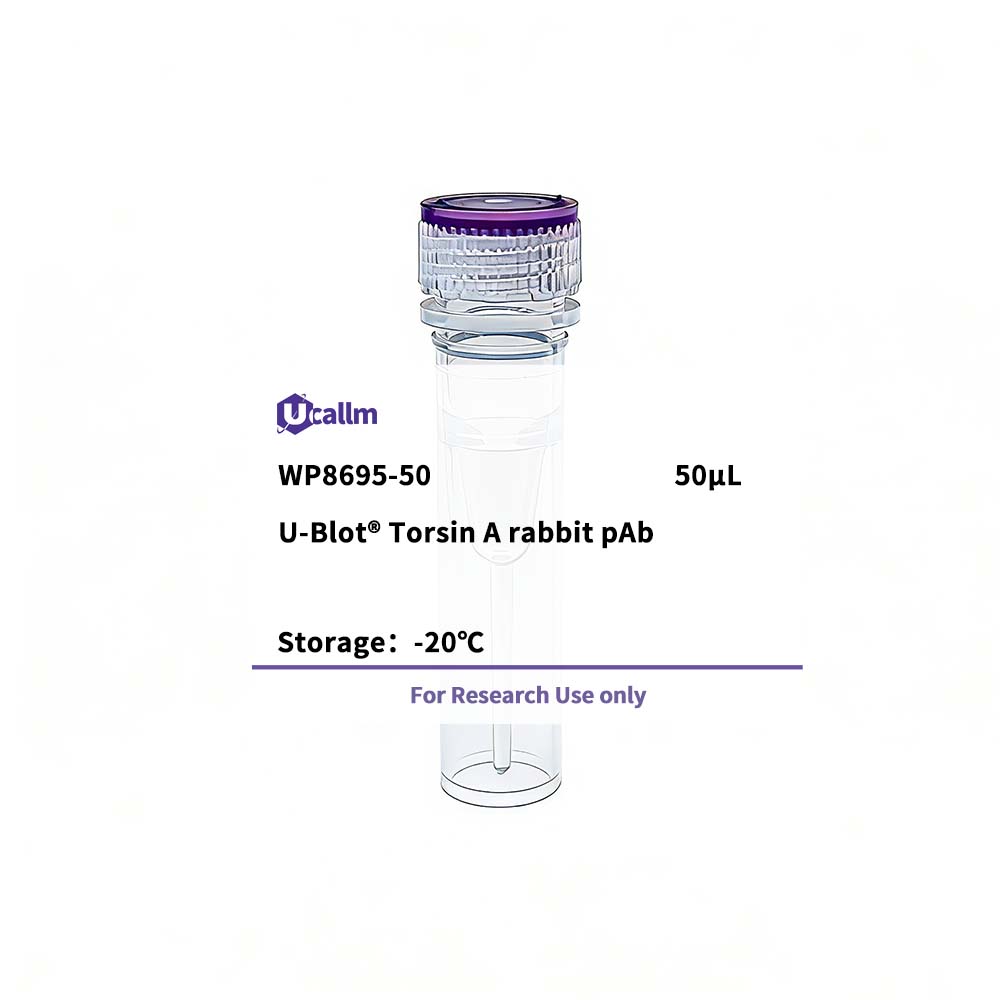
Price range: $268.00 through $328.00
Background:
| Size | 50μL/100μL |
| Target | TOR1A |
| Reactivity | Human, Mouse |
| Applications | WB |
| MW(Calculated) | 37kD |
| MW(Observed) | |
| Host Species | Rabbit |
| Isotype | IgG |
| Conjugate/Modification | Unmodified |
| Recommended Dilution Ratio | WB 1:500-2000 |
| Formulation | Liquid in PBS containing 50% glycerol, 0.5% BSA and 0.02% sodium azide. |
| Purification | The antibody was affinity-purified from rabbit antiserum by affinity-chromatography using epitope-specific immunogen. |
| Storage | -15°C to -25°C/1 year(Do not lower than -25°C) |
| Concentration | 1 mg/ml |
| Clonality | Polyclonal |
| Clone Number | |
| Immunogen | Synthesized peptide derived from human Torsin A |
| Specificity | This antibody detects endogenous levels of Torsin A at Human, Mouse |
| Gene Name | TOR1A DQ2 DYT1 |
| Protein Name | Torsin-1A (Dystonia 1 protein) (Torsin family 1 member A) |
| Other Name | |
| Species | Human |
| Gene ID | 1861 |
| Uniprot | O14656, |
| Species.1 | Mouse |
| Gene ID.1 | 30931 |
| Uniprot.1 | Q9ER39 |
| Species.2 | |
| Gene ID.2 | |
| Uniprot.2 | |
| Cellular Localization | Endoplasmic reticulum lumen . Nucleus membrane; Peripheral membrane protein . Cell projection, growth cone . Cytoplasmic vesicle membrane . Cytoplasmic vesicle, secretory vesicle . Cytoplasmic vesicle, secretory vesicle, synaptic vesicle. Cytoplasm, cytoskeleton. Upon oxidative stress, redistributes to protusions from the cell surface (By similarity). Peripherally associated with the inner face of the ER membrane, probably mediated by the interaction with TOR1AIP1. The association with nucleus membrane is mediated by the interaction with TOR1AIP2. . |
| Tissue Expression | Widely expressed. Highest levels in kidney and liver. In the brain, high levels found in the dopaminergic neurons of the substantia nigra pars compacta, as well as in the neocortex, hippocampus and cerebellum. Also highly expressed in the spinal cord. |
| Signaling_pathway | |
| Research Areas | |
| Function | Protein with chaperone functions important for the control of protein folding, processing, stability and localization as well as for the reduction of misfolded protein aggregates. Involved in the regulation of synaptic vesicle recycling, controls STON2 protein stability in collaboration with the COP9 signalosome complex (CSN). In the nucleus, may link the cytoskeleton with the nuclear envelope, this mechanism seems to be crucial for the control of nuclear polarity, cell movement and, specifically in neurons, nuclear envelope integrity. Participates in the cellular trafficking and may regulate the subcellular location of multipass membrane proteins such as the dopamine transporter SLC6A3, leading to the modulation of dopamine neurotransmission. In the endoplasmic reticulum, plays a role in the quality control of protein folding by increasing clearance of misfolded proteins such as SGCE variants or holding them in an intermediate state for proper refolding. May have a redundant function with TOR1B in non-neural tissues. |



