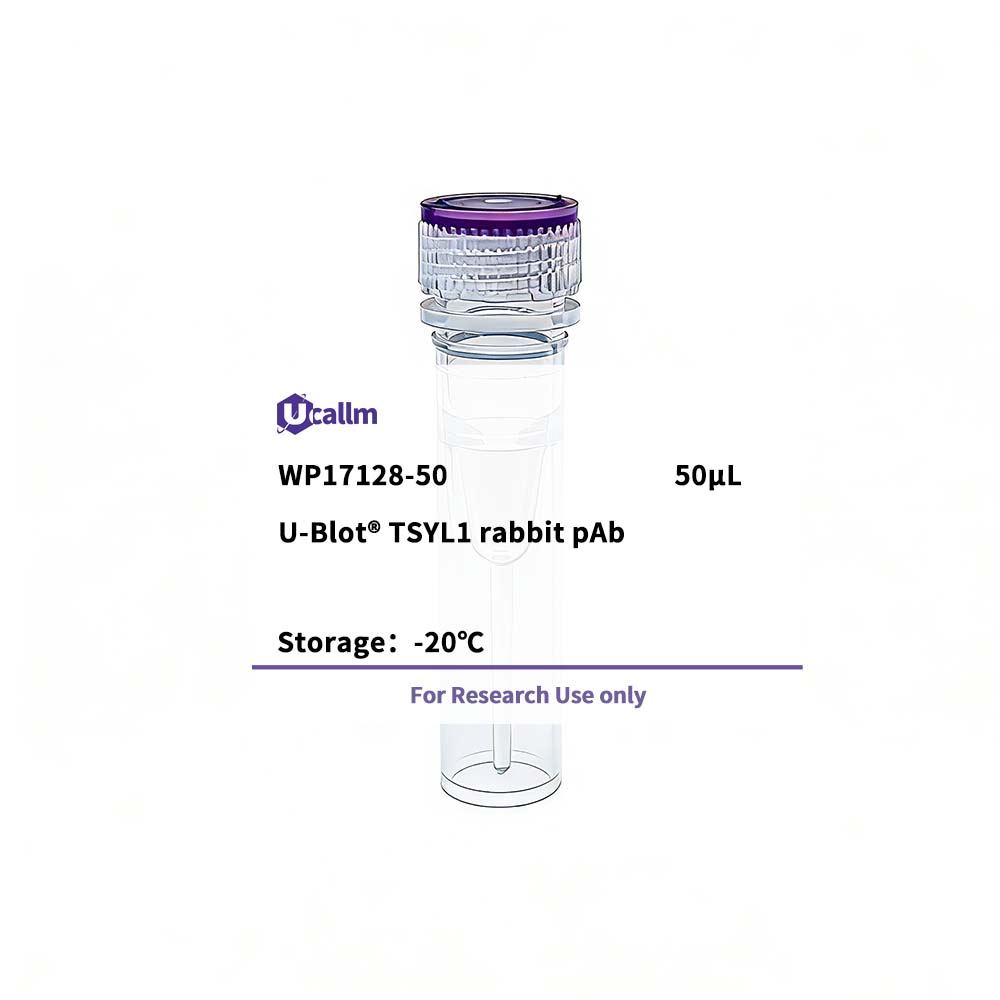
SKU: WP17128 Categories: ,

TSYL1 rabbit pAb

Price range: $268.00 through $328.00

SKU: WP17128-100
Enter the quantity you would like, or drag the panel to find the quantity and price that best for you
Bulk QuoteAuthorize OEM & ODM

Product details

Background:

The protein encoded by this gene is found in the nucleolus and is similar to that of a family of genes on the Y-chromosome. This gene is intronless. Defects in this gene are a cause of sudden infant death with dysgenesis of the testes syndrome (SIDDT). [provided by RefSeq, Dec 2009],


Specifications

Size50μL/100μL
TargetTSYL1
ReactivityHuman, Mouse
ApplicationsWB
MW(Calculated)48kD
MW(Observed)
Host SpeciesRabbit
IsotypeIgG
Conjugate/ModificationUnmodified
Recommended Dilution RatioWB 1:500-2000
FormulationLiquid in PBS containing 50% glycerol, 0.5% BSA and 0.02% sodium azide.
PurificationThe antibody was affinity-purified from rabbit antiserum by affinity-chromatography using epitope-specific immunogen.
Storage-15°C to -25°C/1 year(Do not lower than -25°C)
Concentration1 mg/ml
ClonalityPolyclonal
Clone Number
ImmunogenSynthesized peptide derived from human TSYL1 AA range: 211-261
SpecificityThis antibody detects endogenous levels of TSYL1 at Human/Mouse
Gene NameTSPYL1 TSPYL
Protein NameTSYL1
Other Name
SpeciesHuman
Gene ID7259
UniprotQ9H0U9,
Species.1Mouse
Gene ID.122110
Uniprot.1O88852
Species.2
Gene ID.2
Uniprot.2
Cellular LocalizationNucleus, nucleolus .
Tissue ExpressionExpressed in testis, ovary, liver, spleen, brain, kidney, prostate, lung, liver, and heart.
Signaling_pathway
Research Areas
FunctionDisease:Defects in TSPYL1 are the cause of sudden infant death with dysgenesis of the testes syndrome (SIDDT) [MIM:608800]. SIDDT is an autosomal recessive disorder. Affected infants appear normal at birth, develop signs of visceroautonomic dysfunction early in life, and die before 12 months of age of abrupt cardiorespiratory arrest. Features included bradycardia, hypothermia, severe gastroesophageal reflux, laryngospasm, bronchospasm, and abnormal cardiorespiratory patterns during sleep. Genotypic males with SIDDT had fetal testicular dysgenesis and ambiguous genitalia, with findings such as intraabdominal testes, dysplastic testes, deficient fetal testosterone production, fusion and rugation of the gonadal sac, and partial development of the penile shaft. Female sexual development was normal. Affected infants had an unusual staccato cry, similar to the cry of a goat.,similarity:Belongs to the nucleosome assembly protein (NAP) family.,tissue specificity:Expressed in testis, ovary, liver, spleen, brain, kidney, prostate, lung, liver, and heart.,
Please login to post questions
Back to Top
Product has been added to your cart
