SKU: WM1892 Categories: ,

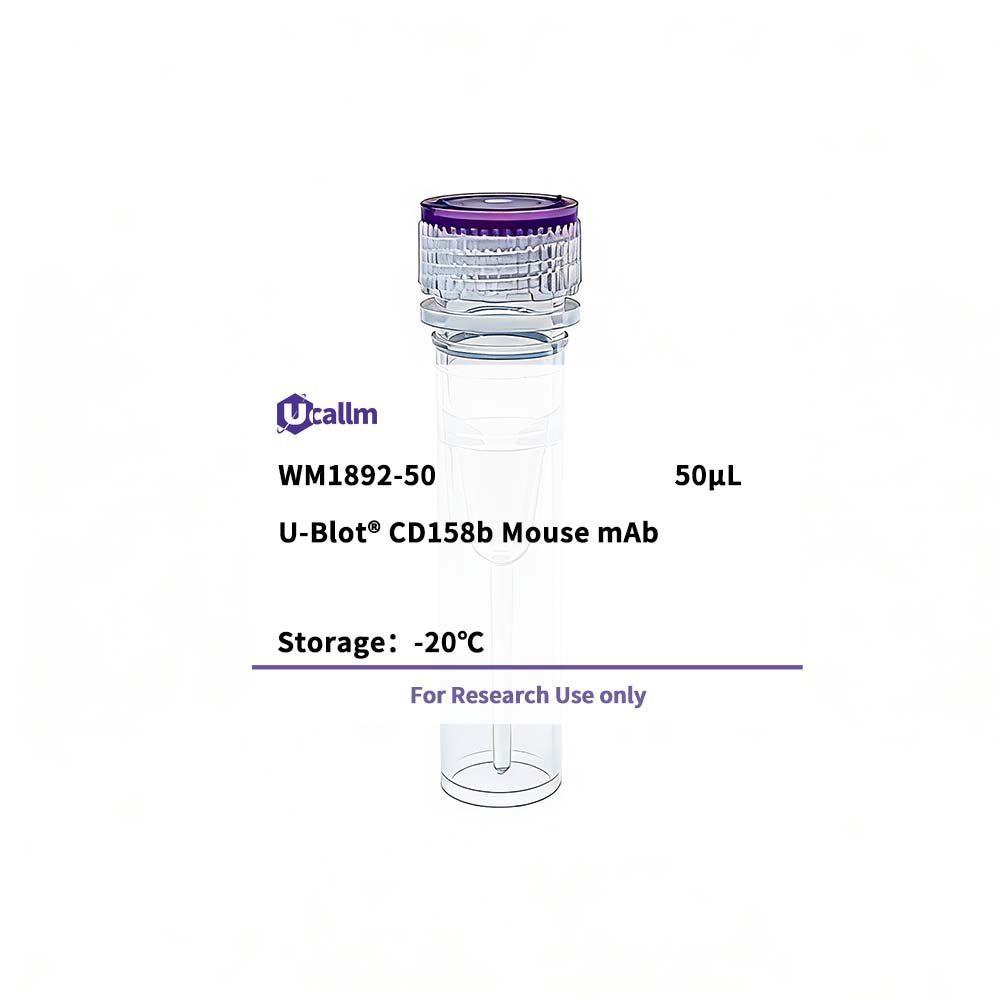
U-Blot® CD158b Mouse mAb

Price range: $268.00 through $328.00

SKU: WM1892-50
Enter the quantity you would like, or drag the panel to find the quantity and price that best for you
Bulk QuoteAuthorize OEM & ODM

Product details

Background:Killer cell immunoglobulin-like receptors (KIRs) are transmembrane glycoproteins expressed by natural killer cells and subsets of T cells. The KIR genes are polymorphic and highly homologous and they are found in a cluster on chromosome 19q13.4 within the 1 Mb leukocyte receptor complex (LRC). The gene content of the KIR gene cluster varies among haplotypes, although several " framework" genes are found in all haplotypes (KIR3DL3, KIR3DP1, KIR3DL4, KIR3DL2). The KIR proteins are classified by the number of extracellular immunoglobulin domains (2D or 3D) and by whether they have a long (L) or short (S) cytoplasmic domain. KIR proteins with the long cytoplasmic domain transduce inhibitory signals upon ligand binding via an immune tyrosine-based inhibitory motif (ITIM), while KIR proteins with the short cytoplasmic domain lack the

Specifications

Size50μL/100μL
TargetCD158b
ReactivityHuman
ApplicationsFC, IF
MW(Calculated)
MW(Observed)
Host SpeciesMouse
IsotypeMouse IgG2b,Kappa
Conjugate/ModificationUnmodified
Recommended Dilution RatioIF 1:200-1:1000; FC:1 µg per million cells in 100 µl volume. For optimal results, the reagent should be titrated according to each specific application
FormulationPBS, pH 7.4
PurificationRecombinant Antibody expressed in animal component-free (ACF) media, purified via Protein A affinity chromatography.
StorageStore at 4°C short term. For long term storage, store at -20°C, avoiding freeze/thaw cycles.
Concentration0.5mg/ml
ClonalityMonoclonal
Clone NumberRMMF0130
ImmunogenThe specific immunogen used to produce this antibody is proprietary information.
SpecificityEndogenous
Gene NameKIR2DL3/KIR2DS2 CD158B1 NKAT6
Protein NameKiller cell immunoglobulin-like receptor 2DL2 (CD158 antigen-like family member B1) (MHC class I NK cell receptor) (Natural killer-associated transcript 6) (NKAT-6) (p58 natural killer cell receptor clone CL-43) (p58 NK receptor CL-43) (CD antigen CD158b1) Killer cell immunoglobulin-like receptor 2DL3/Killer cell immunoglobulin-like receptor 2DS2
Other NameKIR2DL3; / CD158B2; / KIRCL23; / NKAT2; / Killer cell immunoglobulin-like receptor 2DL3; / CD158 antigen-like family member B2; / KIR-023GB; / Killer inhibitory receptor cl 2-3; / MHC class I NK cell receptor; / NKAT2a; / NKAT2bNatural killer-associated transcript 2; / NKAT-2; / p58 natural killer cell receptor clone CL-6; / p58 NK receptor CL-6; / p58.2 MHC class-I-specific NK receptor; / CD158b2; / KIR2DS2; / CD158J; / NKAT5; / Killer cell immunoglobulin-like receptor 2DS2
SpeciesHuman
Gene ID3803;3804;100132285
UniprotP43627,P43628,P43631
Species.1
Gene ID.1
Uniprot.1
Species.2
Gene ID.2
Uniprot.2
Cellular LocalizationCell membrane; Single-pass type I membrane protein.
Tissue ExpressionNatural killer cell
Signaling_pathwayOrganismal Systems >> Immune system >> Natural killer cell mediated cytotoxicity;Organismal Systems >> Immune system >> Antigen processing and presentation;Human Diseases >> Immune disease >> Graft-versus-host disease
Research Areas>>Antigen processing and presentation; / >>Natural killer cell mediated cytotoxicity; / >>Graft-versus-host disease
FunctionFunction:Receptor on natural killer (NK) cells for HLA-C alleles. Inhibits the activity of NK cells thus preventing cell lysis.,miscellaneous:PubMed:15580659, identified a chromosomal rearrangement producing a recombinant gene composed of the promoter and first exon of KIR2DL5A fused to KIR3DP1 which was originally thought to be a pseudogene. This leads to the expression in 4.5 percent of a Spanish Caucasoid population of an mRNA which may encode a chimeric protein KIR2DL5A/KIR3DP1.,similarity:Belongs to the immunoglobulin superfamily.,similarity:Contains 2 Ig-like C2-type (immunoglobulin-like) domains.,similarity:Contains 3 Ig-like C2-type (immunoglobulin-like) domains.,tissue specificity:Expressed in peripheral blood cells.,
Please login to post questions
Back to Top
Product has been added to your cart
