

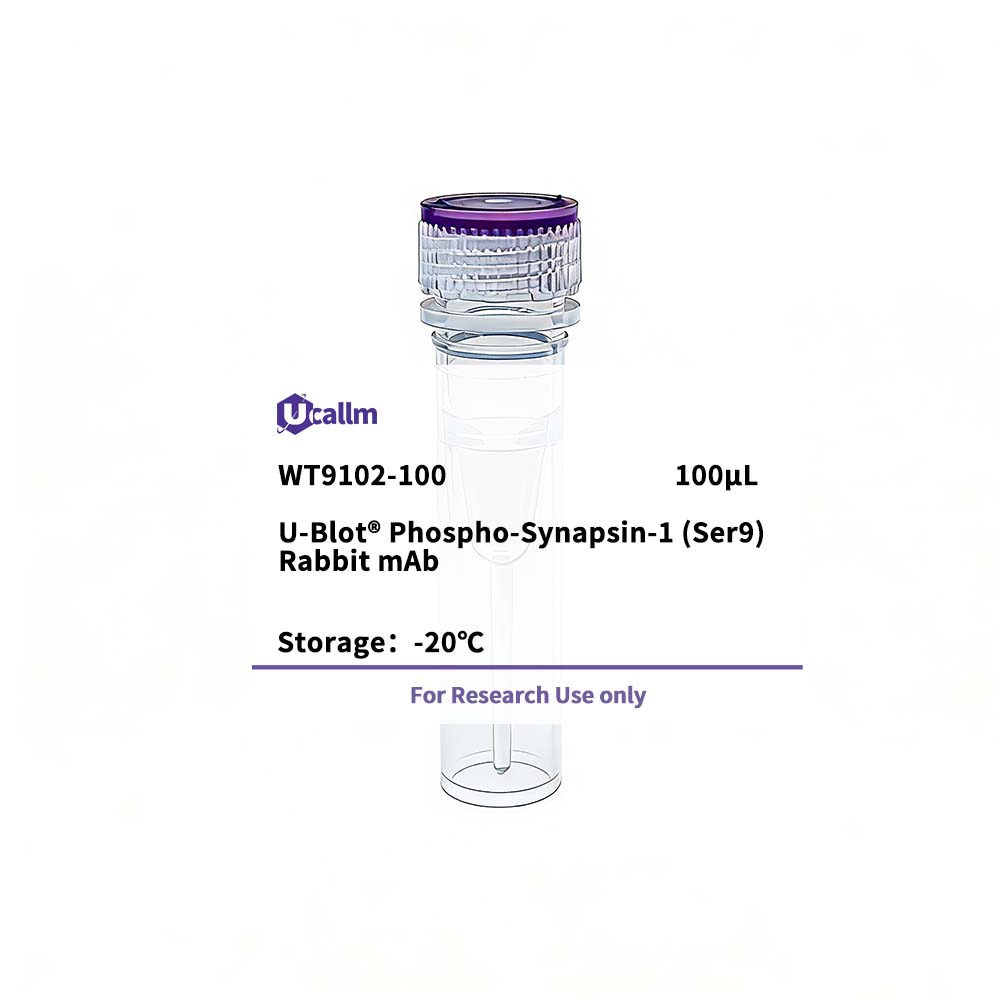
Product details
Background:Synapsin-1 is a subfamily of synaptic proteins that consists of at least 5 related members: Synapsin Ia, Ib, IIa, IIb, and IIIa. They play a critical regulatory role in the release of neurotransmitters and are highly abundant in the nervous system. All synapsins possess a short N-terminal domain that is conserved across the members and can be phosphorylated by protein kinase A (PKA) or calcium/calmodulin-dependent kinase I (CaM kinase I).Phosphorylation of the Ser9 site within the N-terminal domain of synapsin prevents its binding to phospholipids, resulting in the separation of synapsin from synaptic vesicles. When neurons receive stimulation, phosphorylated Synapsin-1 undergoes dephosphorylation, allowing it to rebind with phospholipids and facilitate the release of synaptic vesicles. This process enables the release of neurotransmitters and the transmission of neural signals.




