SKU: WR5428 Categories: ,

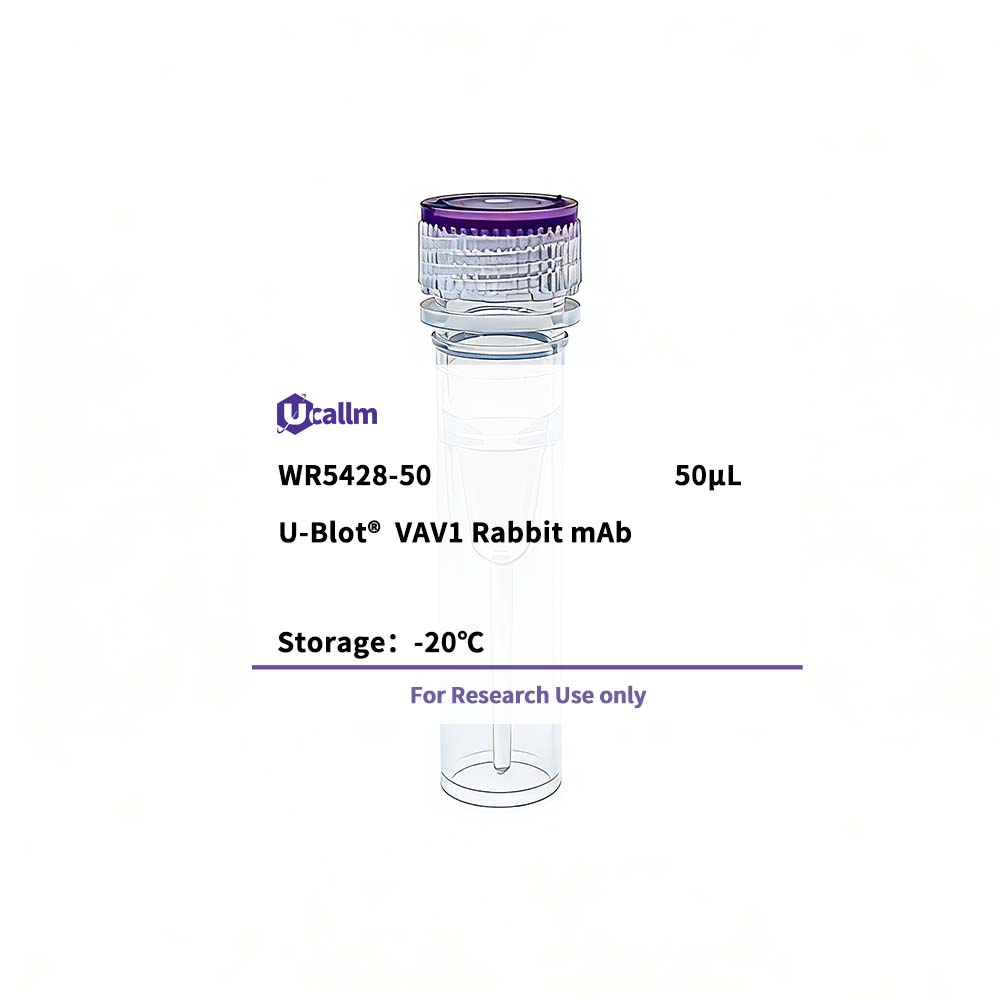
U-Blot® VAV1 Rabbit mAb

Price range: $268.00 through $328.00

SKU: WR5428-50
Enter the quantity you would like, or drag the panel to find the quantity and price that best for you
Bulk QuoteAuthorize OEM & ODM

Product details

Background:This gene is a member of the VAV gene family. The VAV proteins are guanine nucleotide exchange factors (GEFs) for Rho family GTPases that activate pathways leading to actin cytoskeletal rearrangements and transcriptional alterations. The encoded protein is important in hematopoiesis, playing a role in T-cell and B-cell development and activation. The encoded protein has been identified as the specific binding partner of Nef proteins from HIV-1. Coexpression and binding of these partners initiates profound morphological changes, cytoskeletal rearrangements and the JNK/SAPK signaling cascade, leading to increased levels of viral transcription and replication. Alternatively spliced transcript variants encoding multiple isoforms have been observed for this gene. [provided by RefSeq, Apr 2012],

Specifications

Size50μL/100μL
TargetVAV1
ReactivityHuman, Mouse, Rat
ApplicationsWB, IF, IP, ELISA
MW(Calculated)98kD
MW(Observed)98kD
Host SpeciesRabbit
IsotypeIgG,Kappa
Conjugate/ModificationUnmodified
Recommended Dilution RatioWB 1:2000-1:10000; IF 1:200-1:1000; ELISA 1:5000-1:20000; IP 1:50-1:200;
FormulationPBS, 50% glycerol, 0.05% Proclin 300, 0.05%BSA
PurificationRecombinant Antibody expressed in animal component-free (ACF) media, purified via Protein A affinity chromatography.
Storage-15°C to -25°C/1 year(Do not lower than -25°C)
Concentration
ClonalityMonoclonal
Clone NumberRM1677R
ImmunogenThe specific immunogen used to produce this antibody is proprietary information.
SpecificityEndogenous
Gene NameVAV1
Protein NameProto-oncogene vav
Other NameVAV1; / VAV; / Proto-oncogene vav
SpeciesHuman
Gene ID7409
UniprotP15498,
Species.1Mouse
Gene ID.122324
Uniprot.1P27870,
Species.2Rat
Gene ID.2
Uniprot.2P54100
Cellular Localizationintracellular,cytosol,plasma membrane,cell-cell junction,
Tissue ExpressionWidely expressed in hematopoietic cells but not in other cell types.
Signaling_pathwayCellular Processes >> Cellular community - eukaryotes >> Focal adhesion;Cellular Processes >> Cell motility >> Regulation of actin cytoskeleton;Organismal Systems >> Immune system >> Natural killer cell mediated cytotoxicity;Organismal Systems >> Immune system >> T cell receptor signaling pathway;Organismal Systems >> Immune system >> B cell receptor signaling pathway;Organismal Systems >> Immune system >> Fc epsilon RI signaling pathway;Organismal Systems >> Immune system >> Fc gamma R-mediated phagocytosis;Organismal Systems >> Immune system >> Leukocyte transendothelial migration;Organismal Systems >> Immune system >> Chemokine signaling pathway;Environmental Information Processing >> Signal transduction >> Rap1 signaling pathway;Environmental Information Processing >> Signal transduction >> cAMP signaling pathway
Research Areas>>Rap1 signaling pathway; / >>cAMP signaling pathway; / >>Chemokine signaling pathway; / >>Focal adhesion; / >>Natural killer cell mediated cytotoxicity; / >>T cell receptor signaling pathway; / >>B cell receptor signaling pathway; / >>Fc epsilon RI signaling pathway; / >>Fc gamma R-mediated phagocytosis; / >>Leukocyte transendothelial migration; / >>Regulation of actin cytoskeleton; / >>Yersinia infection; / >>Proteoglycans in cancer; / >>Lipid and atherosclerosis
FunctionDomain:The DH domain is involved in interaction with CCPG1.,Function:Couples tyrosine kinase signals with the activation of the Rho/Rac GTPases, thus leading to cell differentiation and/or proliferation.,miscellaneous:'Vav' stands for the sixth letter of the Hebrew alphabet.,PTM:Phosphorylated on tyrosine residues.,similarity:Contains 1 CH (calponin-homology) domain.,similarity:Contains 1 DH (DBL-homology) domain.,similarity:Contains 1 PH domain.,similarity:Contains 1 phorbol-ester/DAG-type zinc finger.,similarity:Contains 1 SH2 domain.,similarity:Contains 2 SH3 domains.,subunit:May interact with CCPG1 (By similarity). Interacts with APS, DOCK2, GRB2, GRB3, DOCK2, SLA and ZNF655/VIK. Interacts with SIAH2; without leading to its degradation. Associates with BLNK, PLCG1, GRB2 and NCK1 in a B-cell antigen receptor-dependent fashion. Interacts with CBLB; which inhibits tyrosine phosphorylation and down-regulates activity. Interacts with SHB and CLNK.,tissue specificity:Widely expressed in hematopoietic cells but not in other cell types.,
Please login to post questions
Back to Top
Product has been added to your cart