SKU: WP14918 Categories: ,

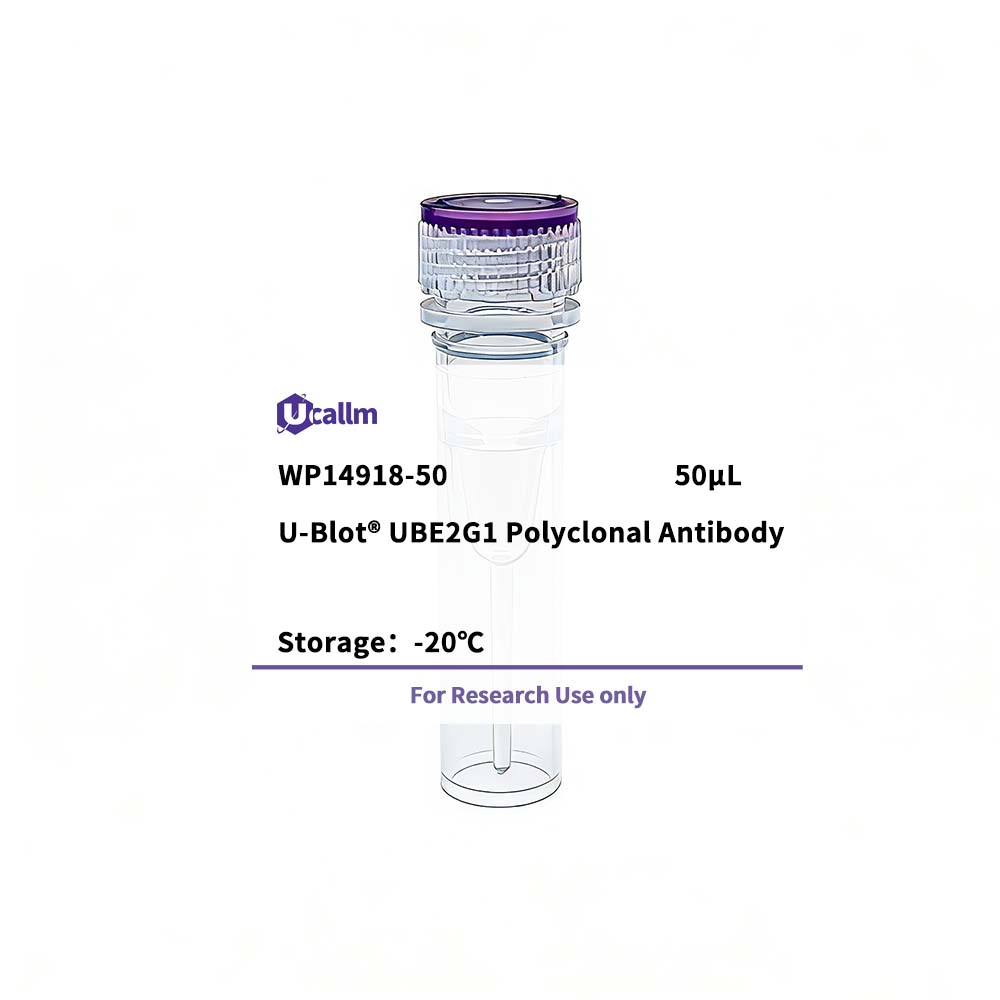
UBE2G1 Polyclonal Antibody

Price range: $268.00 through $328.00

SKU: WP14918-100
Enter the quantity you would like, or drag the panel to find the quantity and price that best for you
Bulk QuoteAuthorize OEM & ODM

Product details

Background:

The modification of proteins with ubiquitin is an important cellular mechanism for targeting abnormal or short-lived proteins for degradation. Ubiquitination involves at least three classes of enzymes: ubiquitin-activating enzymes, or E1s, ubiquitin-conjugating enzymes, or E2s, and ubiquitin-protein ligases, or E3s. This gene encodes a member of the E2 ubiquitin-conjugating enzyme family and catalyzes the covalent attachment of ubiquitin to other proteins. The protein may be involved in degradation of muscle-specific proteins. [provided by RefSeq, Jul 2008],

Specifications

Size50μL/100μL
TargetUBE2G1
ReactivityHuman, Mouse, Rat
ApplicationsIHC, IF, ELISA
MW(Calculated)20kD
MW(Observed)
Host SpeciesRabbit
IsotypeIgG
Conjugate/ModificationUnmodified
Recommended Dilution RatioIHC 1:100-1:300; ELISA 1:40000; IF 1:50-200 / Note: For IHC, we suggest antigen retrieval with TE buffer pH 9.0 (Cat#WT1004)
FormulationLiquid in PBS containing 50% glycerol, 0.5% BSA and 0.02% sodium azide.
PurificationThe antibody was affinity-purified from rabbit antiserum by affinity-chromatography using epitope-specific immunogen.
Storage-15°C to -25°C/1 year(Do not lower than -25°C)
Concentration1 mg/ml
ClonalityPolyclonal
Clone Number
ImmunogenSynthesized peptide derived from the Internal region of human UBE2G1.
SpecificityUBE2G1 Polyclonal Antibody detects endogenous levels of UBE2G1 protein.
Gene NameUBE2G1
Protein NameUbiquitin-conjugating enzyme E2 G1
Other NameUBE2G1; / UBE2G; / Ubiquitin-conjugating enzyme E2 G1; / E217K; / UBC7; / Ubiquitin carrier protein G1; / Ubiquitin-protein ligase G1
SpeciesHuman
Gene ID7326
UniprotP62253,
Species.1Mouse
Gene ID.167128
Uniprot.1P62254,
Species.2Rat
Gene ID.264631
Uniprot.2P62255
Cellular Localizationcytoplasm,extracellular exosome,
Tissue ExpressionWidely expressed, mainly in skeletal muscle.
Signaling_pathwayHuman Diseases >> Neurodegenerative disease >> Parkinson disease;Human Diseases >> Neurodegenerative disease >> Pathways of neurodegeneration - multiple diseases;Genetic Information Processing >> Folding, sorting and degradation >> Ubiquitin mediated proteolysis
Research Areas>>Ubiquitin mediated proteolysis; / >>Protein processing in endoplasmic reticulum; / >>Parkinson disease; / >>Pathways of neurodegeneration - multiple diseases
FunctionCatalytic activity:ATP + ubiquitin + protein lysine = AMP + diphosphate + protein N-ubiquityllysine.,Function:Catalyzes the covalent attachment of ubiquitin to other proteins. May be involved in degradation of muscle-specific proteins.,pathway:Protein modification; protein ubiquitination.,similarity:Belongs to the ubiquitin-conjugating enzyme family.,tissue specificity:Widely expressed, mainly in skeletal muscle.,
Please login to post questions
Back to Top
Product has been added to your cart
