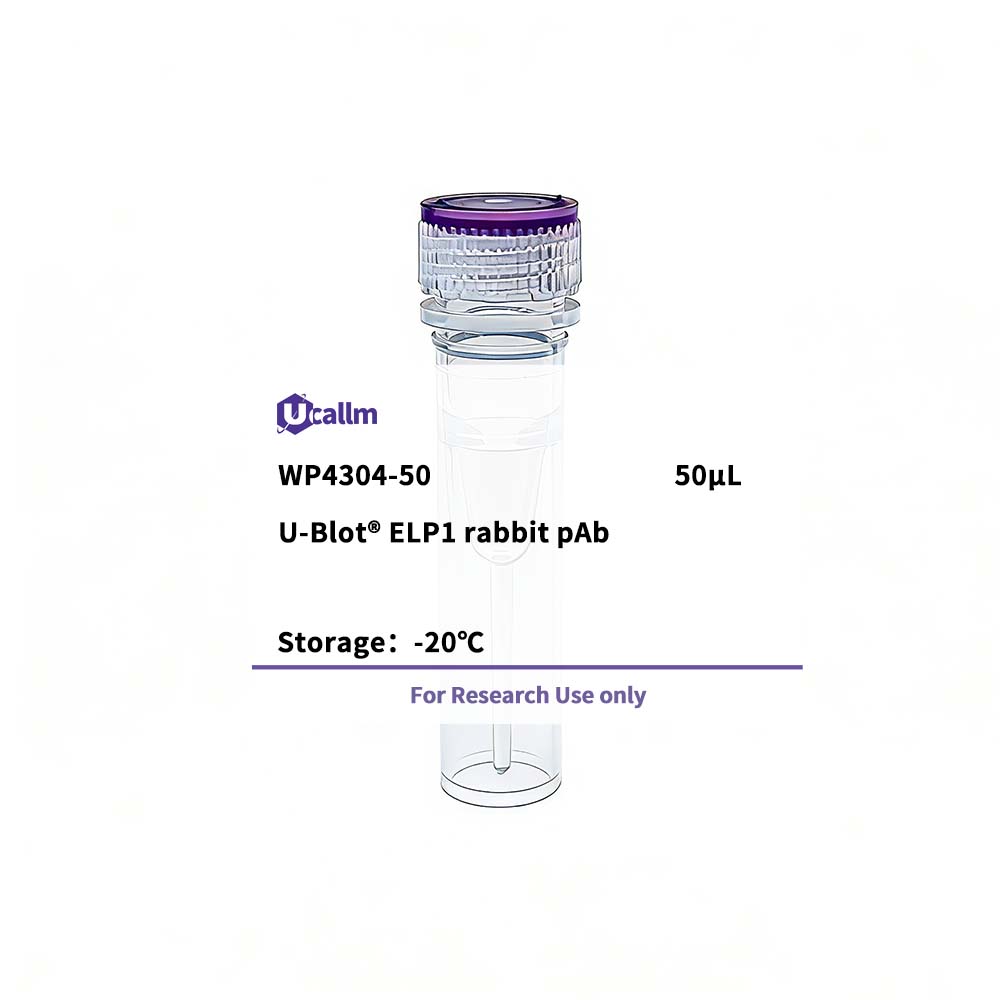
SKU: WP4304 Categories: ,

ELP1 rabbit pAb

Price range: $268.00 through $328.00

SKU: WP4304-100
Enter the quantity you would like, or drag the panel to find the quantity and price that best for you
Bulk QuoteAuthorize OEM & ODM

Product details

Background:

The protein encoded by this gene is a scaffold protein and a regulator for three different kinases involved in proinflammatory signaling. The encoded protein can bind NF-kappa-B-inducing kinase and I-kappa-B kinases through separate domains and assemble them into an active kinase complex. Mutations in this gene have been associated with familial dysautonomia. Alternative splicing results in multiple transcript variants encoding different isoforms. [provided by RefSeq, Jan 2016],

Specifications

Size50μL/100μL
TargetELP1
ReactivityHuman, Mouse, Rat
ApplicationsWB
MW(Calculated)147kD
MW(Observed)
Host SpeciesRabbit
IsotypeIgG
Conjugate/ModificationUnmodified
Recommended Dilution RatioWB 1:500-2000
FormulationLiquid in PBS containing 50% glycerol, 0.5% BSA and 0.02% sodium azide.
PurificationThe antibody was affinity-purified from rabbit antiserum by affinity-chromatography using epitope-specific immunogen.
Storage-15°C to -25°C/1 year(Do not lower than -25°C)
Concentration1 mg/ml
ClonalityPolyclonal
Clone Number
ImmunogenSynthesized peptide derived from human ELP1 AA range: 267-317
SpecificityThis antibody detects endogenous levels of ELP1 at Human/Mouse/Rat
Gene NameIKBKAP ELP1 IKAP
Protein NameELP1
Other Name
SpeciesHuman
Gene ID8518
UniprotO95163,
Species.1Mouse
Gene ID.1230233
Uniprot.1Q7TT37,
Species.2Rat
Gene ID.2140934
Uniprot.2Q8VHU4
Cellular LocalizationCytoplasm . Nucleus .
Tissue Expression
Signaling_pathway
Research Areas
FunctionDisease:Defects in IKBKAP are the cause of familial dysautonomia (FD) [MIM:223900]; also known as Riley-Day syndrome or hereditary sensory and autonomic neuropathy type III. This autosomal recessive disorder is due to the poor development and survival, and progressive degeneration of the sensory, sympathetic and parasympathetic neurons. FD individuals are affected with a variety of symptoms such as decreased sensitivity to pain and temperature, cardiovascular instability, recurrent pneumonias, vomiting crises, and gastrointestinal dysfunction. It is primarily confined to individuals of Ashkenazi Jewish descent, with an incidence of 1/3600 live births.,Function:Acts as subunit of the RNA polymerase II elongator complex, which is a histone acetyltransferase component of the RNA polymerase II (Pol II) holoenzyme and is involved in transcriptional elongation. Elongator may play a role in chromatin remodeling and is involved in acetylation of histones H3 and probably H4.,Function:May act as a scaffold protein that may assemble active IKK-MAP3K14 complexes (IKKA, IKKB and MAP3K14/NIK).,PTM:Phosphorylated.,similarity:Belongs to the ELP1/IKA1 family.,subunit:Interacts preferentially with MAP3K14/NIK followed by IKK-alpha and IKK-beta. Component of the RNA polymerase II elongator complex (Elongator), which consists of IKBKAP/ELP1, STIP1/ELP2, ELP3, ELP4, and two yet unidentified proteins, p30 and p38. Elongator associates with the C-terminal domain (CTD) of Pol II largest subunit. Interacts with ELP3.,
Please login to post questions
Back to Top
Product has been added to your cart
