SKU: WP10941 Categories: ,

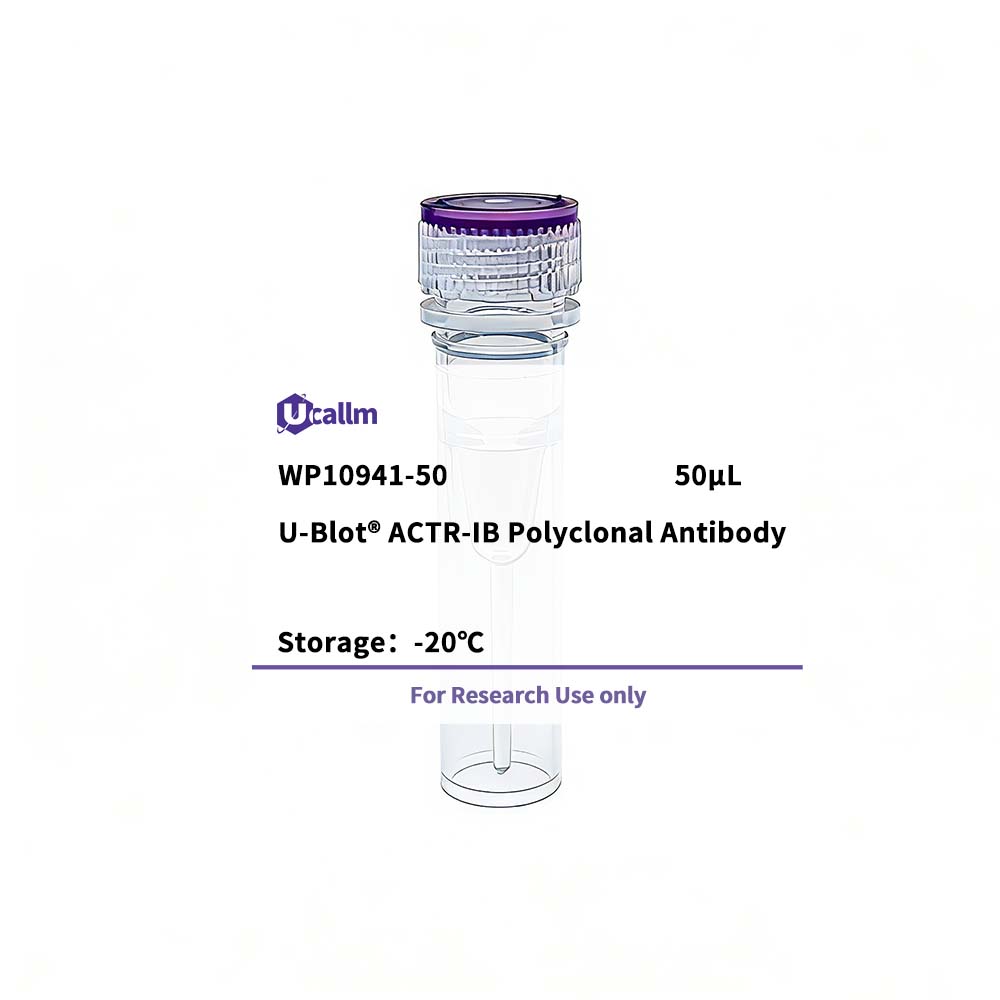
ACTR-IB Polyclonal Antibody

Price range: $268.00 through $328.00

SKU: WP10941-100
Enter the quantity you would like, or drag the panel to find the quantity and price that best for you
Bulk QuoteAuthorize OEM & ODM

Product details

Background:

This gene encodes an activin A type IB receptor. Activins are dimeric growth and differentiation factors which belong to the transforming growth factor-beta (TGF-beta) superfamily of structurally related signaling proteins. Activins signal through a heteromeric complex of receptor serine kinases which include at least two type I and two type II receptors. This protein is a type I receptor which is essential for signaling. Mutations in this gene are associated with pituitary tumors. Alternate splicing results in multiple transcript variants.[provided by RefSeq, Jun 2010],
Specifications

TargetACTR-IB
ReactivityHuman, Mouse, Rat
ApplicationsWB, IHC, IF, ELISA
MW(Calculated)
MW(Observed)56kD
Host SpeciesRabbit
IsotypeIgG
Conjugate/ModificationUnmodified
Modification
Recommended Dilution RatioWB 1:500-1:2000; IHC 1:100-1:300; IF 1:200-1:1000; ELISA 1:5000; Not yet tested in other applications. / Note: For IHC, we suggest antigen retrieval with TE buffer pH 9.0 (Cat#YS0004)
FormulationLiquid in PBS containing 50% glycerol, 0.5% BSA and 0.02% sodium azide.
Source
PurificationThe antibody was affinity-purified from rabbit antiserum by affinity-chromatography using epitope-specific immunogen.
Purity
Storage-15°C to -25°C/1 year(Do not lower than -25°C)
Concentration1 mg/ml
ClonalityPolyclonal
Clone Number
ImmunogenThe antiserum was produced against synthesized peptide derived from human ACV1B. AA range:73-122
Sequence
SpecificityACTR-IB Polyclonal Antibody detects endogenous levels of ACTR-IB protein.
Gene NameACVR1B
Protein NameActivin receptor type-1B
Other NameACVR1B; / ACVRLK4; / ALK4; / Activin receptor type-1B; / Activin receptor type IB; / ACTR-IB; / Activin receptor-like kinase 4; / ALK-4; / Serine/threonine-protein kinase receptor R2; / SKR2
SpeciesHuman
Gene ID-191
UniprotP36896,
Species.1Mouse
Gene ID-211479
Uniprot.1Q61271,
Species.2Rat
Gene ID-329381
Uniprot.2P80202
Organism-4
Gene ID-4
SwissProt-4
BackgroundThis gene encodes an activin A type IB receptor. Activins are dimeric growth and differentiation factors which belong to the transforming growth factor-beta (TGF-beta) superfamily of structurally related signaling proteins. Activins signal through a heteromeric complex of receptor serine kinases which include at least two type I and two type II receptors. This protein is a type I receptor which is essential for signaling. Mutations in this gene are associated with pituitary tumors. Alternate splicing results in multiple transcript variants.[provided by RefSeq, Jun 2010],
Cellular LocalizationCell membrane; Single-pass type I membrane protein .
Tissue ExpressionExpressed in many tissues, most strongly in kidney, pancreas, brain, lung, and liver.
Signaling_pathwayCellular Processes >> Cellular community - eukaryotes >> Signaling pathways regulating pluripotency of stem cells;Environmental Information Processing >> Signal transduction >> TGF-beta signaling pathway;Environmental Information Processing >> Signaling molecules and interaction >> Cytokine-cytokine receptor interaction
Research Areas>>Cytokine-cytokine receptor interaction; / >>TGF-beta signaling pathway; / >>Signaling pathways regulating pluripotency of stem cells
FunctionCatalytic activity:ATP + [receptor-protein] = ADP + [receptor-protein] phosphate.,cofactor:Magnesium or manganese.,Function:On ligand binding, forms a receptor complex consisting of two type II and two type I transmembrane serine/threonine kinases. Type II receptors phosphorylate and activate type I receptors which autophosphorylate, then bind and activate SMAD transcriptional regulators. Phosphorylates TTRAP.,PTM:Autophosphorylated.,similarity:Belongs to the protein kinase superfamily. TKL Ser/Thr protein kinase family. TGFB receptor subfamily.,similarity:Contains 1 GS domain.,similarity:Contains 1 protein kinase domain.,subunit:Interacts with AIP1. Part of a complex consisting of AIP1, ACVR2A, ACVR1B and SMAD3. Interacts with TTRAP.,tissue specificity:Expressed in many tissues, most strongly in kidney, pancreas, brain, lung, and liver.,
RRID
Please login to post questions
Back to Top
Product has been added to your cart