SKU: WM1328 Categories: ,

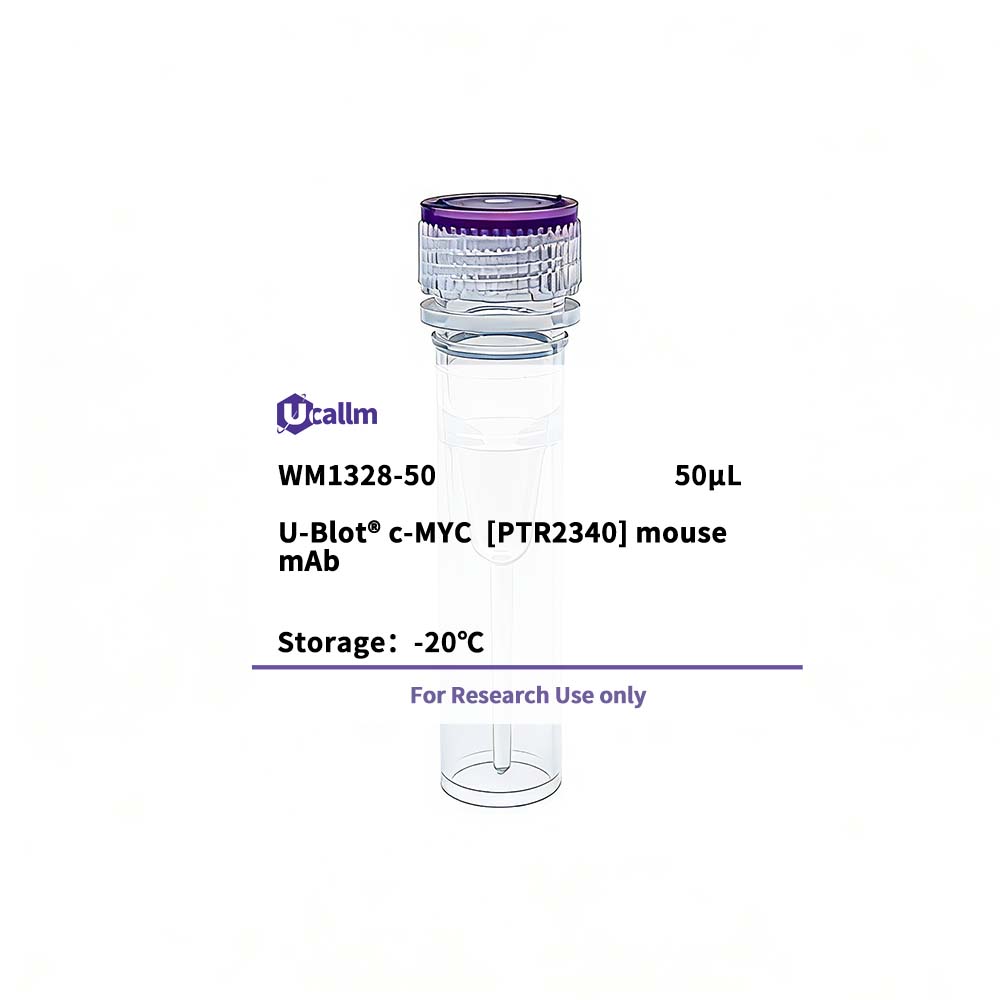
c-MYC [PTR2340] mouse mAb

Price range: $268.00 through $328.00

SKU: WM1328-50
Enter the quantity you would like, or drag the panel to find the quantity and price that best for you
Bulk QuoteAuthorize OEM & ODM

Product details

Background:
v-myc avian myelocytomatosis viral oncogene homolog(MYC) Homo sapiens The protein encoded by this gene is a multifunctional, nuclear phosphoprotein that plays a role in cell cycle progression, apoptosis and cellular transformation. It functions as a transcription factor that regulates transcription of specific target genes. Mutations, overexpression, rearrangement and translocation of this gene have been associated with a variety of hematopoietic tumors, leukemias and lymphomas, including Burkitt lymphoma. There is evidence to show that alternative translation initiations from an upstream, in-frame non-AUG (CUG) and a downstream AUG start site result in the production of two isoforms with distinct N-termini. The synthesis of non-AUG initiated protein is suppressed in Burkitt's lymphomas, suggesting its importance in the normal function of this gene. [provided by RefSeq, Jul 2008],

Specifications

Size50μL/100μL
Targetc-Myc
ReactivityHuman, Mouse, Rat
ApplicationsIHC, WB, IF, ELISA
MW(Calculated)48kD
MW(Observed)57kD
Host SpeciesMouse
IsotypeIgG2b,Kappa
Conjugate/ModificationUnmodified
Recommended Dilution RatioIHC 1:200-1000; WB 1:500-2000; IF 1:100-500; ELISA 1:1000-5000 / Note: For IHC, we suggest antigen retrieval with TE buffer pH 9.0 (Cat#WT1004)
FormulationPBS, 50% glycerol, 0.05% Proclin 300, 0.05%BSA
PurificationRecombinant Antibody expressed in animal component-free (ACF) media, purified via Protein G affinity chromatography.
Storage-15°C to -25°C/1 year(Do not lower than -25°C)
Concentration
ClonalityMonoclonal
Clone NumberRMMR2340
ImmunogenSynthesized peptide derived from human c-MYC AA range: 350-453
SpecificityThis antibody detects endogenous levels of c-MYC protein.
Gene NameMYC BHLHE39
Protein NameMyc proto-oncogene protein (Class E basic helix-loop-helix protein 39) (bHLHe39) (Proto-oncogene c-Myc) (Transcription factor p64)
Other NameMYC; / BHLHE39; / Myc proto-oncogene protein; / Class E basic helix-loop-helix protein 39; / bHLHe39; / Proto-oncogene c-Myc; / Transcription factor p64
SpeciesHuman
Gene ID4609
UniprotP01106,
Species.1Mouse
Gene ID.117869
Uniprot.1P01108,
Species.2Rat
Gene ID.224577
Uniprot.2P09416
Cellular LocalizationNuclear
Tissue Expression
Signaling_pathwayCellular Processes >> Cell growth and death >> Cell cycle;Cellular Processes >> Cell growth and death >> Cellular senescence;Cellular Processes >> Cellular community - eukaryotes >> Signaling pathways regulating pluripotency of stem cells;Organismal Systems >> Endocrine system >> Thyroid hormone signaling pathway;Human Diseases >> Cancer: overview >> Pathways in cancer;Human Diseases >> Cancer: overview >> Transcriptional misregulation in cancer;Human Diseases >> Cancer: overview >> MicroRNAs in cancer;Human Diseases >> Cancer: overview >> Central carbon metabolism in cancer;Human Diseases >> Cancer: specific types >> Colorectal cancer;Human Diseases >> Cancer: specific types >> Hepatocellular carcinoma;Human Diseases >> Cancer: specific types >> Gastric cancer;Human Diseases >> Cancer: specific types >> Thyroid cancer;Human Diseases >> Cancer: specific types >> Acute myeloid leukemia;Human Diseases >> Cancer: specific types >> Chronic myeloid leukemia;Human Diseases >> Cancer: specific types >> Bladder cancer;Human Diseases >> Cancer: specific types >> Endometrial cancer;Human Diseases >> Cancer: specific types >> Breast cancer;Human Diseases >> Cancer: specific types >> Small cell lung cancer;Environmental Information Processing >> Signal transduction >> MAPK signaling pathway;Environmental Information Processing >> Signal transduction >> ErbB signaling pathway;Environmental Information Processing >> Signal transduction >> Wnt signaling pathway;Environmental Information Processing >> Signal transduction >> TGF-beta signaling pathway;Environmental Information Processing >> Signal transduction >> Hippo signaling pathway;Environmental Information Processing >> Signal transduction >> JAK-STAT signaling pathway;Environmental Information Processing >> Signal transduction >> PI3K-Akt signaling pathway
Research Areas>>MAPK signaling pathway; / >>ErbB signaling pathway; / >>Cell cycle; / >>PI3K-Akt signaling pathway; / >>Cellular senescence; / >>Wnt signaling pathway; / >>TGF-beta signaling pathway; / >>Hippo signaling pathway; / >>Signaling pathways regulating pluripotency of stem cells; / >>JAK-STAT signaling pathway; / >>Thyroid hormone signaling pathway; / >>Salmonella infection; / >>Hepatitis C; / >>Hepatitis B; / >>Human cytomegalovirus infection; / >>Human T-cell leukemia virus 1 infection; / >>Kaposi sarcoma-associated herpesvirus infection; / >>Epstein-Barr virus infection; / >>Pathways in cancer; / >>Transcriptional misregulation in cancer; / >>Proteoglycans in cancer; / >>MicroRNAs in cancer; / >>Chemical carcinogenesis - receptor activation; / >>Colorectal cancer; / >>Endometrial cancer; / >>Thyroid cancer; / >>Bladder cancer; / >>Chronic myeloid leukemia; / >>Acute myeloid leukemia; / >>Small cell lung cancer; / >>Breast cancer; / >>Hepatocellular carcinoma; / >>Gastric cancer; / >>Central carbon metabolism in cancer
FunctionDisease:A chromosomal aberration involving MYC may be a cause of a form of B-cell chronic lymphocytic leukemia. Translocation t(8; 12)(q24; q22) with BTG1.,Disease:Overexpression of MYC is implicated in the etiology of a variety of hematopoietic tumors.,Function:Participates in the regulation of gene transcription. Binds DNA both in a non-specific manner and also specifically to recognizes the core sequence 5'-CAC[GA]TG-3'. Seems to activate the transcription of growth-related genes.,online information:Myc entry,PTM:Phosphorylated by PRKDC.,similarity:Contains 1 basic helix-loop-helix (bHLH) domain.,subunit:Efficient DNA binding requires dimerization with another bHLH protein. Binds DNA as a heterodimer with MAX. Interacts with TAF1C and SPAG9. Interacts with PARP10. Interacts with KDM5A and KDM5B.,
Please login to post questions
Back to Top
Product has been added to your cart

