SKU: WM1259 Categories: ,

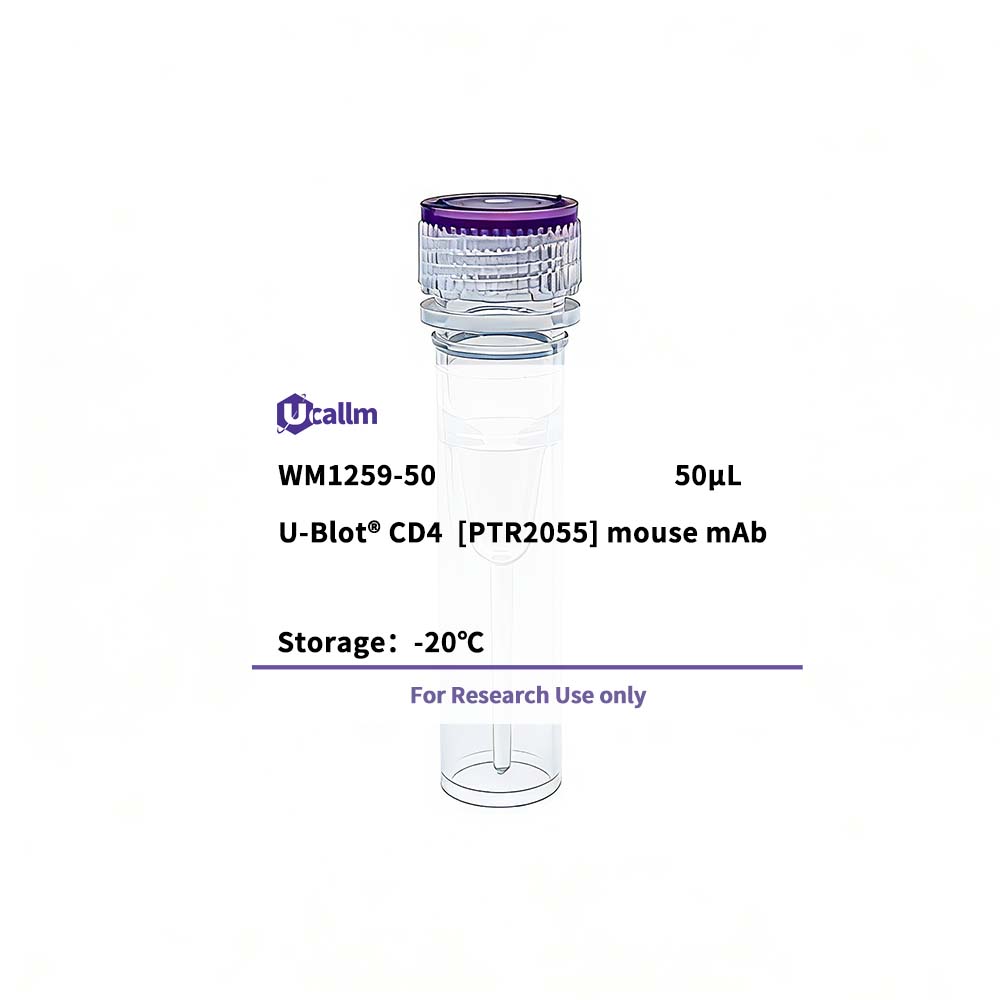
CD4 [PTR2055] mouse mAb

Price range: $268.00 through $328.00

SKU: WM1259-50
Enter the quantity you would like, or drag the panel to find the quantity and price that best for you
Bulk QuoteAuthorize OEM & ODM

Product details

Background:
CD4 molecule(CD4) Homo sapiens This gene encodes a membrane glycoprotein of T lymphocytes that interacts with major histocompatibility complex class II antigenes and is also a receptor for the human immunodeficiency virus. This gene is expressed not only in T lymphocytes, but also in B cells, macrophages, and granulocytes. It is also expressed in specific regions of the brain. The protein functions to initiate or augment the early phase of T-cell activation, and may function as an important mediator of indirect neuronal damage in infectious and immune-mediated diseases of the central nervous system. Multiple alternatively spliced transcript variants encoding different isoforms have been identified in this gene. [provided by RefSeq, Aug 2010],

Specifications

TargetCD4
ReactivityHuman
ApplicationsWB, IF, ELISA
MW(Calculated)
MW(Observed)51kD
Host SpeciesMouse
IsotypeIgG1,Kappa
Conjugate/ModificationUnmodified
Modification
Recommended Dilution RatioWB 1:500-2000; IF 1:100-500; ELISA 1:1000-5000
FormulationPBS, 50% glycerol, 0.05% Proclin 300, 0.05%BSA
Source
PurificationRecombinant Antibody expressed in animal component-free (ACF) media, purified via Protein G affinity chromatography.
Purity
Storage-15°C to -25°C/1 year(Do not lower than -25°C)
Concentration1 mg/ml
ClonalityMonoclonal
Clone NumberPTR2055
ImmunogenSynthesized peptide derived from human CD4. AA range: 1-100
Sequence
SpecificityThis antibody detects endogenous levels of CD4 protein.
Gene NameCD4
Protein NameT-cell surface glycoprotein CD4 (T-cell surface antigen T4/Leu-3) (CD antigen CD4)
Other NameT-cell surface glycoprotein CD4; / T-cell surface antigen T4/Leu-3; / CD antigen CD4
SpeciesHuman
Gene ID-1920
UniprotP01730,
Species.1Mouse
Gene ID-212504
Uniprot.1P06332,
Species.2Rat
Gene ID-324932
Uniprot.2P05540
Organism-4
Gene ID-4
SwissProt-4
BackgroundCD4 molecule(CD4) Homo sapiens This gene encodes a membrane glycoprotein of T lymphocytes that interacts with major histocompatibility complex class II antigenes and is also a receptor for the human immunodeficiency virus. This gene is expressed not only in T lymphocytes, but also in B cells, macrophages, and granulocytes. It is also expressed in specific regions of the brain. The protein functions to initiate or augment the early phase of T-cell activation, and may function as an important mediator of indirect neuronal damage in infectious and immune-mediated diseases of the central nervous system. Multiple alternatively spliced transcript variants encoding different isoforms have been identified in this gene. [provided by RefSeq, Aug 2010],
Cellular LocalizationMembranous
Tissue ExpressionHighly expressed in T-helper cells. The presence of CD4 is a hallmark of T-helper cells which are specialized in the activation and growth of cytotoxic T-cells, regulation of B cells, or activation of phagocytes. CD4 is also present in other immune cells such as macrophages, dendritic cells or NK cells.
Signaling_pathwayOrganismal Systems >> Immune system >> Hematopoietic cell lineage;Organismal Systems >> Immune system >> Antigen processing and presentation;Organismal Systems >> Immune system >> T cell receptor signaling pathway;Organismal Systems >> Immune system >> Th1 and Th2 cell differentiation;Organismal Systems >> Immune system >> Th17 cell differentiation;Human Diseases >> Cancer: overview >> PD-L1 expression and PD-1 checkpoint pathway in cancer;Human Diseases >> Immune disease >> Primary immunodeficiency;Environmental Information Processing >> Signaling molecules and interaction >> Cytokine-cytokine receptor interaction;Environmental Information Processing >> Signaling molecules and interaction >> Cell adhesion molecules
Research Areas
FunctionIntegral membrane glycoprotein that plays an essential role in the immune response and serves multiple functions in responses against both external and internal offenses. In T-cells, functions primarily as a coreceptor for MHC class II molecule:peptide complex. The antigens presented by class II peptides are derived from extracellular proteins while class I peptides are derived from cytosolic proteins. Interacts simultaneously with the T-cell receptor (TCR) and the MHC class II presented by antigen presenting cells (APCs). In turn, recruits the Src kinase LCK to the vicinity of the TCR-CD3 complex. LCK then initiates different intracellular signaling pathways by phosphorylating various substrates ultimately leading to lymphokine production, motility, adhesion and activation of T-helper cells. In other cells such as macrophages or NK cells, plays a role in differentiation/activation, cytokine expression and cell migration in a TCR/LCK-independent pathway. Participates in the development of T-helper cells in the thymus and triggers the differentiation of monocytes into functional mature macrophages.; (Microbial infection) Primary receptor for human immunodeficiency virus-1 (HIV-1) . Down-regulated by HIV-1 Vpu . Acts as a receptor for Human Herpes virus 7/HHV-7 .
RRID
Please login to post questions
Back to Top
Product has been added to your cart