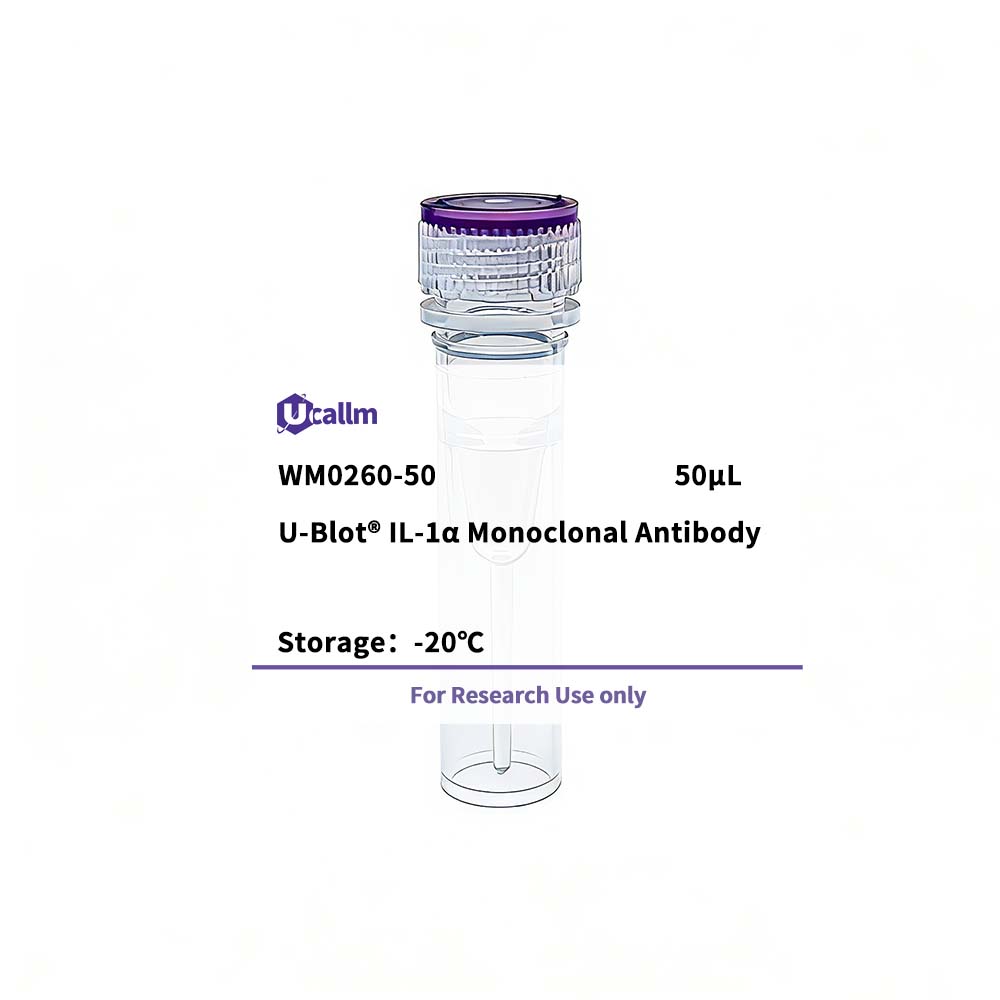
SKU: WM0260 Categories: ,

IL-1α Monoclonal Antibody

Price range: $268.00 through $328.00

SKU: WM0260-50
Enter the quantity you would like, or drag the panel to find the quantity and price that best for you
Bulk QuoteAuthorize OEM & ODM

Product details

Background:
The protein encoded by this gene is a member of the interleukin 1 cytokine family. This cytokine is a pleiotropic cytokine involved in various immune responses, inflammatory processes, and hematopoiesis. This cytokine is produced by monocytes and macrophages as a proprotein, which is proteolytically processed and released in response to cell injury, and thus induces apoptosis. This gene and eight other interleukin 1 family genes form a cytokine gene cluster on chromosome 2. It has been suggested that the polymorphism of these genes is associated with rheumatoid arthritis and Alzheimer's disease. [provided by RefSeq, Jul 2008],


Specifications

Size50μL/100μL
TargetIL-1α
ReactivityHuman
ApplicationsWB, ELISA
MW(Calculated)31kD
MW(Observed)
Host SpeciesMouse
Isotype
Conjugate/ModificationUnmodified
Recommended Dilution RatioWB 1:500-1:2000; ELISA 1:10000; Not yet tested in other applications.
FormulationLiquid in PBS containing 50% glycerol, 0.5% BSA and 0.02% sodium azide.
PurificationAffinity purification
Storage-15°C to -25°C/1 year(Do not lower than -25°C)
Concentration
ClonalityMonoclonal
Clone Number9F11
ImmunogenPurified recombinant fragment of human IL-1a expressed in E. Coli.
SpecificityIL-1α Monoclonal Antibody detects endogenous levels of IL-1α protein.
Gene NameIL1A
Protein NameInterleukin-1 alpha
Other NameIL1A; / IL1F1; / Interleukin-1 alpha; / IL-1 alpha; / Hematopoietin-1
SpeciesHuman
Gene ID3552
UniprotP01583,
Species.1Mouse
Gene ID.1
Uniprot.1P01582
Species.2
Gene ID.2
Uniprot.2
Cellular LocalizationCytoplasm . Secreted . The lack of a specific hydrophobic segment in the precursor sequence suggests that IL-1 is released by damaged cells or is secreted by a mechanism differing from that used for other secretory proteins. The secretion is dependent on protein unfolding and facilitated by the cargo receptor TMED10; it results in protein translocation from the cytoplasm into the ERGIC (endoplasmic reticulum-Golgi intermediate compartment) followed by vesicle entry and secretion (PubMed:32272059). .
Tissue ExpressionLung,
Signaling_pathwayCellular Processes >> Cell growth and death >> Necroptosis;Cellular Processes >> Cell growth and death >> Cellular senescence;Organismal Systems >> Immune system >> Hematopoietic cell lineage;Organismal Systems >> Development and regeneration >> Osteoclast differentiation;Human Diseases >> Immune disease >> Rheumatoid arthritis;Human Diseases >> Immune disease >> Inflammatory bowel disease;Human Diseases >> Immune disease >> Graft-versus-host disease;Human Diseases >> Neurodegenerative disease >> Alzheimer disease;Human Diseases >> Neurodegenerative disease >> Prion disease;Human Diseases >> Neurodegenerative disease >> Pathways of neurodegeneration - multiple diseases;Environmental Information Processing >> Signal transduction >> MAPK signaling pathway;Environmental Information Processing >> Signaling molecules and interaction >> Cytokine-cytokine receptor interaction
Research Areas>>MAPK signaling pathway; / >>Cytokine-cytokine receptor interaction; / >>Necroptosis; / >>Cellular senescence; / >>Osteoclast differentiation; / >>Hematopoietic cell lineage; / >>Non-alcoholic fatty liver disease; / >>AGE-RAGE signaling pathway in diabetic complications; / >>Type I diabetes mellitus; / >>Alzheimer disease; / >>Prion disease; / >>Pathways of neurodegeneration - multiple diseases; / >>Pertussis; / >>Leishmaniasis; / >>Tuberculosis; / >>Measles; / >>Influenza A; / >>Inflammatory bowel disease; / >>Rheumatoid arthritis; / >>Graft-versus-host disease; / >>Fluid shear stress and atherosclerosis
FunctionDomain:The similarity among the IL-1 precursors suggests that the amino ends of these proteins serve some as yet undefined function.,Function:Produced by activated macrophages, IL-1 stimulates thymocyte proliferation by inducing IL-2 release, B-cell maturation and proliferation, and fibroblast growth factor activity. IL-1 proteins are involved in the inflammatory response, being identified as endogenous pyrogens, and are reported to stimulate the release of prostaglandin and collagenase from synovial cells.,online information:Interleukin-1 entry,online information:The Singapore human mutation and polymorphism database,similarity:Belongs to the IL-1 family.,subcellular location:The lack of a specific hydrophobic segment in the precursor sequence suggests that IL-1 is released by damaged cells or is secreted by a mechanism differing from that used for other secretory proteins.,subunit:Monomer.,
Please login to post questions
Back to Top
Product has been added to your cart

