SKU: WP0766 Categories: ,

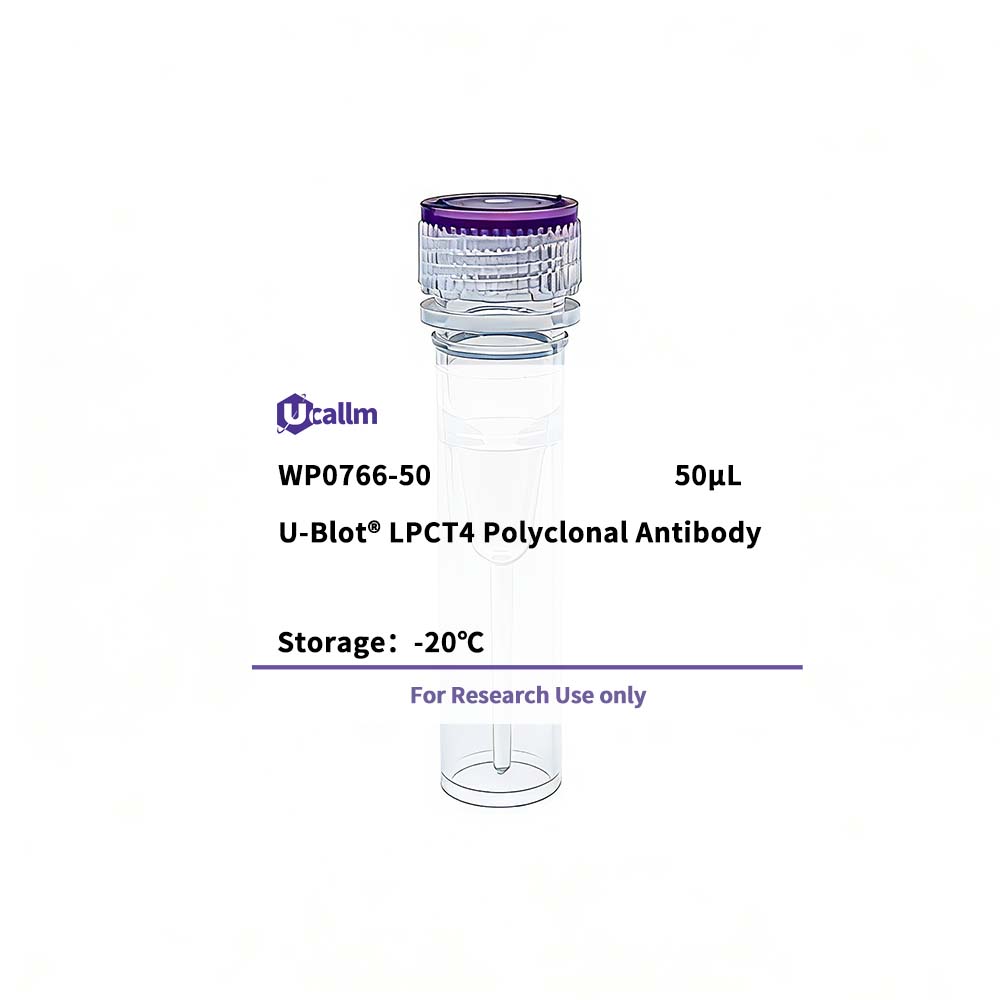
LPCT4 Polyclonal Antibody

Price range: $268.00 through $328.00

SKU: WP0766-100
Enter the quantity you would like, or drag the panel to find the quantity and price that best for you
Bulk QuoteAuthorize OEM & ODM

Product details

Background:

Members of the 1-acylglycerol-3-phosphate O-acyltransferase (EC 2.3.1.51) family, such as AGPAT7, catalyze the conversion of lysophosphatidic acid (LPA) to phosphatidic acid (PA), a precursor in the biosynthesis of all glycerolipids. Both LPA and PA are involved in signal transduction (Ye et al., 2005 [PubMed 16243729]).[supplied by OMIM, May 2008],

Specifications

Size50μL/100μL
TargetLPCT4
ReactivityHuman, Mouse
ApplicationsWB, ELISA
MW(Calculated)
MW(Observed)57kD
Host SpeciesRabbit
IsotypeIgG
Conjugate/ModificationUnmodified
Recommended Dilution RatioWB 1:500-2000; ELISA 1:5000-20000
FormulationLiquid in PBS containing 50% glycerol,0.5% BSA and 0.02% sodium azide.
PurificationThe antibody was affinity-purified from rabbit antiserum by affinity-chromatography using epitope-specific immunogen.
Storage-15°C to -25°C/1 year(Do not lower than -25°C)
Concentration1 mg/ml
ClonalityPolyclonal
Clone Number
ImmunogenSynthesized peptide derived from human protein . at AA range: 300-380
SpecificityLPCT4 Polyclonal Antibody detects endogenous levels of protein.
Gene NameLPCAT4 AGPAT7 AYTL3 LPEAT2
Protein NameLysophospholipid acyltransferase LPCAT4 (1-acylglycerol-3-phosphate O-acyltransferase 7) (1-AGP acyltransferase 7) (1-AGPAT 7) (Acyltransferase-like 3) (Lysophosphatidylcholine acyltransferase 4) (Lysophosphatidylethanolamine acyltransferase 2)
Other Name
SpeciesHuman
Gene ID254531
UniprotQ643R3,
Species.1Mouse
Gene ID.1
Uniprot.1Q6NVG1
Species.2
Gene ID.2
Uniprot.2
Cellular LocalizationEndoplasmic reticulum membrane; Multi-pass membrane protein .
Tissue ExpressionWidely expressed with predominant level in brain.
Signaling_pathway
Research Areas>>Glycerophospholipid metabolism; / >>Ether lipid metabolism; / >>Metabolic pathways
FunctionCaution:Was originally (PubMed:16243729) thought to be a lysophosphatidic acid acyltransferase based on sequence similarity but the mouse ortholog has been shown to be a lysophosphatidylcholine acyltransferase.,Function:Converts lysophosphatidylcholine (LPC) to phosphatidycholine in the presence of acyl-CoA.,pathway:Lipid metabolism; phospholipid metabolism.,similarity:Belongs to the 1-acyl-sn-glycerol-3-phosphate acyltransferase family.,tissue specificity:Widely expressed. Expressed in uterus, thymus, pancreas, skeletal muscle, bladder, stomach, lung and testis.,
Please login to post questions
Back to Top
Product has been added to your cart

