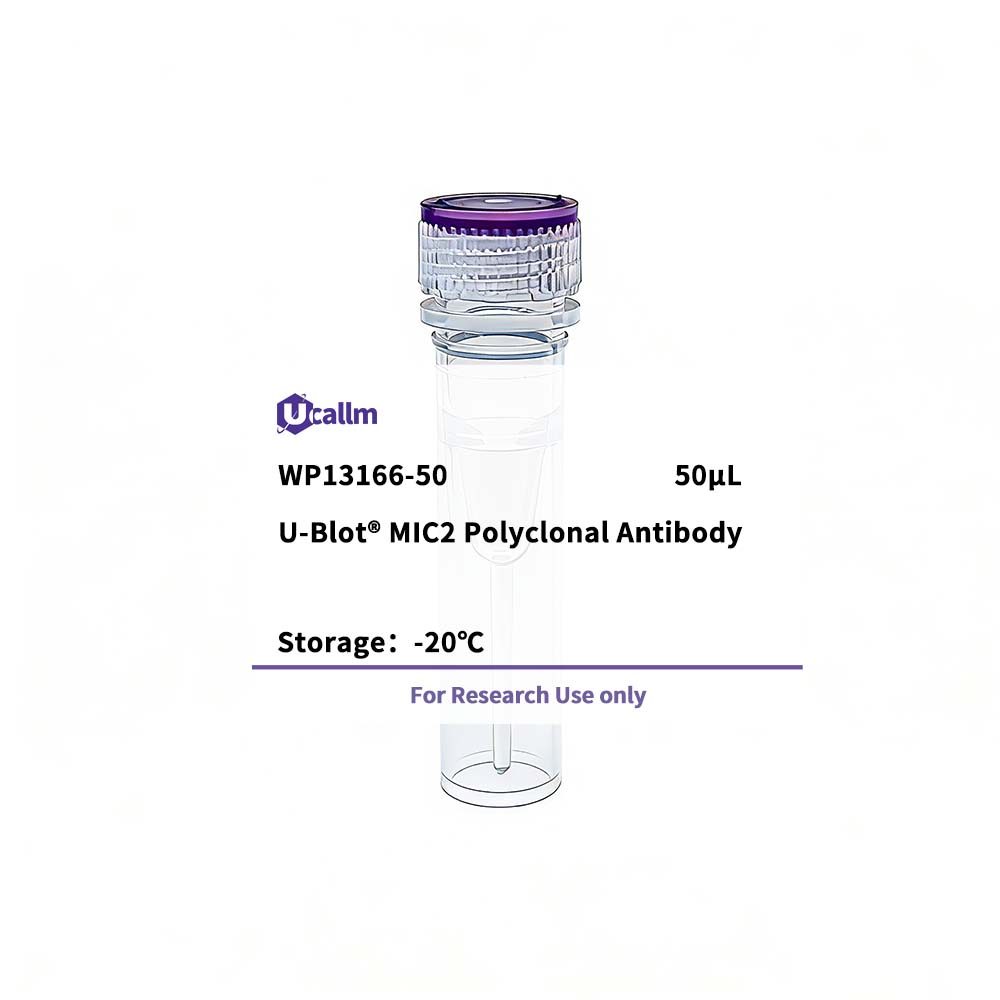
SKU: WP13166 Categories: ,

MIC2 Polyclonal Antibody

Price range: $268.00 through $328.00

SKU: WP13166-100
Enter the quantity you would like, or drag the panel to find the quantity and price that best for you
Bulk QuoteAuthorize OEM & ODM

Product details

Background:

The protein encoded by this gene is a cell surface glycoprotein involved in leukocyte migration, T-cell adhesion, ganglioside GM1 and transmembrane protein transport, and T-cell death by a caspase-independent pathway. In addition, the encoded protein may have the ability to rearrange the actin cytoskeleton and may also act as an oncosuppressor in osteosarcoma. This gene is found in the pseudoautosomal region of chromosomes X and Y and escapes X-chromosome inactivation. There is a related pseudogene located immediately adjacent to this locus. [provided by RefSeq, Mar 2016],

Specifications

Size50μL/100μL
TargetCD99
ReactivityHuman, Mouse
ApplicationsIF, IHC, ELISA
MW(Calculated)19kD
MW(Observed)
Host SpeciesRabbit
IsotypeIgG
Conjugate/ModificationUnmodified
Recommended Dilution RatioIF 1:200-1:1000; ELISA 1:5000; Not yet tested in other applications;
FormulationLiquid in PBS containing 50% glycerol, 0.5% BSA and 0.02% sodium azide.
PurificationThe antibody was affinity-purified from rabbit antiserum by affinity-chromatography using epitope-specific immunogen.
Storage-15°C to -25°C/1 year(Do not lower than -25°C)
Concentration1 mg/ml
ClonalityPolyclonal
Clone Number
ImmunogenThe antiserum was produced against synthesized peptide derived from human CD99. AA range:11-60
SpecificityMIC2 Polyclonal Antibody detects endogenous levels of MIC2 protein.
Gene NameCD99
Protein NameCD99 antigen
Other NameCD99; / MIC2; / MIC2X; / MIC2Y; / CD99 antigen; / 12E7; / E2 antigen; / Protein MIC2; / T-cell surface glycoprotein E2; / CD antigen CD99
SpeciesHuman
Gene ID4267
UniprotP14209,
Species.1Mouse
Gene ID.1
Uniprot.1Q8VCN6
Species.2
Gene ID.2
Uniprot.2
Cellular LocalizationMembrane; Single-pass type I membrane protein .
Tissue ExpressionBrain,Kidney,Skin,T-cell,Uterus,
Signaling_pathwayOrganismal Systems >> Immune system >> Leukocyte transendothelial migration;Environmental Information Processing >> Signaling molecules and interaction >> Cell adhesion molecules
Research Areas>>Cell adhesion molecules; / >>Leukocyte transendothelial migration
FunctionFunction:Involved in T-cell adhesion processes. It is involved in spontaneous rosette formation with erythrocytes.,miscellaneous:The gene encoding for this protein is located in the pseudoautosomal region 1 (PAR1) of X and Y chromosomes.,PTM:Extensively O-glycosylated.,similarity:Belongs to the CD99 family.,
Please login to post questions
Back to Top
Product has been added to your cart
