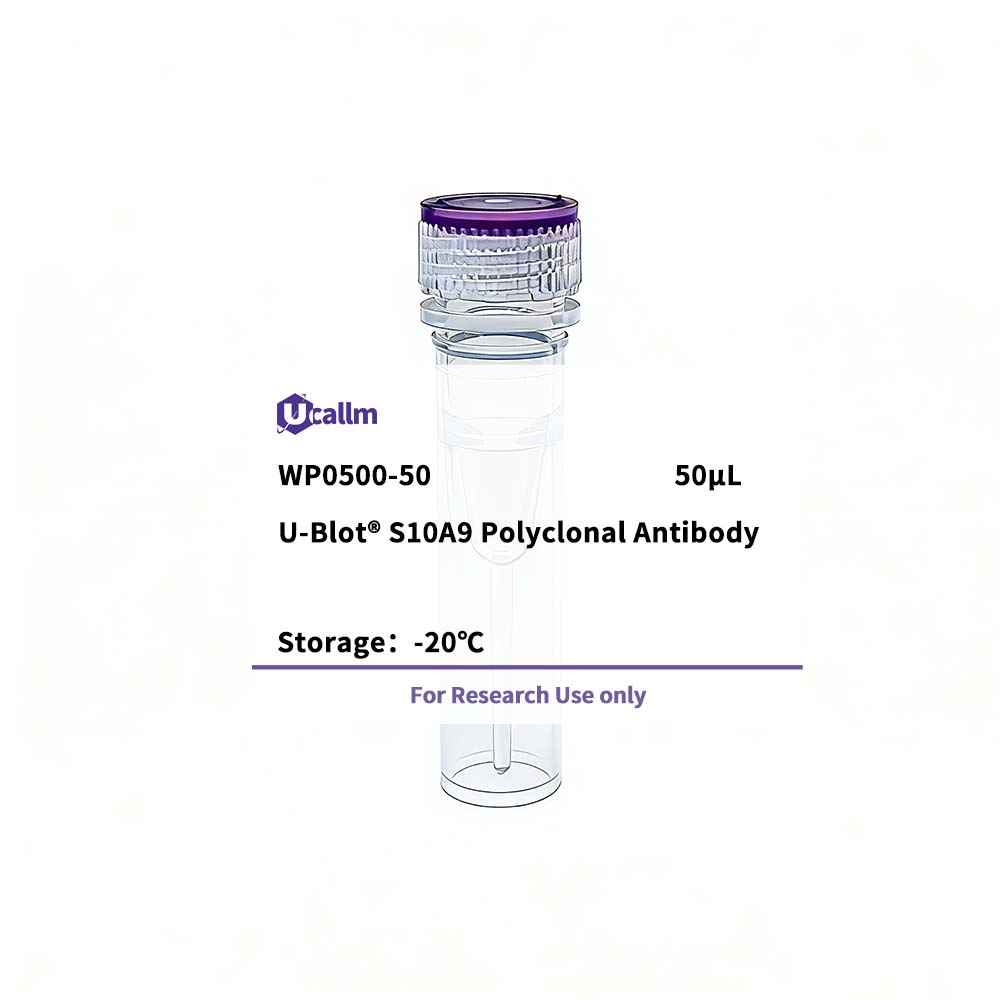
SKU: WP0500 Categories: ,

S10A9 Polyclonal Antibody

Price range: $268.00 through $328.00

SKU: WP0500-100
Enter the quantity you would like, or drag the panel to find the quantity and price that best for you
Bulk QuoteAuthorize OEM & ODM

Product details

Background:

S100 calcium binding protein A9(S100A9) Homo sapiens The protein encoded by this gene is a member of the S100 family of proteins containing 2 EF-hand calcium-binding motifs. S100 proteins are localized in the cytoplasm and/or nucleus of a wide range of cells, and involved in the regulation of a number of cellular processes such as cell cycle progression and differentiation. S100 genes include at least 13 members which are located as a cluster on chromosome 1q21. This protein may function in the inhibition of casein kinase and altered expression of this protein is associated with the disease cystic fibrosis. This antimicrobial protein exhibits antifungal and antibacterial activity. [provided by RefSeq, Nov 2014],

Specifications

Size50μL/100μL
TargetS10A9
ReactivityHuman, Mouse, Rat
ApplicationsWB, ELISA
MW(Calculated)
MW(Observed)12kD
Host SpeciesRabbit
IsotypeIgG
Conjugate/ModificationUnmodified
Recommended Dilution RatioWB 1:500-2000; ELISA 1:5000-20000
FormulationLiquid in PBS containing 50% glycerol,0.5% BSA and 0.02% sodium azide.
PurificationThe antibody was affinity-purified from rabbit antiserum by affinity-chromatography using epitope-specific immunogen.
Storage-15°C to -25°C/1 year(Do not lower than -25°C)
Concentration1 mg/ml
ClonalityPolyclonal
Clone Number
ImmunogenSynthesized peptide derived from human protein . at AA range: 40-120
SpecificityS10A9 Polyclonal Antibody detects endogenous levels of protein.
Gene NameS100A9 CAGB CFAG MRP14
Protein NameProtein S100-A9 (Calgranulin-B) (Calprotectin L1H subunit) (Leukocyte L1 complex heavy chain) (Migration inhibitory factor-related protein 14) (MRP-14) (p14) (S100 calcium-binding protein A9)
Other NameProtein S100-A9; / Calgranulin-B; / Calprotectin L1H subunit; / Leukocyte L1 complex heavy chain; / Migration inhibitory factor-related protein 14; / MRP-14; / p14; / S100 calcium-binding protein A9
SpeciesHuman
Gene ID6280
UniprotP06702,
Species.1Mouse
Gene ID.120202
Uniprot.1P31725,
Species.2Rat
Gene ID.294195
Uniprot.2P50116
Cellular LocalizationSecreted. Cytoplasm . Cytoplasm, cytoskeleton . Cell membrane; Peripheral membrane protein . Predominantly localized in the cytoplasm. Upon elevation of the intracellular calcium level, translocated from the cytoplasm to the cytoskeleton and the cell membrane (PubMed:18786929). Upon neutrophil activation or endothelial adhesion of monocytes, is secreted via a microtubule-mediated, alternative pathway (PubMed:15598812). .
Tissue ExpressionCalprotectin (S100A8/9) is predominantly expressed in myeloid cells. Except for inflammatory conditions, the expression is restricted to a specific stage of myeloid differentiation since both proteins are expressed in circulating neutrophils and monocytes but are absent in normal tissue macrophages and lymphocytes. Under chronic inflammatory conditions, such as psoriasis and malignant disorders, also expressed in the epidermis. Found in high concentrations at local sites of inflammation or in the serum of patients with inflammatory diseases such as rheumatoid, cystic fibrosis, inflammatory bowel disease, Crohn's disease, giant cell arteritis, cystic fibrosis, Sjogren's syndrome, systemic lupus erythematosus, and progressive systemic sclerosis. Involved in the formation and deposition of amyloids in the aging prostate known as corpora amylacea inclusions. Strongly up-regulated in many tumors, including gastric, esophageal, colon, pancreatic, bladder, ovarian, thyroid, breast and skin cancers.
Signaling_pathwayOrganismal Systems >> Immune system >> IL-17 signaling pathway
Research Areas>>IL-17 signaling pathway
FunctionFunction:Expressed by macrophages in acutely inflammated tissues and in chronic inflammations. Seem to be an inhibitor of protein kinases. Also expressed in epithelial cells constitutively or induced during dermatoses. May interact with components of the intermediate filaments in monocytes and epithelial cells.,miscellaneous:Has been shown to bind calcium.,similarity:Belongs to the S-100 family.,similarity:Contains 2 EF-hand domains.,subunit:Interacts with CEACAM3 in a calcium-dependent manner.,
Please login to post questions
Back to Top
Product has been added to your cart

