

Product details
Background:
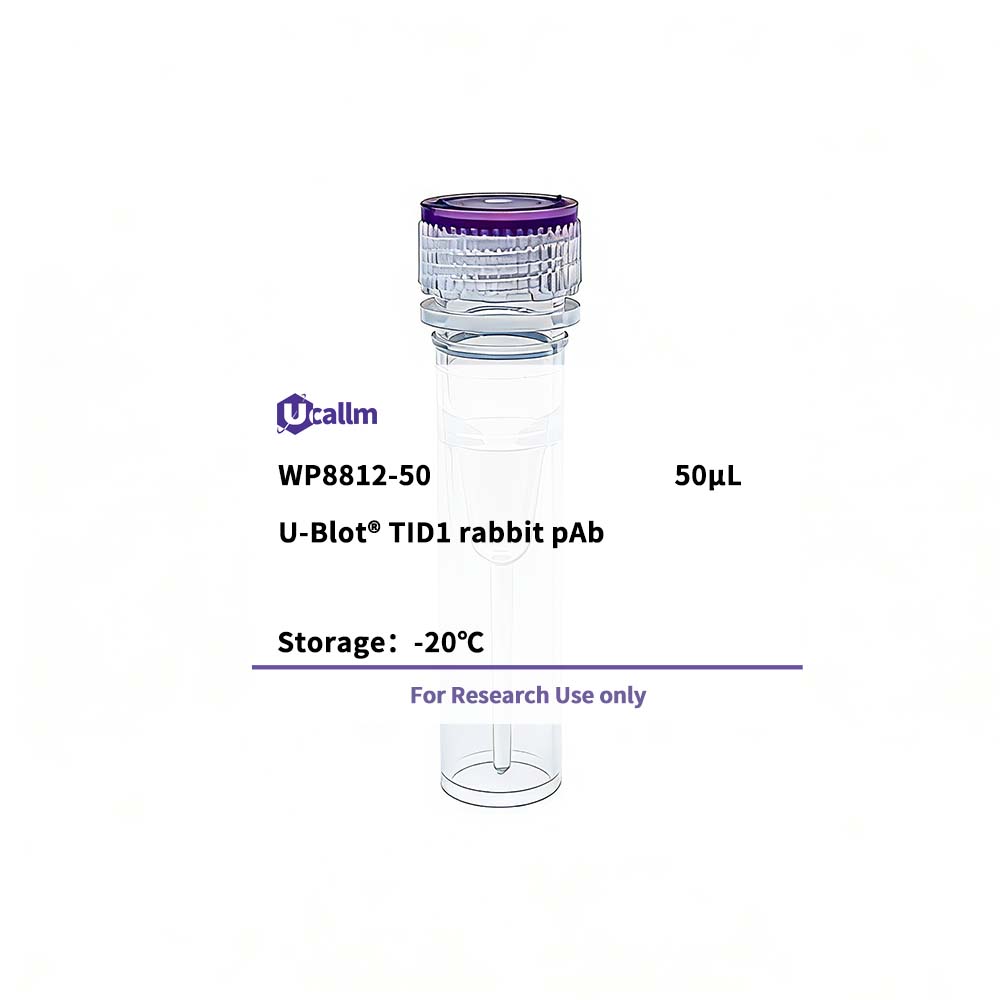
Price range: $268.00 through $328.00
Background:
| Size | 50μL/100μL |
| Target | DNAJA3 |
| Reactivity | Human, Mouse |
| Applications | WB |
| MW(Calculated) | 53kD |
| MW(Observed) | |
| Host Species | Rabbit |
| Isotype | IgG |
| Conjugate/Modification | Unmodified |
| Recommended Dilution Ratio | WB 1:500-2000 |
| Formulation | Liquid in PBS containing 50% glycerol, 0.5% BSA and 0.02% sodium azide. |
| Purification | The antibody was affinity-purified from rabbit antiserum by affinity-chromatography using epitope-specific immunogen. |
| Storage | -15°C to -25°C/1 year(Do not lower than -25°C) |
| Concentration | 1 mg/ml |
| Clonality | Polyclonal |
| Clone Number | |
| Immunogen | Synthesized peptide derived from human TID1 |
| Specificity | This antibody detects endogenous levels of TID1 at Human, Mouse |
| Gene Name | DNAJA3 HCA57 TID1 |
| Protein Name | DnaJ homolog subfamily A member 3, mitochondrial (DnaJ protein Tid-1) (hTid-1) (Hepatocellular carcinoma-associated antigen 57) (Tumorous imaginal discs protein Tid56 homolog) |
| Other Name | |
| Species | Human |
| Gene ID | 9093 |
| Uniprot | Q96EY1, |
| Species.1 | Mouse |
| Gene ID.1 | 83945 |
| Uniprot.1 | Q99M87 |
| Species.2 | |
| Gene ID.2 | |
| Uniprot.2 | |
| Cellular Localization | Mitochondrion matrix. Cytoplasm, cytosol . Cell junction, synapse, postsynaptic cell membrane; Peripheral membrane protein . Recruited to the postsynaptic cell membrane of the neuromuscular junction through interaction with MUSK. . |
| Tissue Expression | Widely expressed with highest levels in heart, liver, lung and skeletal muscles. Also expressed in keratinocytes. |
| Signaling_pathway | |
| Research Areas | |
| Function | Modulates apoptotic signal transduction or effector structures within the mitochondrial matrix. Affect cytochrome C release from the mitochondria and caspase 3 activation, but not caspase 8 activation. Isoform 1 increases apoptosis triggered by both TNF and the DNA-damaging agent mytomycin C; in sharp contrast, isoform 2 suppresses apoptosis. Can modulate IFN-gamma-mediated transcriptional activity. Isoform 2 may play a role in neuromuscular junction development as an effector of the MUSK signaling pathway. |





