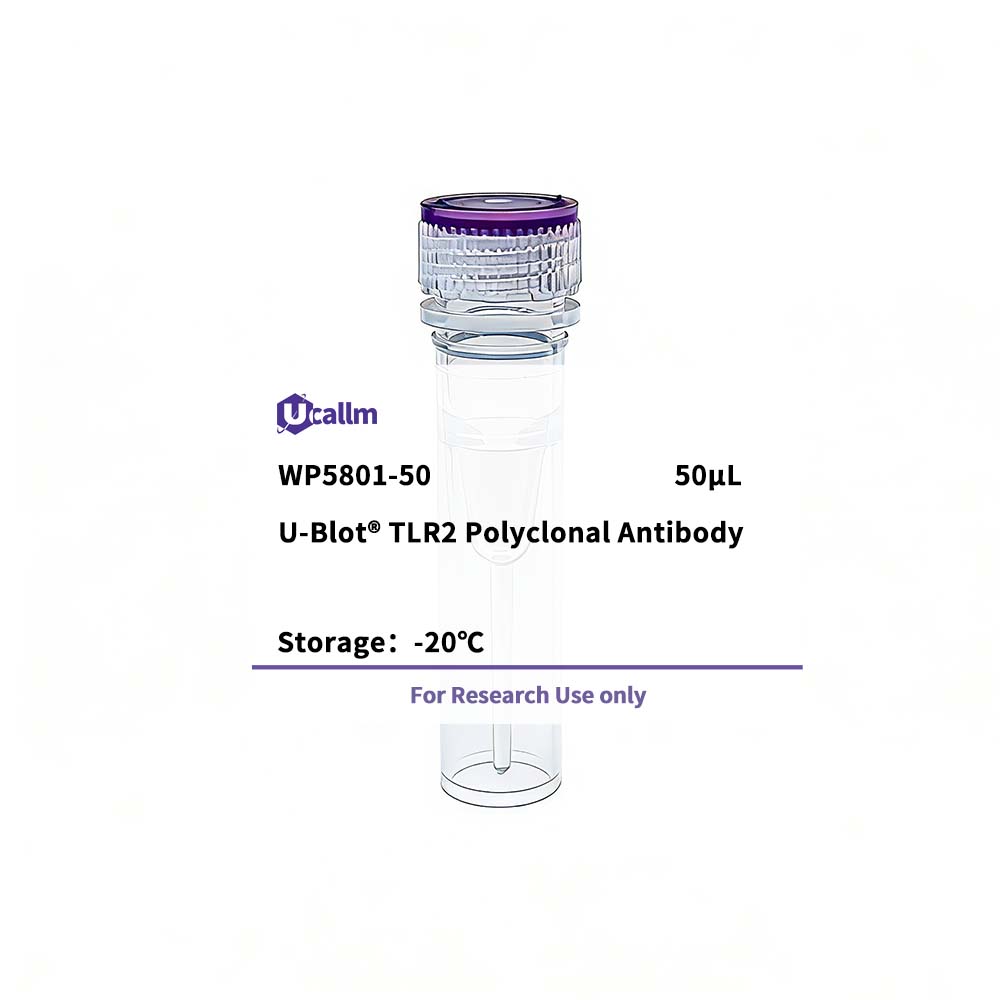
SKU: WP5801 Categories: ,

TLR2 Polyclonal Antibody

Price range: $268.00 through $328.00

SKU: WP5801-100
Enter the quantity you would like, or drag the panel to find the quantity and price that best for you
Bulk QuoteAuthorize OEM & ODM

Product details

Background:

The protein encoded by this gene is a member of the Toll-like receptor (TLR) family which plays a fundamental role in pathogen recognition and activation of innate immunity. TLRs are highly conserved from Drosophila to humans and share structural and functional similarities. This protein is a cell-surface protein that can form heterodimers with other TLR family members to recognize conserved molecules derived from microorganisms known as pathogen-associated molecular patterns (PAMPs). Activation of TLRs by PAMPs leads to an up-regulation of signaling pathways to modulate the host's inflammatory response. This gene is also thought to promote apoptosis in response to bacterial lipoproteins. This gene has been implicated in the pathogenesis of several autoimmune diseases. Alternative splicing results in multiple transcript variants. [provided by RefSeq, Jan 2016],


Specifications

Size50μL/100μL
TargetTLR2
ReactivityHuman, Mouse, Rat
ApplicationsIHC, IF
MW(Calculated)
MW(Observed)
Host SpeciesRabbit
IsotypeIgG
Conjugate/ModificationUnmodified
Recommended Dilution RatioIHC 1:200-500; IF 1:50-200 / Note: For IHC, we suggest antigen retrieval with TE buffer pH 9.0 (Cat#WT1004)
FormulationPBS, pH 7.4, containing 0.5%BSA, 0.02% sodium azide as Preservative and 50% Glycerol.
PurificationThe antibody was affinity-purified from rabbit antiserum by affinity-chromatography using epitope-specific immunogen.
Storage-15°C to -25°C/1 year(Do not lower than -25°C)
Concentration
ClonalityPolyclonal
Clone Number
ImmunogenRecombinant Protein of TLR2
SpecificityThe antibody detects endogenous TLR2 protein.
Gene NameTLR2
Protein NameToll-like receptor 2
Other NameTLR2; / TIL4; / Toll-like receptor 2; / Toll/interleukin-1 receptor-like protein 4; / CD282
SpeciesHuman
Gene ID7097
UniprotO60603,
Species.1Mouse
Gene ID.1
Uniprot.1Q9QUN7
Species.2
Gene ID.2
Uniprot.2
Cellular LocalizationMembrane; Single-pass type I membrane protein . Cytoplasmic vesicle, phagosome membrane; Single-pass type I membrane protein . Membrane raft . Does not reside in lipid rafts before stimulation but accumulates increasingly in the raft upon the presence of the microbial ligand. In response to diacylated lipoproteins, TLR2:TLR6 heterodimers are recruited in lipid rafts, this recruitment determines the intracellular targeting to the Golgi apparatus. Triacylated lipoproteins induce the same mechanism for TLR2:TLR1 heterodimers. .
Tissue ExpressionHighly expressed in peripheral blood leukocytes, in particular in monocytes, in bone marrow, lymph node and in spleen. Also detected in lung and in fetal liver. Levels are low in other tissues.
Signaling_pathwayCellular Processes >> Transport and catabolism >> Phagosome;Organismal Systems >> Immune system >> Neutrophil extracellular trap formation;Organismal Systems >> Immune system >> Toll-like receptor signaling pathway;Human Diseases >> Cancer: overview >> PD-L1 expression and PD-1 checkpoint pathway in cancer;Human Diseases >> Immune disease >> Rheumatoid arthritis;Human Diseases >> Immune disease >> Inflammatory bowel disease;Environmental Information Processing >> Signal transduction >> PI3K-Akt signaling pathway
Research Areas>>Phagosome; / >>PI3K-Akt signaling pathway; / >>Neutrophil extracellular trap formation; / >>Toll-like receptor signaling pathway; / >>Salmonella infection; / >>Legionellosis; / >>Leishmaniasis; / >>Chagas disease; / >>Malaria; / >>Toxoplasmosis; / >>Amoebiasis; / >>Tuberculosis; / >>Hepatitis B; / >>Measles; / >>Herpes simplex virus 1 infection; / >>Epstein-Barr virus infection; / >>Human immunodeficiency virus 1 infection; / >>Coronavirus disease - COVID-19; / >>Proteoglycans in cancer; / >>PD-L1 expression and PD-1 checkpoint pathway in cancer; / >>Inflammatory bowel disease; / >>Rheumatoid arthritis; / >>Lipid and atherosclerosis
FunctionFunction:Cooperates with LY96 to mediate the innate immune response to bacterial lipoproteins and other microbial cell wall components. Cooperates with TLR1 to mediate the innate immune response to bacterial lipoproteins or lipopeptides. Acts via MYD88 and TRAF6, leading to NF-kappa-B activation, cytokine secretion and the inflammatory response. May also promote apoptosis in response to lipoproteins. Recognizes mycoplasmal macrophage-activating lipopeptide-2kD (MALP-2), soluble tuberculosis factor (STF), phenol-soluble modulin (PSM) and B.burgdorferi outer surface protein A lipoprotein (OspA-L) cooperatively with TLR6.,polymorphism:Genetic variations in TLR2 are associated with suceptibility to leprosy [MIM:246300]. Leprosy is a chronic disease associated with depressed cellular (but not humoral) immunity, the bacterium requires a lower temperature than 37 degrees Celsius and thrives particularly in peripheral Schwann cells and macrophages. The Trp-677 polymorphism in the intracellular domain of TLR2 has a role in susceptibility to lepromatous leprosy. Wild-type TLR2 mediates CD14-enhanced Mycobacterium leprae-dependent activation of NFKB1, but TLR2 containing the Trp-677 polymorphism did not. The impaired function of the Trp-677 polymorphism provides a molecular mechanism for the poor cellular immune response associated with lepromatous leprosy.,PTM:Glycosylation of Asn-442 is critical for secretion of the N-terminal ectodomain of TLR2.,similarity:Belongs to the Toll-like receptor family.,similarity:Contains 1 TIR domain.,similarity:Contains 14 LRR (leucine-rich) repeats.,subunit:Interacts with LY96, TLR1 and TLR6 (via extracellular domain). Binds MYD88 (via TIR domain). Interacts with TICAM1. Ligand binding induces the formation of a heterodimer with TLR1.,tissue specificity:Highly expressed in peripheral blood leukocytes, in particular in monocytes, in bone marrow, lymph node and in spleen. Also detected in lung and in fetal liver. Levels are low in other tissues.,
Please login to post questions
Back to Top
Product has been added to your cart

