SKU: WM1182 Categories: ,

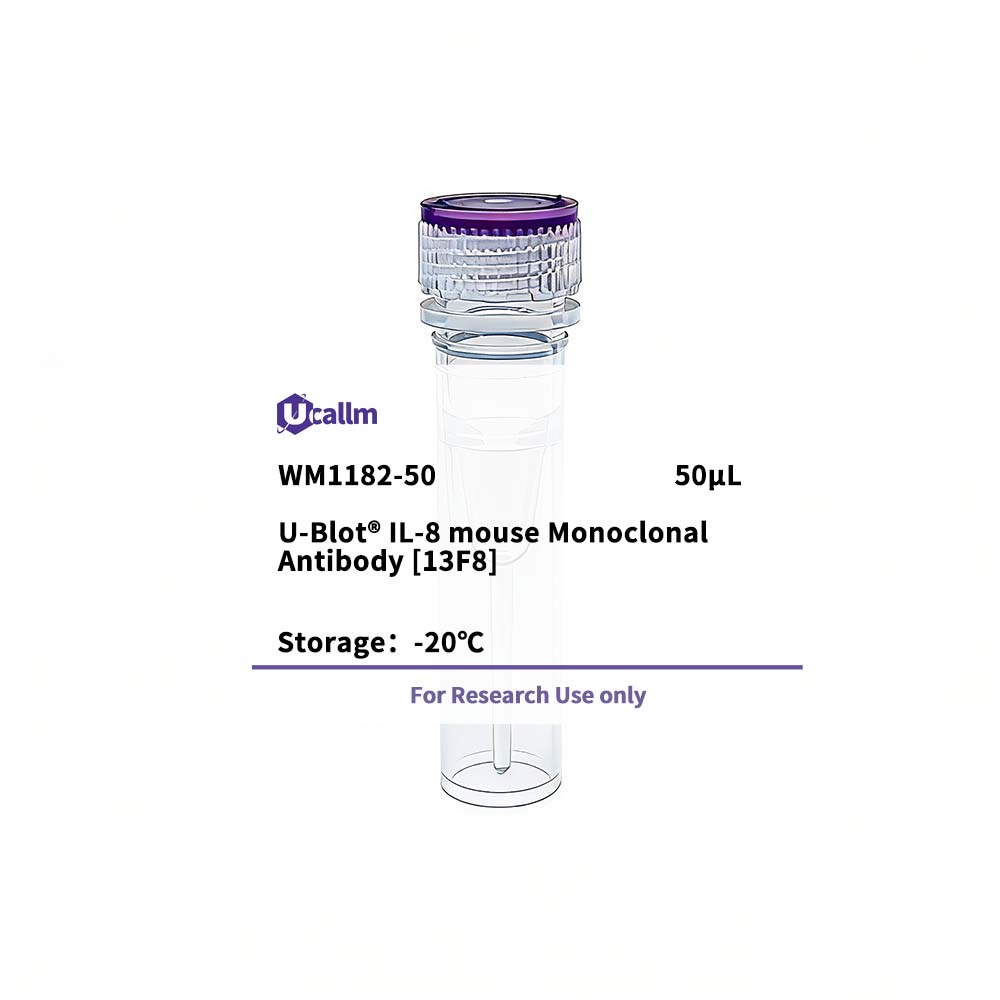
IL-8 mouse Monoclonal Antibody [13F8]

Price range: $268.00 through $328.00

SKU: WM1182-50
Enter the quantity you would like, or drag the panel to find the quantity and price that best for you
Bulk QuoteAuthorize OEM & ODM

Product details

Background:
The protein encoded by this gene is a member of the CXC chemokine family. This chemokine is one of the major mediators of the inflammatory response. This chemokine is secreted by several cell types. It functions as a chemoattractant, and is also a potent angiogenic factor. This gene is believed to play a role in the pathogenesis of bronchiolitis, a common respiratory tract disease caused by viral infection. This gene and other ten members of the CXC chemokine gene family form a chemokine gene cluster in a region mapped to chromosome 4q. [provided by RefSeq, Jul 2008],

Specifications

Size50μL/100μL
TargetIL-8
ReactivityHuman
ApplicationsIHC, IF
MW(Calculated)
MW(Observed)11kD
Host SpeciesMouse
IsotypeIgG1,kappa
Conjugate/ModificationUnmodified
Recommended Dilution RatioIHC 1:100-200; IF 1:50-200 / Note: For IHC, we suggest antigen retrieval with TE buffer pH 9.0 (Cat#WT1004)
FormulationLiquid in PBS containing 50% glycerol, 0.5% BSA and 0.02% sodium azide.
PurificationThe antibody was affinity-purified from mouse ascites by affinity-chromatography using specific immunogen.
Storage-15°C to -25°C/1 year(Do not lower than -25°C)
Concentration1 mg/ml
ClonalityMonoclonal
Clone Number13F8
ImmunogenSynthetic C-TERM Peptide of IL-8
SpecificityIL-8 protein detects endogenous levels of IL8
Gene NameIL8 CXCL8
Protein NameIL8
Other NameIL8
SpeciesHuman
Gene ID3576
UniprotP10145
Species.1
Gene ID.1
Uniprot.1
Species.2
Gene ID.2
Uniprot.2
Cellular LocalizationSecreted.
Tissue ExpressionChronic myeloid leukemia cell,Kidney,Lung,Lung carcinoma,Neutrophil,Periphe
Signaling_pathwayCellular Processes >> Cell growth and death >> Cellular senescence;Organismal Systems >> Immune system >> Toll-like receptor signaling pathway;Organismal Systems >> Immune system >> NOD-like receptor signaling pathway;Organismal Systems >> Immune system >> RIG-I-like receptor signaling pathway;Organismal Systems >> Immune system >> IL-17 signaling pathway;Organismal Systems >> Immune system >> Chemokine signaling pathway;Human Diseases >> Cancer: overview >> Pathways in cancer;Human Diseases >> Cancer: overview >> Transcriptional misregulation in cancer;Human Diseases >> Cancer: specific types >> Bladder cancer;Human Diseases >> Immune disease >> Rheumatoid arthritis;Environmental Information Processing >> Signal transduction >> NF-kappa B signaling pathway;Environmental Information Processing >> Signal transduction >> Phospholipase D signaling pathway;Environmental Information Processing >> Signaling molecules and interaction >> Cytokine-cytokine receptor interaction;Environmental Information Processing >> Signaling molecules and interaction >> Viral protein interaction with cytokine and cytokine receptor
Research Areas>>Cytokine-cytokine receptor interaction; / >>Viral protein interaction with cytokine and cytokine receptor; / >>Chemokine signaling pathway; / >>NF-kappa B signaling pathway; / >>Phospholipase D signaling pathway; / >>Cellular senescence; / >>Toll-like receptor signaling pathway; / >>NOD-like receptor signaling pathway; / >>RIG-I-like receptor signaling pathway; / >>IL-17 signaling pathway; / >>Non-alcoholic fatty liver disease; / >>AGE-RAGE signaling pathway in diabetic complications; / >>Alcoholic liver disease; / >>Epithelial cell signaling in Helicobacter pylori infection; / >>Pathogenic Escherichia coli infection; / >>Shigellosis; / >>Salmonella infection; / >>Pertussis; / >>Legionellosis; / >>Yersinia infection; / >>Chagas disease; / >>Malaria; / >>Amoebiasis; / >>Hepatitis B; / >>Human cytomegalovirus infection; / >>Influenza A; / >>Kaposi sarcoma-associated herpesvirus infection; / >>Coronavirus disease - COVID-19; / >>Pathways in cancer; / >>Transcriptional misregulation in cancer; / >>Bladder cancer; / >>Rheumatoid arthritis; / >>Lipid and atherosclerosis
FunctionFunction:IL-8 is a chemotactic factor that attracts neutrophils, basophils, and T-cells, but not monocytes. It is also involved in neutrophil activation. It is released from several cell types in response to an inflammatory stimulus. IL-8(6-77) has a 5-10-fold higher activity on neutrophil activation, IL-8(5-77) has increased activity on neutrophil activation and IL-8(7-77) has a higher affinity to receptors CXCR1 and CXCR2 as compared to IL-8(1-77), respectively.,online information:Interleukin-8 entry,PTM:Several N-terminal processed forms are produced by proteolytic cleavage after secretion from at least peripheral blood monocytes, leukcocytes and endothelial cells. In general, IL-8(1-77) is referred to as interleukin-8. IL-8(6-77) is the most promiment form.,similarity:Belongs to the intercrine alpha (chemokine CxC) family.,subunit:Homodimer.,
Please login to post questions
Back to Top
Product has been added to your cart