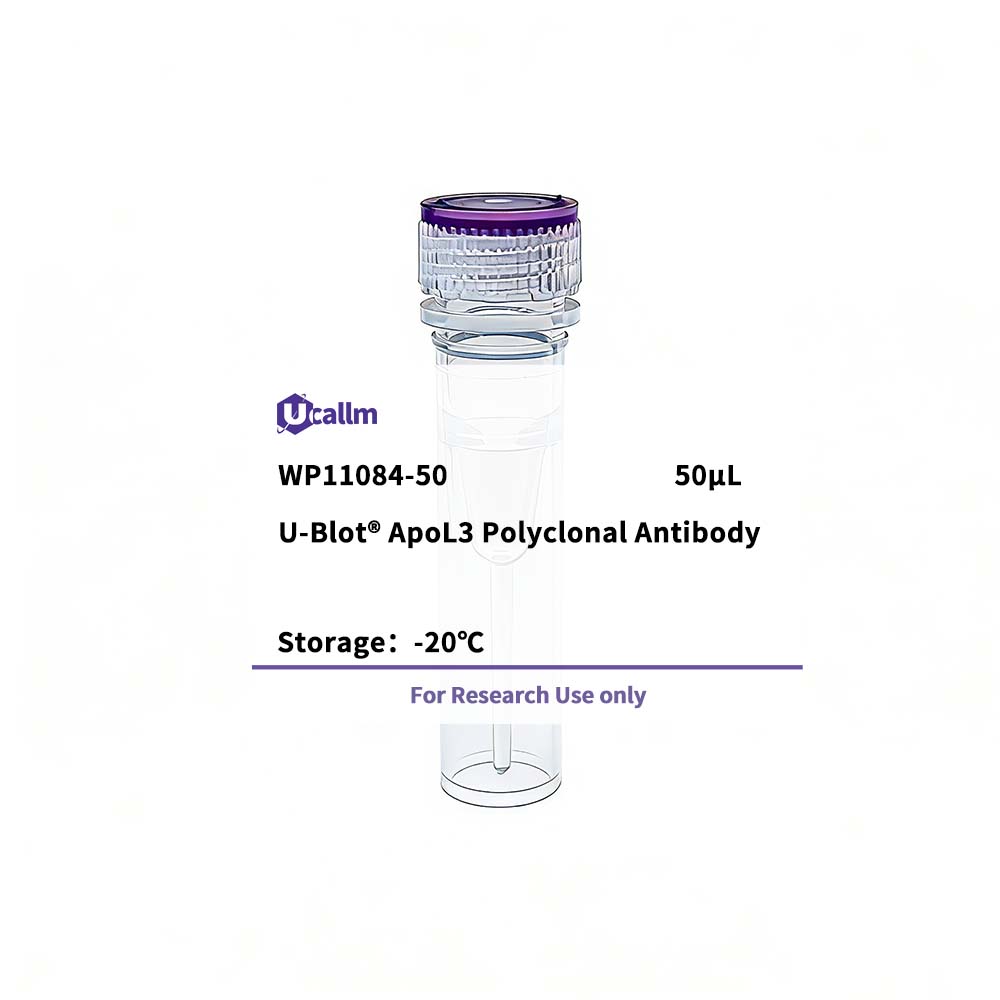
SKU: WP11084 Categories: ,

ApoL3 Polyclonal Antibody

Price range: $268.00 through $328.00

SKU: WP11084-100
Enter the quantity you would like, or drag the panel to find the quantity and price that best for you
Bulk QuoteAuthorize OEM & ODM

Product details

Background:

This gene is a member of the apolipoprotein L gene family, and it is present in a cluster with other family members on chromosome 22. The encoded protein is found in the cytoplasm, where it may affect the movement of lipids, including cholesterol, and/or allow the binding of lipids to organelles. In addition, expression of this gene is up-regulated by tumor necrosis factor-alpha in endothelial cells lining the normal and atherosclerotic iliac artery and aorta. Alternative splicing results in multiple transcript variants. [provided by RefSeq, Mar 2015],

Specifications

Size50μL/100μL
TargetApoL3
ReactivityHuman
ApplicationsIHC, IF, ELISA
MW(Calculated)44kD
MW(Observed)
Host SpeciesRabbit
IsotypeIgG
Conjugate/ModificationUnmodified
Recommended Dilution RatioIHC 1:100-1:300; ELISA 1:40000; IF 1:50-200 / Note: For IHC, we suggest antigen retrieval with TE buffer pH 9.0 (Cat#WT1004)
FormulationLiquid in PBS containing 50% glycerol, 0.5% BSA and 0.02% sodium azide.
PurificationThe antibody was affinity-purified from rabbit antiserum by affinity-chromatography using epitope-specific immunogen.
Storage-15°C to -25°C/1 year(Do not lower than -25°C)
Concentration1 mg/ml
ClonalityPolyclonal
Clone Number
ImmunogenSynthesized peptide derived from ApoL3 . at AA range: 100-180
SpecificityApoL3 Polyclonal Antibody detects endogenous levels of ApoL3 protein.
Gene NameAPOL3
Protein NameApolipoprotein L3
Other NameAPOL3; / Apolipoprotein L3; / Apolipoprotein L-III; / ApoL-III; / TNF-inducible protein CG12-1; / CG12_1
SpeciesHuman
Gene ID80833
UniprotO95236
Species.1
Gene ID.1
Uniprot.1
Species.2
Gene ID.2
Uniprot.2
Cellular LocalizationCytoplasm .
Tissue ExpressionWidely expressed; the highest levels are in prostate, lung and placenta; also detected in kidney, bone marrow, spleen, thymus, spinal cord, adrenal gland, salivary gland, trachea and mammary gland; levels are low in brain, heart, fetal liver, pancreas and testis.
Signaling_pathway
Research Areas
FunctionFunction:May affect the movement of lipids in the cytoplasm or allow the binding of lipids to organelles.,induction:In vitro, is responsive to tumor necrosis factor.,similarity:Belongs to the apolipoprotein L family.,tissue specificity:Widely expressed; the highest levels are in prostate, lung and placenta; also detected in kidney, bone marrow, spleen, thymus, spinal cord, adrenal gland, salivary gland, trachea and mammary gland; levels are low in brain, heart, fetal liver, pancreas and testis.,
Please login to post questions
Back to Top
Product has been added to your cart
