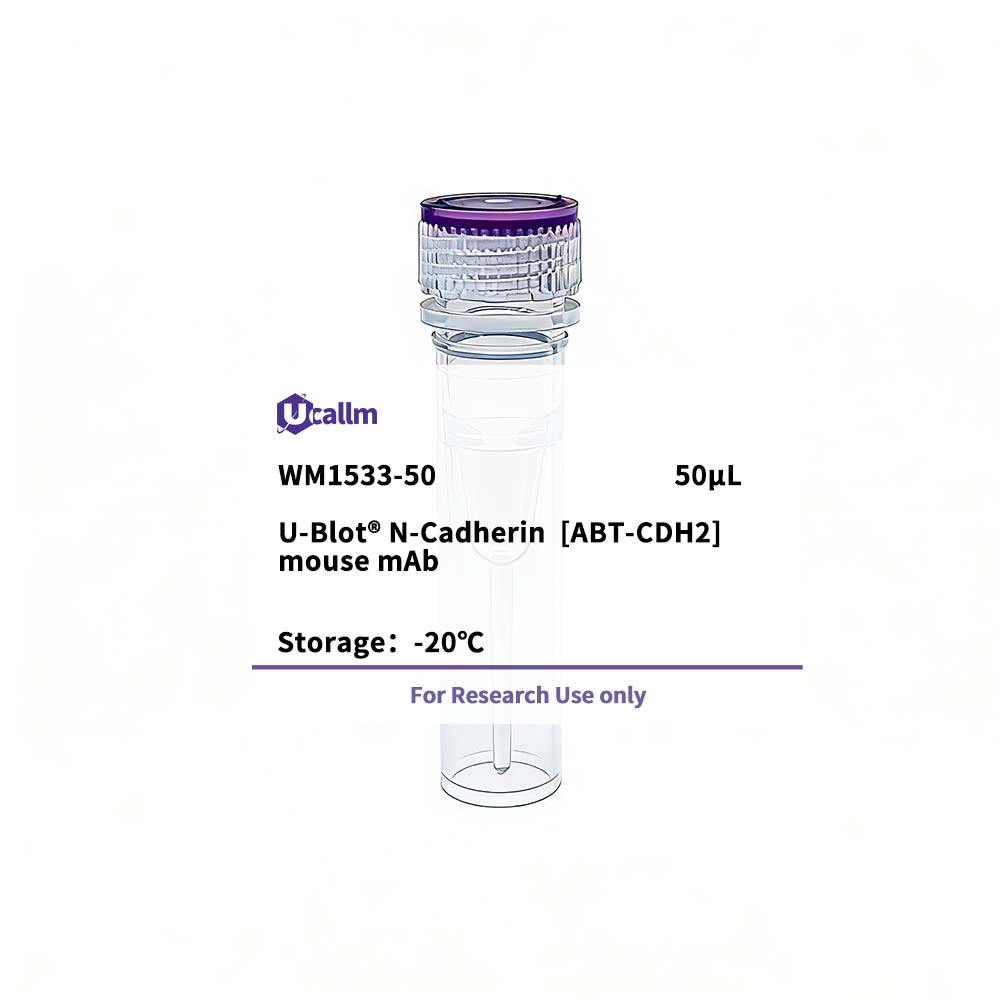
SKU: WM1533 Categories: ,

N-Cadherin [ABT-CDH2] mouse mAb

Price range: $268.00 through $328.00

SKU: WM1533-50
Enter the quantity you would like, or drag the panel to find the quantity and price that best for you
Bulk QuoteAuthorize OEM & ODM

Product details

Background:
This gene encodes a classical cadherin and member of the cadherin superfamily. Alternative splicing results in multiple transcript variants, at least one of which encodes a preproprotein is proteolytically processed to generate a calcium-dependent cell adhesion molecule and glycoprotein. This protein plays a role in the establishment of left-right asymmetry, development of the nervous system and the formation of cartilage and bone. [provided by RefSeq, Nov 2015],

Specifications

Size50μL/100μL
TargetN-Cadherin
ReactivityHuman, Mouse, Rat
ApplicationsIHC, WB, IF, ELISA
MW(Calculated)100kD
MW(Observed)110kD
Host SpeciesMouse
IsotypeIgG2b,Kappa
Conjugate/ModificationUnmodified
Recommended Dilution RatioIHC 1:100-500; WB 1:500-2000; IF 1:100-500; ELISA 1:1000-5000 / Note: For IHC, we suggest antigen retrieval with TE buffer pH 9.0 (Cat#WT1004)
FormulationPBS, 50% glycerol, 0.05% Proclin 300, 0.05%BSA
PurificationRecombinant Antibody expressed in animal component-free (ACF) media, purified via Protein G affinity chromatography.
Storage-15°C to -25°C/1 year(Do not lower than -25°C)
Concentration
ClonalityMonoclonal
Clone NumberRMM-CDH2
ImmunogenSynthesized peptide derived from human N-Cadherin AA range: 200-400
SpecificityThis antibody detects endogenous levels of N-Cadherin protein.
Gene NameCDH2 CDHN NCAD
Protein NameCadherin-2 (CDw325) (Neural cadherin) (N-cadherin) (CD antigen CD325)
Other Name
SpeciesHuman
Gene ID1000
UniprotP19022
Species.1
Gene ID.1
Uniprot.1
Species.2
Gene ID.2
Uniprot.2
Cellular LocalizationMembranous
Tissue ExpressionBrain,Epithelium,Liver,
Signaling_pathwayEnvironmental Information Processing >> Signaling molecules and interaction >> Cell adhesion molecules
Research Areas>>Cell adhesion molecules; / >>Arrhythmogenic right ventricular cardiomyopathy
FunctionFunction:Cadherins are calcium dependent cell adhesion proteins. They preferentially interact with themselves in a homophilic manner in connecting cells; cadherins may thus contribute to the sorting of heterogeneous cell types. CDH2 may be involved in neuronal recognition mechanism.,similarity:Contains 5 cadherin domains.,subunit:Interacts with CDCP1.,
Please login to post questions
Back to Top
Product has been added to your cart