SKU: WP14871 Categories: ,

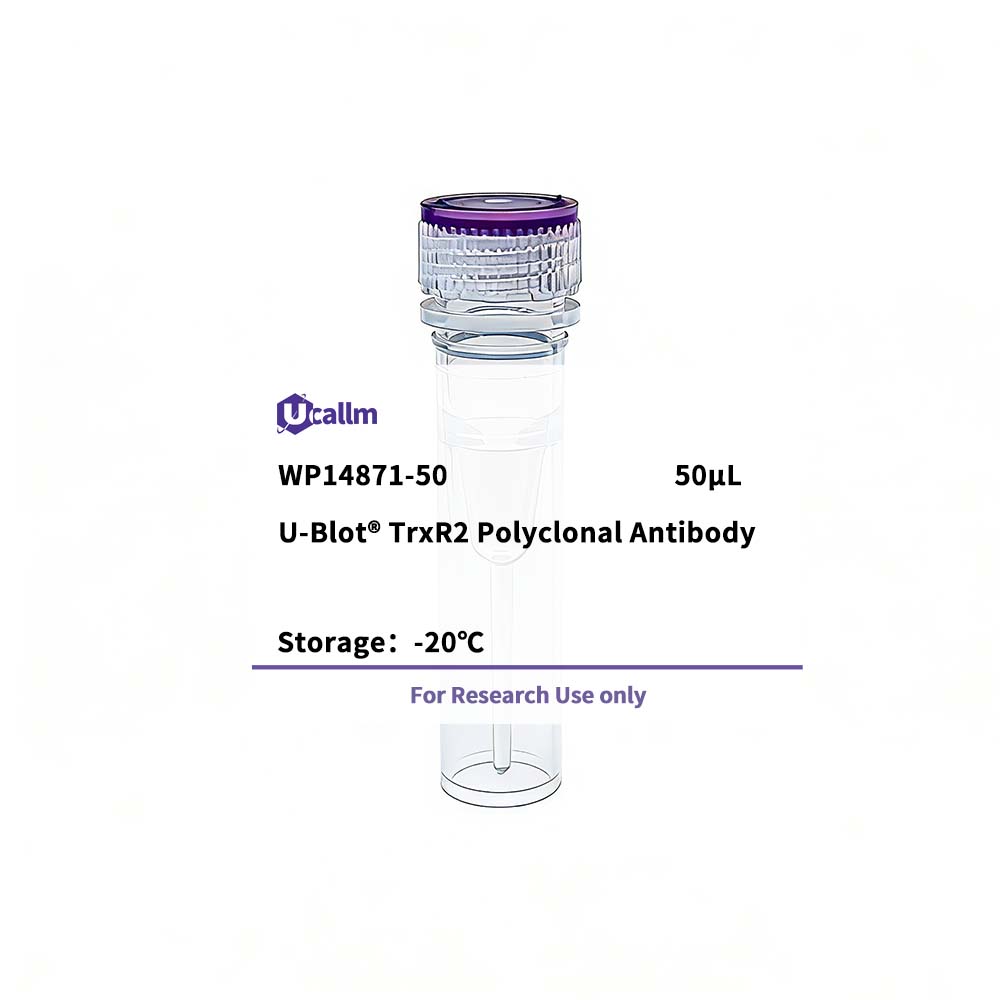
TrxR2 Polyclonal Antibody

Price range: $268.00 through $328.00

SKU: WP14871-100
Enter the quantity you would like, or drag the panel to find the quantity and price that best for you
Bulk QuoteAuthorize OEM & ODM

Product details

Background:

thioredoxin reductase 2(TXNRD2) Homo sapiens This gene encodes a member of the class I pyridine nucleotide-disulfide oxidoreductase family. The encoded protein is a selenocysteine-containing flavoenzyme that maintains thioredoxins in a reduced state, thereby playing a key role in regulating the cellular redox environment. Mammals have three related thioredoxin reductases. This gene encodes a mitochondrial form important for scavenging of reactive oxygen species in mitochondria. Alternatively spliced transcript variants encoding different isoforms have been described. [provided by RefSeq, Sep 2013],


Specifications

Size50μL/100μL
TargetTXNRD2
ReactivityHuman, Mouse, Rat
ApplicationsWB, IHC, IF, ELISA
MW(Calculated)
MW(Observed)56kD
Host SpeciesRabbit
IsotypeIgG
Conjugate/ModificationUnmodified
Recommended Dilution RatioWB 1:500-1:2000; IHC 1:100-1:300; ELISA 1:10000; IF 1:50-200 / Note: For IHC, we suggest antigen retrieval with TE buffer pH 9.0 (Cat#WT1004)
FormulationLiquid in PBS containing 50% glycerol, 0.5% BSA and 0.02% sodium azide.
PurificationThe antibody was affinity-purified from rabbit antiserum by affinity-chromatography using epitope-specific immunogen.
Storage-15°C to -25°C/1 year(Do not lower than -25°C)
Concentration1 mg/ml
ClonalityPolyclonal
Clone Number
ImmunogenThe antiserum was produced against synthesized peptide derived from human TRXR2. AA range:471-520
SpecificityTrxR2 Polyclonal Antibody detects endogenous levels of TrxR2 protein.
Gene NameTXNRD2
Protein NameThioredoxin reductase 2 mitochondrial
Other NameTXNRD2; / KIAA1652; / TRXR2; / Thioredoxin reductase 2; / mitochondrial; / Selenoprotein Z; / SelZ; / TR-beta; / Thioredoxin reductase TR3
SpeciesHuman
Gene ID10587
UniprotQ9NNW7,
Species.1Mouse
Gene ID.126462
Uniprot.1Q9JLT4,
Species.2Rat
Gene ID.250551
Uniprot.2Q9Z0J5
Cellular LocalizationMitochondrion .
Tissue ExpressionHighly expressed in the prostate, ovary, liver, testis, uterus, colon and small intestine. Intermediate levels in brain, skeletal muscle, heart and spleen. Low levels in placenta, pancreas, thymus and peripheral blood leukocytes. According to PubMed:10608886, high levels in kidney, whereas according to PubMed:9923614, levels are low. High expression is observed in the adrenal cortex (PubMed:24601690).
Signaling_pathwayHuman Diseases >> Cancer: overview >> Pathways in cancer;Human Diseases >> Cancer: specific types >> Hepatocellular carcinoma
Research Areas>>Selenocompound metabolism; / >>Pathways in cancer; / >>Hepatocellular carcinoma
FunctionCatalytic activity:Thioredoxin + NADP(+) = thioredoxin disulfide + NADPH.,cofactor:FAD.,Function:Maintains thioredoxin in a reduced state. Implicated in the defenses against oxidative stress. May play a role in redox-regulated cell signaling.,miscellaneous:The active site is a redox-active disulfide bond. The selenocysteine residue is essential for enzymatic activity.,sequence Caution:Translated as Sec.,similarity:Belongs to the class-I pyridine nucleotide-disulfide oxidoreductase family.,subunit:Homodimer.,tissue specificity:Highly expressed in the prostate, ovary, liver, testis, uterus, colon and small intestine. Intermediate levels in brain, skeletal muscle, heart and spleen. Low levels in placenta, pancreas, thymus and peripheral blood leukocytes. According to PubMed:10608886, high levels in kidney, whereas according to PubMed:9923614 levels are low.,
Please login to post questions
Back to Top
Product has been added to your cart
