SKU: WP0917 Categories: ,

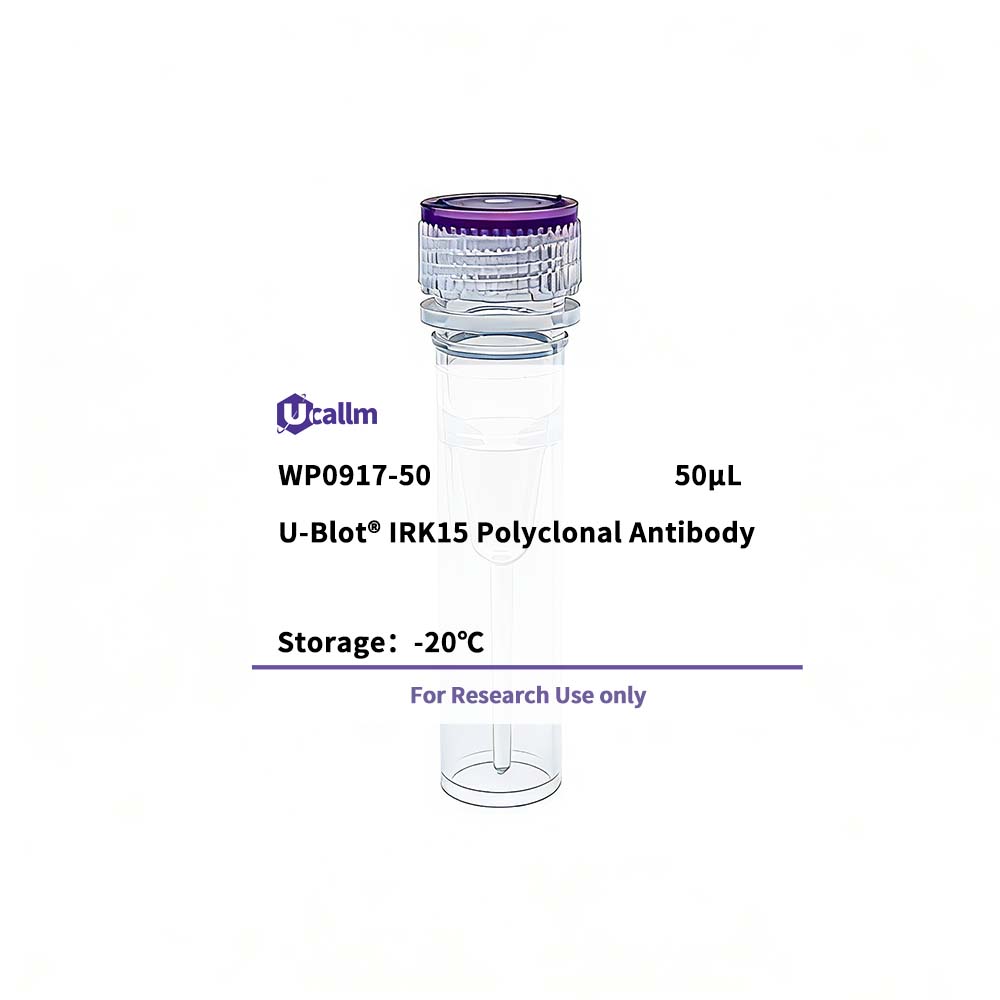
IRK15 Polyclonal Antibody

Price range: $268.00 through $328.00

SKU: WP0917-100
Enter the quantity you would like, or drag the panel to find the quantity and price that best for you
Bulk QuoteAuthorize OEM & ODM

Product details

Background:

Potassium channels are present in most mammalian cells, where they participate in a wide range of physiologic responses. The protein encoded by this gene is an integral membrane protein and inward-rectifier type potassium channel. The encoded protein has a greater tendency to allow potassium to flow into a cell rather than out of a cell. Eight transcript variants encoding the same protein have been found for this gene. [provided by RefSeq, Feb 2013],

Specifications

Size50μL/100μL
TargetIRK15
ReactivityHuman, Mouse, Rat
ApplicationsWB, ELISA
MW(Calculated)
MW(Observed)41kD
Host SpeciesRabbit
IsotypeIgG
Conjugate/ModificationUnmodified
Recommended Dilution RatioWB 1:500-2000; ELISA 1:5000-20000
FormulationLiquid in PBS containing 50% glycerol,0.5% BSA and 0.02% sodium azide.
PurificationThe antibody was affinity-purified from rabbit antiserum by affinity-chromatography using epitope-specific immunogen.
Storage-15°C to -25°C/1 year(Do not lower than -25°C)
Concentration1 mg/ml
ClonalityPolyclonal
Clone Number
ImmunogenSynthesized peptide derived from human protein . at AA range: 30-110
SpecificityIRK15 Polyclonal Antibody detects endogenous levels of protein.
Gene NameKCNJ15 KCNJ14
Protein NameATP-sensitive inward rectifier potassium channel 15 (Inward rectifier K(+) channel Kir1.3) (Inward rectifier K(+) channel Kir4.2) (Potassium channel, inwardly rectifying subfamily J member 15)
Other Name
SpeciesHuman
Gene ID3772
UniprotQ99712,
Species.1Mouse
Gene ID.1
Uniprot.1O88932,
Species.2Rat
Gene ID.2
Uniprot.2Q91ZF1
Cellular LocalizationMembrane; Multi-pass membrane protein.
Tissue ExpressionKidney,
Signaling_pathway
Research Areas>>Gastric acid secretion
FunctionFunction:Inward rectifier potassium channels are characterized by a greater tendency to allow potassium to flow into the cell rather than out of it. Their voltage dependence is regulated by the concentration of extracellular potassium; as external potassium is raised, the voltage range of the channel opening shifts to more positive voltages. The inward rectification is mainly due to the blockage of outward current by internal magnesium.,similarity:Belongs to the inward rectifier-type potassium channel family.,subunit:Interacts with INADL.,
Please login to post questions
Back to Top
Product has been added to your cart


