SKU: WR5337 Categories: ,

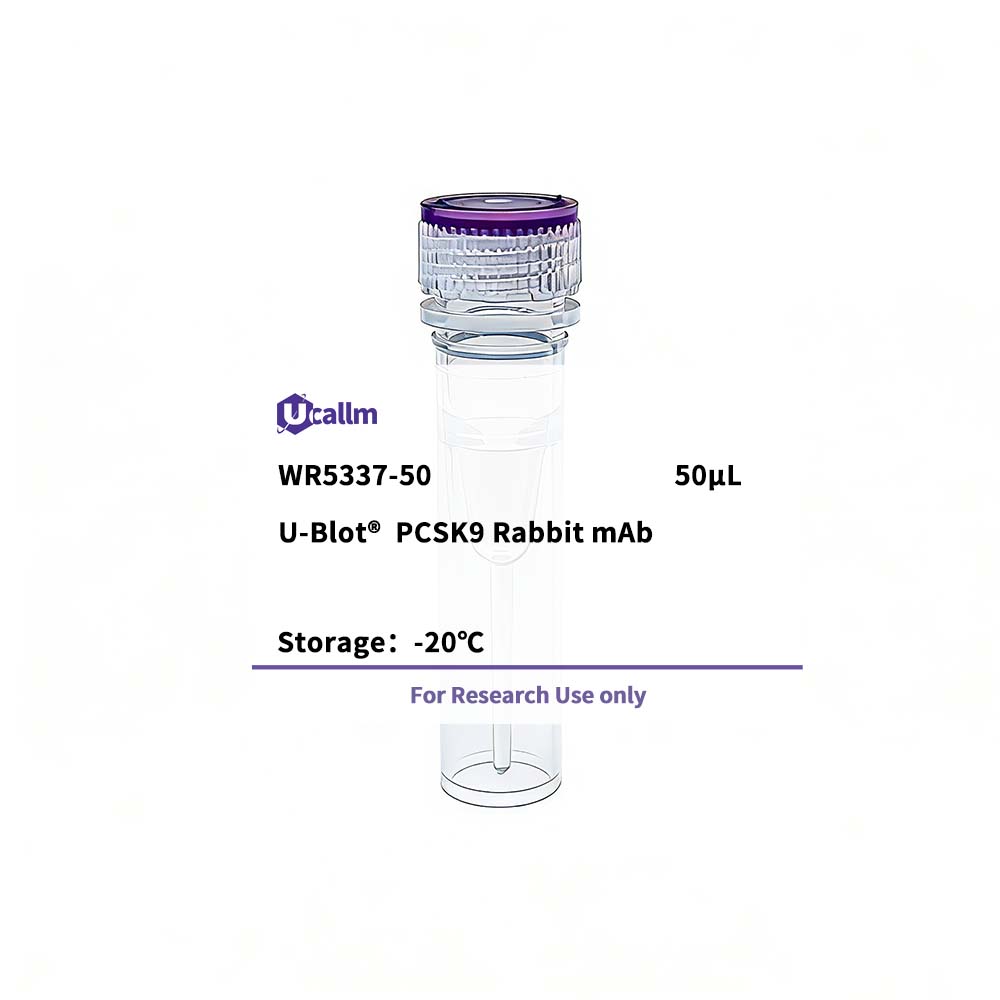
U-Blot® PCSK9 Rabbit mAb

Price range: $268.00 through $328.00

SKU: WR5337-50
Enter the quantity you would like, or drag the panel to find the quantity and price that best for you
Bulk QuoteAuthorize OEM & ODM

Product details

Background:cofactor:Calcium.,disease:Defects in PCSK9 are the cause of familial hypercholesterolemia 3 (FH3) [MIM:603776]. FH3 inheritance is autosomal dominant.,enzyme regulation:Inhibited by EGTA.,function:May be implicated in the differentiation of cortical neurons and may play a role in cholesterol homeostasis.,PTM:The soluble zymogen undergoes autocatalytic intramolecular processing in the endoplasmic reticulum, resulting in the cleavage of its propeptide that remains associated with the secreted enzyme.,similarity:Belongs to the peptidase S8 family.,similarity:Contains 1 peptidase S8 domain.,subunit:The precursor protein but not the mature protein may form multimers.,tissue specificity:Expressed in neuro-epithelioma, colon carcinoma, hepatic and pancreatic cell lines, and in Schwann cells.,

Specifications

TargetPCSK9
ReactivityHuman, Rat
ApplicationsWB, IF, IP, ELISA
MW(Calculated)74kD
MW(Observed)65kD(mature form),80kD(precursor)
Host SpeciesRabbit
IsotypeIgG,Kappa
Conjugate/ModificationUnmodified
Modification
Recommended Dilution RatioWB 1:2000-1:10000; IF 1:200-1:1000; ELISA 1:5000-1:20000; IP 1:50-1:200;
FormulationPBS, 50% glycerol, 0.05% Proclin 300, 0.05%BSA
Source
PurificationRecombinant Antibody expressed in animal component-free (ACF) media, purified via Protein A affinity chromatography.
Purity
Storage-15°C to -25°C/1 year(Do not lower than -25°C)
Concentration
ClonalityMonoclonal
Clone NumberPT1571R
ImmunogenThe specific immunogen used to produce this antibody is proprietary information.
Sequence
SpecificityEndogenous
Gene NamePCSK9 NARC1 PSEC0052
Protein NamePCSK9
Other NameProprotein convertase subtilisin/kexin type 9; / Neural apoptosis-regulated convertase 1; / NARC-1; / Proprotein convertase 9; / PC9; / Subtilisin/kexin-like protease PC9
SpeciesHuman
Gene ID-1255738
UniprotQ8NBP7,
Species.1Mouse
Gene ID-2100102
Uniprot.1Q80W65,
Species.2Rat
Gene ID-3298296
Uniprot.2P59996
Organism-4
Gene ID-4
SwissProt-4
Backgroundcofactor:Calcium.,disease:Defects in PCSK9 are the cause of familial hypercholesterolemia 3 (FH3) [MIM:603776]. FH3 inheritance is autosomal dominant.,enzyme regulation:Inhibited by EGTA.,function:May be implicated in the differentiation of cortical neurons and may play a role in cholesterol homeostasis.,PTM:The soluble zymogen undergoes autocatalytic intramolecular processing in the endoplasmic reticulum, resulting in the cleavage of its propeptide that remains associated with the secreted enzyme.,similarity:Belongs to the peptidase S8 family.,similarity:Contains 1 peptidase S8 domain.,subunit:The precursor protein but not the mature protein may form multimers.,tissue specificity:Expressed in neuro-epithelioma, colon carcinoma, hepatic and pancreatic cell lines, and in Schwann cells.,
Cellular LocalizationCytoplasm. Secreted. Endosome. Lysosome. Cell surface. Endoplasmic reticulum. Golgi apparatus. Autocatalytic cleavage is required to transport it from the endoplasmic reticulum to the Golgi apparatus and for the secretion of the mature protein. Localizes to the endoplasmic reticulum in the absence of LDLR and colocalizes to the cell surface and to the endosomes/lysosomes in the presence of LDLR. The sorting to the cell surface and endosomes is required in order to fully promote LDLR degradation.
Tissue ExpressionExpressed in neuro-epithelioma, colon carcinoma, hepatic and pancreatic cell lines, and in Schwann cells.
Signaling_pathway
Research Areas>>Cholesterol metabolism
Functionurogenital system development, kidney development, liver development, regulation of receptor recycling, negative regulation of receptor recycling, regulation of receptor internalization, positive regulation of receptor internalization,proteolysis, neutral lipid metabolic process, acylglycerol metabolic process, triglyceride metabolic process, phospholipid metabolic process, glycerol ether metabolic process, induction of apoptosis, vacuolar transport, lysosomal transport,steroid metabolic process, cholesterol metabolic process, macromolecule catabolic process, cellular response to starvation, response to endogenous stimulus, response to hormone stimulus, regulation of catabolic process,response to extracellular stimulus, response to organic substance, regulation of receptor activity, positive regulation of macromolecule metabolic process, negative regulation of macromolecule metabolic process, regulation of cell death,positive regulation of cell death, regulation of lipoprotein particle clearance, negative regulation of lipoprotein particle clearance, regulation of low-density lipoprotein particle clearance, negative regulation of low-density lipoprotein particle clearance, induction of programmed cell death, sterol metabolic process, protein processing, protein autoprocessing, organic ether metabolic process, organophosphate metabolic process, regulation of endocytosis,protein catabolic process, neuron differentiation, regulation of cellular catabolic process, response to nutrient levels,cellular response to extracellular stimulus, cellular response to nutrient levels, regulation of cellular protein metabolic process, low-density lipoprotein receptor metabolic process, receptor catabolic process, low-density lipoprotein receptor catabolic process, regulation of low-density lipoprotein receptor catabolic process, response to insulin stimulus, cellular response to insulin stimulus, cellular response to hormone stimulus, cellular response to stress,lipoprotein metabolic process, regulation of protein catabolic process, homeostatic process, response to starvation,cholesterol homeostasis, regulation of apoptosis, positive regulation of apoptosis, regulation of programmed cell death, positive regulation of programmed cell death, negative regulation of catalytic activity, receptor metabolic process, response to peptide hormone stimulus, regulation of neuron apoptosis, positive regulation of neuron apoptosis, negative regulation of molecular function, cellular protein catabolic process, cellular macromolecule catabolic process, positive regulation of endocytosis, glycerolipid metabolic process, intracellular transport, regulation of receptor-mediated endocytosis, positive regulation of receptor-mediated endocytosis, chemical homeostasis, positive regulation of transport, positive regulation of cellular component organization, negative regulation of multicellular organismal process, protein maturation, protein maturation by peptide bond cleavage, lipid homeostasis, sterol homeostasis, regulation of vesicle-mediated transport,
RRID
Please login to post questions
Back to Top
Product has been added to your cart